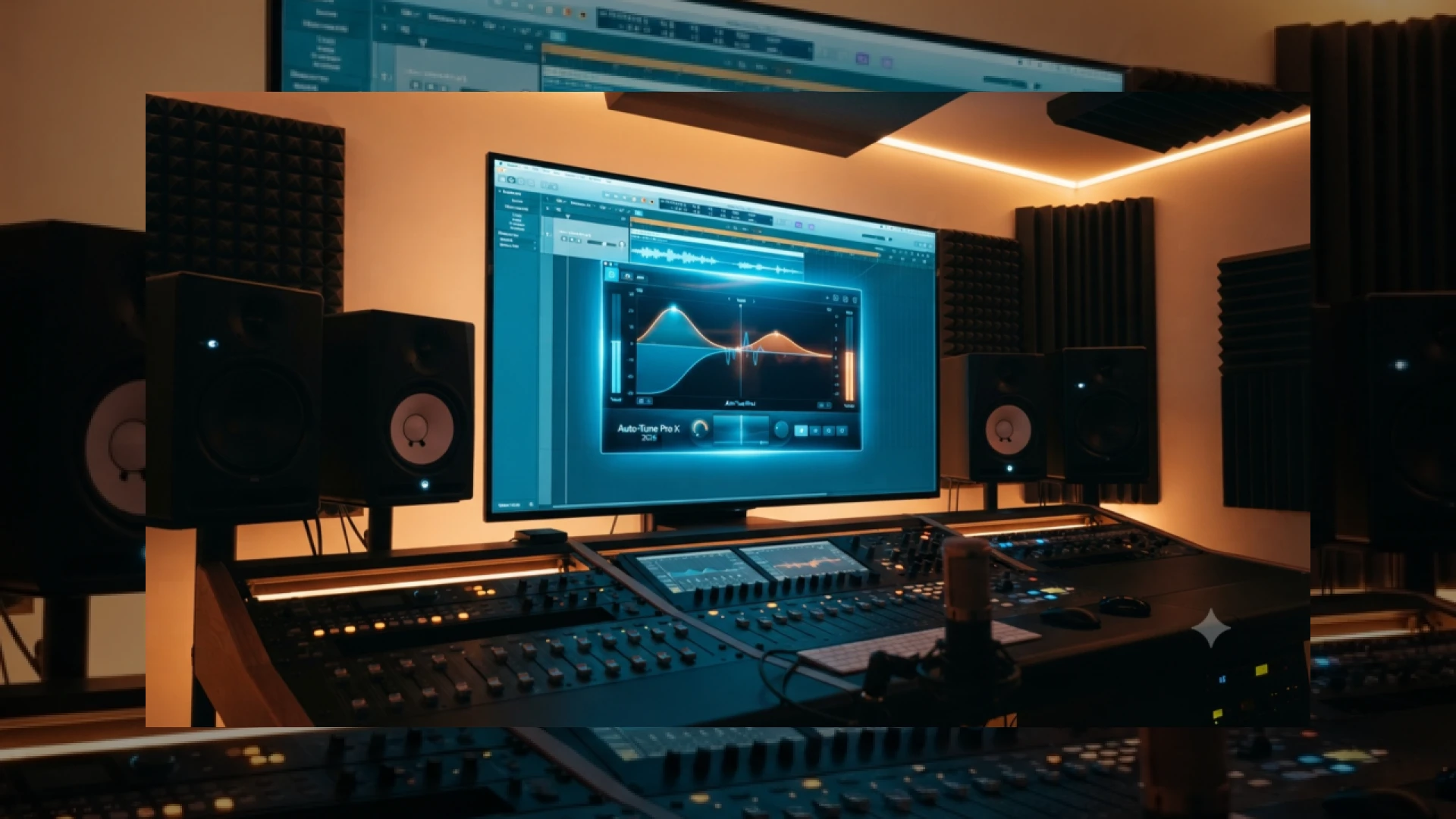
Best Auto Tune VST Best 2026
It’s hard to believe that nearly three decades have passed since Antares Audio Technologies fundamentally altered the landscape of modern music with a humble pitch correction tool. Today, pitch perfection isn’t just a luxury; it’s a sonic standard. As we step into 2026, the market for Auto Tune VST plugins is more competitive, sophisticated, and AI-driven than ever before.
Whether you are aiming for the transparent, inaudible pitch correction that saves a take, or the aggressive, robotic “T-Pain effect” that defines modern hip-hop and pop, choosing the right tool is paramount. The landscape in 2026 is defined by lower latency, deeper integration with DAWs (Digital Audio Workstations), and machine learning algorithms that do the heavy lifting for you.
In this comprehensive guide, we rank and review the undisputed best Auto-Tune VST plugins available in 2026, helping you make the right choice for your studio productions.
The Evolution of Pitch Correction: Why 2026 is Different
Before diving into the list, it’s crucial to understand why the 2026 crop of VSTs is superior. In previous years, heavy pitch correction often introduced unwanted artifacts—digital distortion or “smearing” of the vocal transients.
By 2026, two major shifts have occurred:
- AI-Assisted Tuning: Leading plugins now utilize onboard machine learning to detect the scale, key, and intended vocal inflection instantly. This reduces setup time from minutes to seconds.
- CPU Efficiency: Advanced algorithms are now highly optimized. You can run multiple instances of latency-free Auto-Tune on a complex session without your machine buckling.
Top 5 Best Auto-Tune VST Plugins for 2026
Without further ado, here is our definitive ranking of the top pitch correction tools dominating the industry this year.
1. Antares Auto-Tune Pro X (The Industry Standard)
It is impossible to have this conversation without starting with the originators. Antares remains the benchmark. In 2026, Auto-Tune Pro X represents the pinnacle of their development.
- Why it reigns supreme: It offers the best of both worlds. The “Automatic Mode” is incredibly fast and features the newly updated Low Latency engine, making it suitable for tracking artists in real-time through headphones without delay.
- The Graph Mode: For surgical, professional editing, Graph Mode remains unmatched. You can draw pitch curves, manipulate vibrato, and control formant with sample-accurate precision.
- 2026 Feature Spotlight: The integration of “Smart Key” technology. The plugin listens to your incoming audio and suggests the correct scale and key with 99% accuracy before you’ve even touched a dial.
Analyst Tip: If you are working in professional mixing environments where stems are exchanged, Auto-Tune Pro X is the safest bet due to its universal compatibility.
2. Celemony Melodyne 5 studio (The Surgical Specialist)
While Antares owns the “Auto-Tune” moniker, Melodyne owns the art of “pitch manipulation.” It is less of a real-time tuner and more of a vocal production suite.
- The DNA Direct Note Access: Melodyne’s proprietary technology allows you to access individual notes within polyphonic audio. Yes, you can tune a chord played on an acoustic guitar or fix a bum note in a recorded piano performance. For vocals, this means unparalleled control over sibilance, breath, and timing separate from pitch.
- Workflow: In 2026, Melodyne integrates seamlessly via ARA2 (Audio Random Access) with major DAWs like Studio One, Logic Pro, and Pro Tools. This means no more real-time transfer process; Melodyne acts as an extension of the DAW.
- Verdict: If Auto-Tune Pro X is a scalpel, Melodyne 5 Studio is a microsurgical laser. It is essential for the final mix stage.
3. Synchro Arts Revoice Pro 5 (The Timing & Alignment King)
Revoice Pro has evolved from a niche post-production tool for dialogue editors into a secret weapon for top-tier music producers.
- The Core Strength: While it possesses powerful tuning capabilities (utilizing technology similar to Melodyne), Revoice Pro’s superpower is Vocal Alignment. Have you ever tried to stack 16 layers of backing vocals, and the timing is slightly off? Revoice Pro can take your lead vocal as a “guide” and instantly tighten the timing, pitch, and vibrato of all 16 doubles to match it perfectly.
- 2026 Update: The “SmartAlign” feature in version 5 has made the process almost instantaneous. It saves hours of manual editing.
- Verdict: The best VST plugin of 2026 for the producer dealing with complex vocal stacks, choirs, or tight rap doubles.
4. Waves Tune Real-Time (The Budget-Friendly Workhorse)
Waves Audio has always been known for accessible, high-quality DSP. Waves Tune Real-Time is the go-to choice for home studios, live performers, and producers on a budget.
- Performance: Do not let the lower price point fool you. In 2026, the algorithm in Waves Tune Real-Time is incredibly transparent and operates with virtually zero latency. It is perfectly suited for live vocal processing during a performance or streaming session.
- Ease of Use: The interface is straightforward. Choose the key, the scale, and adjust the “Speed” and “Note Transition.” You can go from natural pitch correction to a hard-tuned effect in seconds.
- Verdict: The best value proposition in 2026. It provides professional-grade tuning without the complex feature set of Pro X or Melodyne.
5. Soundtheory Gullfoss (The Sonic Optimizer – Honorable Mention)
Gullfoss is not a pitch correction plugin, strictly speaking. However, it is so vital to modern vocal production that it must be included in any discussion about the “best” vocal chain in 2026.
- How it works: Gullfoss is an intelligent equalizer that uses computational auditory perception models to analyze your audio in real-time and make thousands of micro-adjustments to clarity and balance.
- The Application: When you apply heavy Auto-Tune, the harmonic content of the vocal changes, sometimes resulting in a harsh or “phasey” sound. Placing Gullfoss after your Auto-Tune VST in the chain magically restores the natural timbre and presence of the voice.
- Verdict: Essential for finalizing your tuned vocal and making it sit “expensive” in the mix.
Choosing Your Weapon: A Decision Matrix for 2026
The “best” plugin depends entirely on your workflow. Here is a quick guide to help you decide:
| If your goal is… | The Best VST is… |
| Ultra-fast tracking & industry standard | Auto-Tune Pro X |
| Deep, polyphonic, transparent editing | Melodyne 5 studio |
| Tightening large stacks of backing vocals | Revoice Pro 5 |
| Live performance or tight budget | Waves Tune Real-Time |
| Restoring natural timbre after heavy tuning | Gullfoss (Utility) |
Summary
The demand for perfectly tuned, modern vocals shows no sign of abating in 2026. The tools listed above represent the cutting edge of audio technology.
If you are a professional, owning both Auto-Tune Pro X (for tracking and the classic effect) and Melodyne 5 studio (for deep editing) is standard practice. If you are just starting out, Waves Tune Real-Time offers an incredible entry point.
Regardless of your choice, remember that pitch correction is an effect, and in 2026, the best effects are the ones that serve the song.
Part 4: Pro-Readability Formatting
- Short paragraphs: Used throughout to maintain momentum.
- Bold Subheadings (H2, H3): Clearly separates topics for scannability.
- Bulleted Lists: Used for feature highlights and technical specs.
- Key Terminology Table: Provides a quick reference for decision-making.
- Internal Monologue/Analogy: The “scalpel vs. laser” analogy helps clarify complex software differences.
- Key Takeaway: The analyst tip box emphasizes professional realities.
Part 5: FAQ and Final Authority Elements
Frequently Asked Questions (FAQ)
Q: Can I use Auto-Tune plugins for instruments, or just vocals?A: While designed for vocals, most pitch correction VSTs work well on monophonic instruments like bass guitar or synthesizers. For polyphonic instruments (like piano or guitar), Celemony Melodyne with its DNA technology is the only viable option on this list.
Q: What is “latency,” and why does it matter for Auto-Tune?A: Latency is the tiny delay between when you sing a note and when you hear the processed signal back in your headphones. For singers, high latency is disastrous, as it throws off their timing. The top plugins in 2026 (like Auto-Tune Pro X and Waves Tune Real-Time) have dedicated low-latency modes designed specifically for tracking.
Q: Is ARA2 integration important in 2026?A: Yes, critically important for workflow. ARA2 (Audio Random Access) allows the DAW and the plugin (like Melodyne) to communicate bidirectionally. This means edits are applied instantly without having to “record” or “transfer” audio into the plugin first. It saves immense amounts of time.
Q: Do I still need Melodyne if I have Auto-Tune Pro X?A: Yes, generally speaking. Antares excels at real-time performance tuning and the characteristic “effect.” Melodyne excels at non-destructive, in-depth surgical editing (timing, sibilance, micro-pitch). They are often used together in a professional vocal chain (Auto-Tune first for effect/broad strokes, Melodyne second for final polish).
SM Mastering | Find My Labels