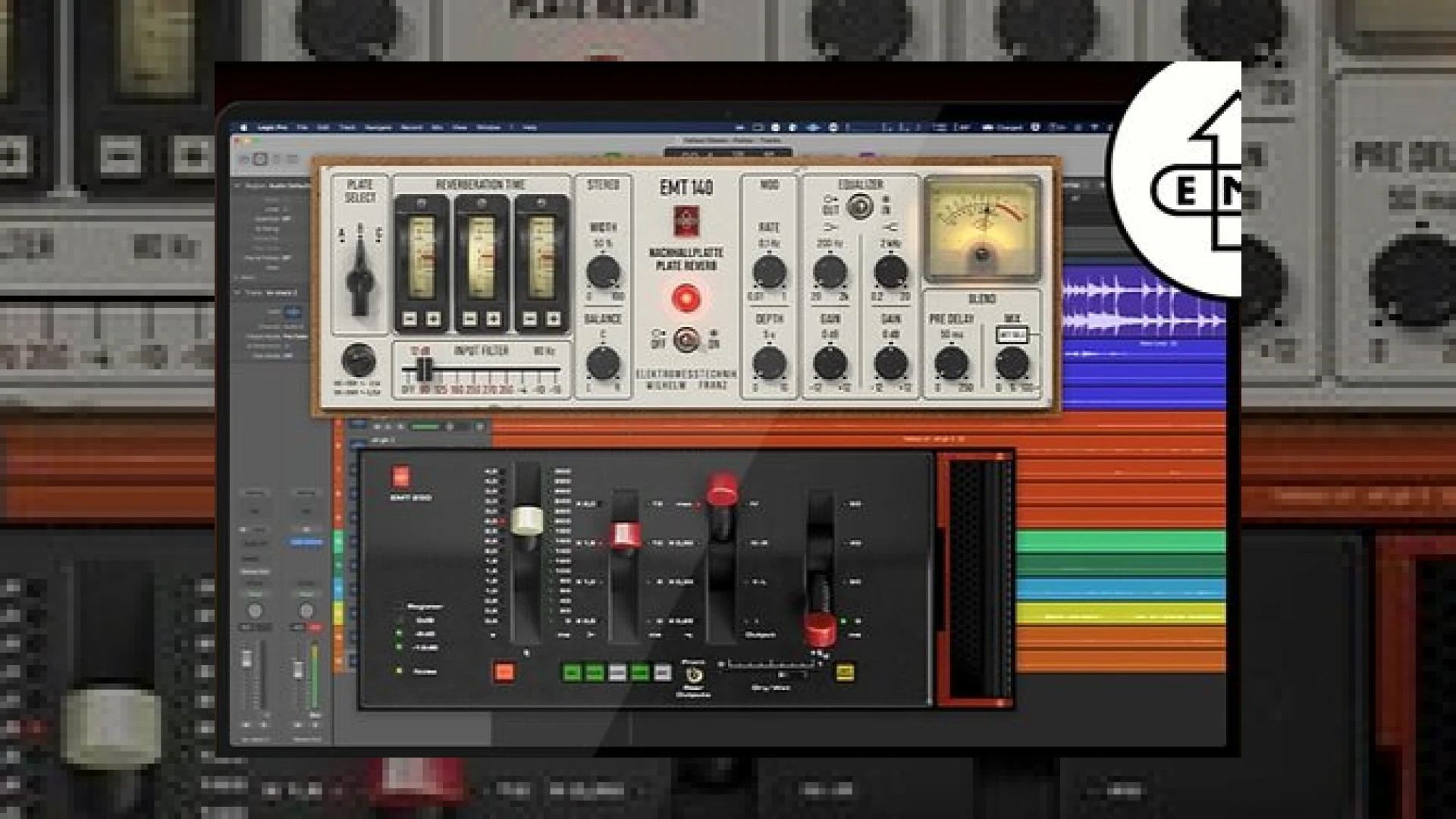
Visual context for Universal Audio’s EMT 140 & 250 plug-ins go native.
For years, mixing and mastering engineers have relied on dedicated DSP hardware cards to run the industry’s most accurate emulations of vintage hardware reverbs. However, a major paradigm shift is happening as Universal Audio continues to expand its highly sought-after native software library. In an exciting development for the global music production community, universal audio’s emt 140 & 250 plug-ins go native, allowing creators to run these legendary reverb tools directly on their host computer’s CPU without requiring an Apollo interface or UAD Satellite accelerator.
The transition to native processing means that home studio producers, mobile engineers, and professional mastering houses can access these classic acoustic spaces instantly. Now that universal audio’s emt 140 & 250 plug-ins go native, the barriers to accessing high-end professional spatial effects have officially dropped. These meticulously crafted emulations capture the undeniable character of the original German hardware units, which defined the sonic landscape of iconic albums by artists ranging from Pink Floyd and The Beatles to Radiohead and Prince. For those seeking to prepare their mixes for commercial-grade release, applying these processors during production adds a profound level of depth before sending your final stereo tracks to SM Mastering Audio Articles for professional polishing.
Why Universal Audio’s EMT 140 & 250 Plug-ins Go Native is a Game Changer
The EMT 140 emulation models three distinct, uniquely voiced plate configurations from the historic Plant Studios in California, capturing the rich, dense decay that only physical metal plates can provide. On the digital side, the EMT 250 emulation delivers the lush, deeply modulated sound of the world’s very first electronic digital reverb, sourced directly from Ocean Way Recording’s legendary “golden unit.” Since universal audio’s emt 140 & 250 plug-ins go native, you can instantiate dozens of these premium processors across your DAW sessions without worrying about DSP limits. This is incredibly beneficial when building complex, multi-layered mixes that require separate, cohesive acoustic environments for vocals, drums, and synthesizers.
Furthermore, because universal audio’s emt 140 & 250 plug-ins go native, you have the flexibility to take your sessions on the road with a simple laptop setup, free from external hardware dongles. Universal Audio has perfectly optimized these algorithms to run efficiently on modern macOS and Windows operating systems. The software is officially endorsed by EMT International, ensuring that the crossover to native format does not compromise a single ounce of the authentic harmonic character or the legendary frequency response of the physical hardware units.
Specifications & Overview
Below is a technical comparison of the two newly updated native plug-ins:
| Name | Use | Price (Introductory / Regular) | Rating |
|---|---|---|---|
| UAD EMT 140 Classic Plate Reverberator | Vocal spatialization, snare drum decay, acoustic guitar glue | $79 / $199 | 4.9 / 5.0 |
| UAD EMT 250 Classic Electronic Reverb | Vintage digital space, chorus, phase modulation, delay | $79 / $199 | 4.8 / 5.0 |
Practical Studio Workflow Tips
To get the absolute most out of these tools now that universal audio’s emt 140 & 250 plug-ins go native, consider integrating these professional studio techniques into your workflow:
- The Auxiliary Send Setup: Always run your plate reverbs on a dedicated stereo auxiliary track with the Mix control set to 100% wet. This allows you to apply high-pass filters and EQ to the reverb return without affecting the dry, transient signal of your main tracks.
- Leverage the EMT 250’s Multi-Effects: Do not treat the EMT 250 as just a reverb. It features incredible built-in programs for Chorus, Delay, and Space. Try using the Chorus program on synth pads or backing vocals to achieve a wide, vintage 1980s stereo field.
- Pre-Delay Management: Use the pre-delay controls on the EMT 140 to separate your dry vocal transient from the onset of the plate decay. A pre-delay of 20ms to 40ms keeps the lead vocal forward and clear in the mix while still benefiting from a lush background tail.
- Control the Low-End Build-up: Classic plate reverbs can accumulate a massive amount of muddy low-frequency energy. Use the low-cut filters built into the EMT 140 plug-in interface to clean up everything below 150 Hz to keep your kick drum and bass clean.
Conclusion
The release of these native editions represents a major milestone for modern audio engineers who demand uncompromising analog flavor combined with the flexibility of host-based processing. By removing the requirement for DSP hardware, Universal Audio has democratized access to the definitive sounds of record-making history, ensuring these incredible tools remain staple processors in the digital era.
Frequently Asked Questions
Do I need an Apollo interface to run the native EMT 140 and EMT 250 plug-ins?
No. With this native release, you do not need any Universal Audio DSP hardware (such as an Apollo interface or UAD Satellite) to run these plug-ins. They run entirely on your computer’s native CPU.
What formats are supported for these native UAD plug-ins?
Both plug-ins are fully supported on Windows 10 or higher and macOS 10.15 or higher. They are available in VST3, Audio Units (AU), and AAX formats, making them compatible with all major DAWs including Pro Tools, Logic Pro, Ableton Live, and Cubase.
How do the EMT 140 and EMT 250 differ in sound and application?
The EMT 140 simulates physical, analog steel plates, providing a dense, warm, and smooth organic decay that is legendary for vocals and drums. The EMT 250 is an emulation of an early digital hardware unit, offering a brighter, more modulated, lush vintage digital character along with modulation effects like chorus and delay.
🛒 Official Product Info & Where to Buy
Check full technical specs, pricing, and purchase options directly from the official manufacturer or authorized dealer for Universal Audio’s EMT 140 & 250 plug-ins go native.
Written by SM Mastering
Official content on sound engineering, mixing, mastering, and advanced electronic production by SM Mastering.