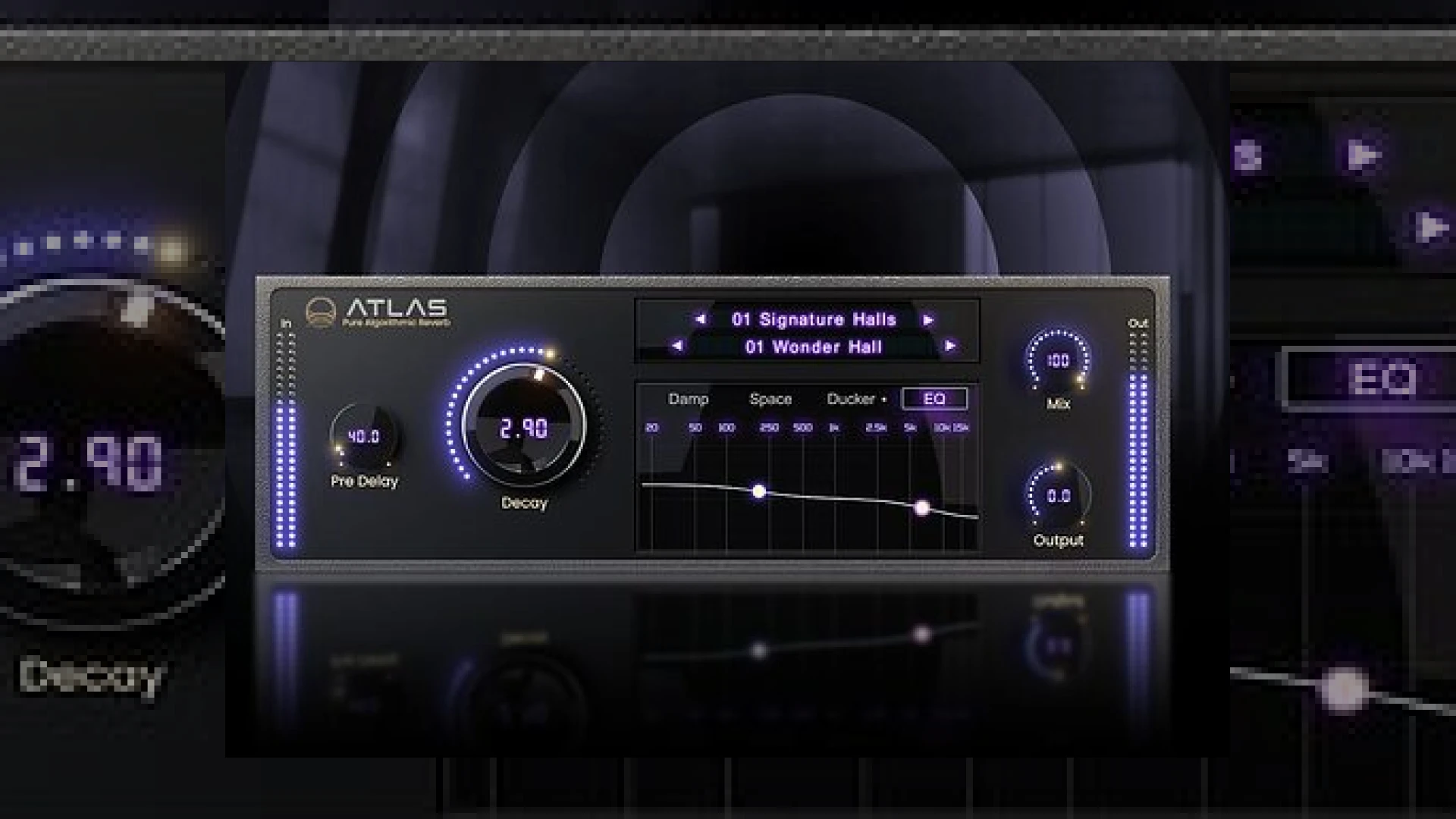
Visual context for Waves release Atlas Reverb.
The industry is abuzz as Waves release Atlas Reverb, their brand-new flagship algorithmic reverb plugin designed to bring vintage warmth and modern flexibility to digital audio workstations. Unlike traditional static convolution engines, this plugin strives to bring dynamic life back into digital spaces. It promises to give vocals, drums, guitars, and full mixes a deep sense of dimension that integrates seamlessly with your tracks, making the reverb feel like part of the original recording rather than an artificial layer.
Why the Waves Release Atlas Reverb Changes the Game
For years, engineers have chosen between convolution reverbs—which capture a static snapshot of a physical space—and algorithmic engines, which offer synthetic flexibility. With the Waves release Atlas Reverb, the engineering team has successfully bridged the gap. They spent thousands of hours in listening tests and fine-tuning to create an engine whose reflections move and modulate in real-time as your music moves.
While brands like Universal Audio have long dominated the hardware emulation space, Waves is taking a unique hybrid algorithmic approach here. Instead of just modeling old electronic components, Atlas focuses on organic behavior. It draws heavy inspiration from the algorithmic reverbs that shaped the massive hits of the 1980s, offering classic chambers, plates, halls, and springs alongside experimental “Dreamscapes” for ambient sound design.
Key Features and Technical Specifications
The user interface of Atlas Reverb is designed to facilitate quick decisions. It features a streamlined browser for instant auditioning of spaces, leaving complex calculations to run automatically under the hood. This design makes it a practical, everyday workhorse rather than an overly complex special effect. Additionally, because of its low latency and minimal CPU footprint, it is equally suited for live sound environments as it is for meticulous studio sessions.
| Name | Use | Price | Rating |
|---|---|---|---|
| Waves Atlas Reverb | Algorithmic Reverb & Spatial Processing | Introductory pricing applies (check official site) | 4.8 / 5.0 |
Practical Studio Workflow Tips
To get the most out of your mixes, we recommend the following professional workflows:
- Use as an Aux Send: To maintain phase alignment and absolute control, set up Atlas Reverb on a dedicated aux bus. Set the mix control to 100% wet and blend to taste. This allows you to apply separate EQ or compression to the reverb tail without affecting the dry source.
- Dynamic Sidechaining: For dense vocal tracks, place a compressor after the reverb plugin on your aux track and sidechain it to the dry lead vocal. This keeps the vocal upfront and dry while letting the reverb bloom beautifully in the gaps between phrases.
- Take Advantage of Low Latency: Since Waves release Atlas Reverb with optimized CPU efficiency, you can safely track live musicians with the reverb active in their headphone cue mixes, enhancing their performance without introducing distracting audio delay.
For more advanced mixing and mastering strategies, explore our resources at SM Mastering Audio Articles.
Conclusion
With the official Waves release Atlas Reverb, producers and mastering engineers have a powerful new tool in their spatial audio toolkit. By prioritizing organic behavior and smooth modulation over static modeling, Waves has created a reverb that truly glues a mix together. Whether you are looking for a subtle room on an acoustic guitar or a massive, dreamy hall on a lead vocal, Atlas Reverb delivers world-class results without dragging down your CPU.
Frequently Asked Questions
What makes Atlas Reverb different from standard convolution reverbs?
While convolution reverb captures a static snapshot of a physical space, Atlas Reverb focuses on dynamic behavior. Its reflections move and modulate as the music moves, providing a more connected and natural-sounding integration with your mix.
Can Atlas Reverb be used in live sound scenarios?
Yes. Waves designed Atlas Reverb with extremely low latency and highly optimized CPU consumption, making it stable enough for live performance environments as well as heavy studio sessions.
What types of reverb spaces does Atlas Reverb offer?
Atlas Reverb offers classic algorithmic styles including rooms, chambers, plates, and springs, alongside “Signature Halls” and highly creative “Dreamscapes” for atmospheric and experimental sound design.
🛒 Official Product Info & Where to Buy
Check full technical specs, pricing, and purchase options directly from the official manufacturer or authorized dealer for Waves release Atlas Reverb.

Written by SM Mastering
Official content on sound engineering, mixing, mastering, and advanced electronic production by SM Mastering.