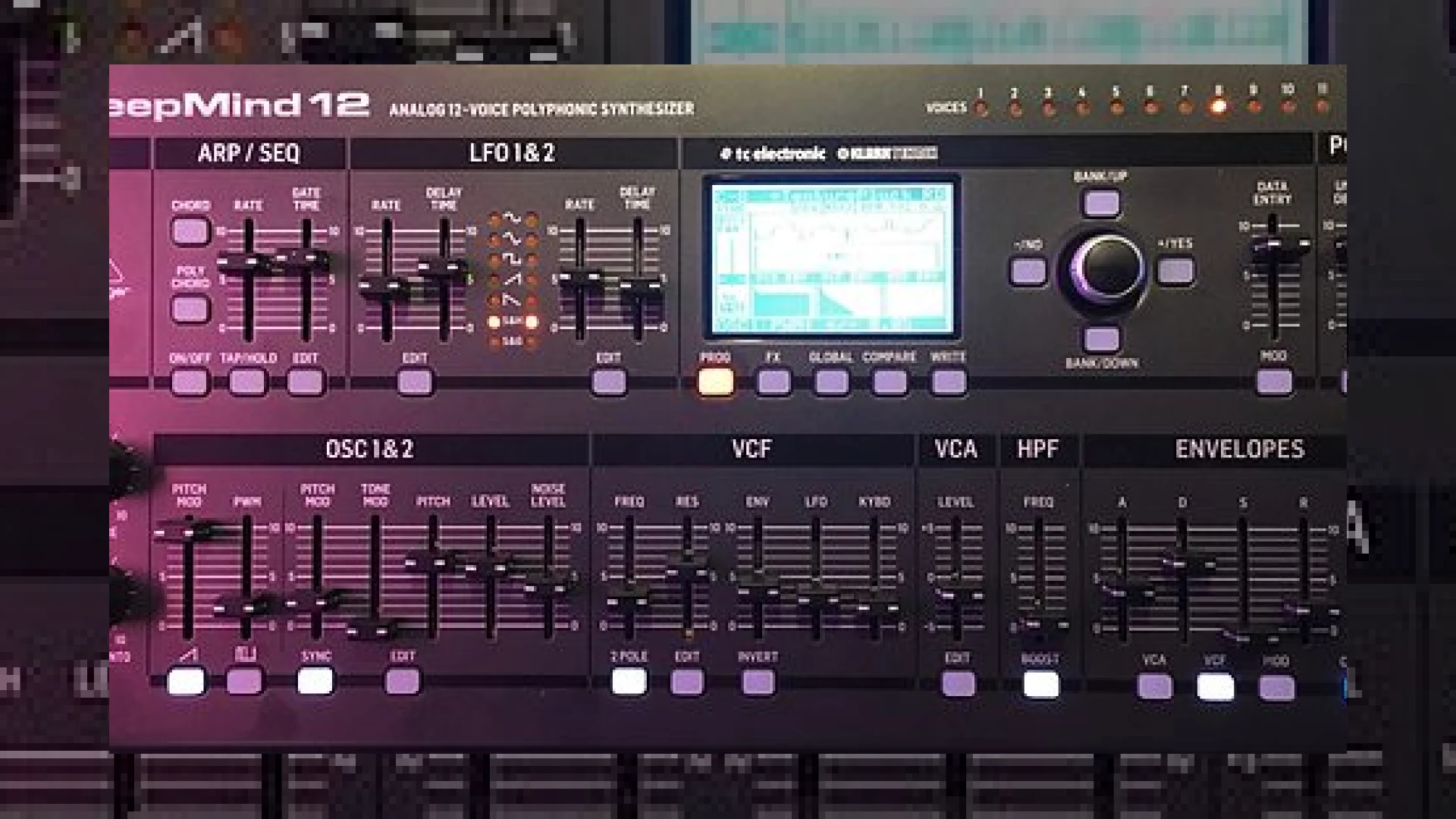
Visual context for Two new models join Behringer Deepmind series.
The analog synthesizer market has experienced a significant shift over the past decade, driven heavily by accessibility and high-fidelity sound engines. In a move that has captured the attention of electronic music producers and hardware enthusiasts worldwide, two new models join behringer deepmind series to expand the possibilities of modern analog synthesis. At SM Mastering, we often analyze how hardware synthesizers integrate into the mastering and mixing pipeline. The addition of these instruments provides a cost-effective route to rich, polyphonic analog textures that can elevate your productions before they even reach the final mastering stage.
Why Two New Models Join Behringer Deepmind Series
Understanding the market demand is key to recognizing why these instruments were developed. With the announcement that two new models join behringer deepmind series, synthesists now have the choice between a highly portable keyboard setup and a rack-mountable desktop powerhouse. This expansion addresses the needs of both touring musicians who require compact setups and studio owners looking to maximize desk space. When preparing tracks for high-end processing, utilizing dedicated hardware synthesizers like these can introduce organic harmonic saturation that digital emulations often struggle to replicate. For those looking to master their tracks with professional precision, you can learn more about optimizing your mixdowns on the SM Mastering Audio Articles platform.
Technical Breakdown of the Deepmind 12 Desktop and Deepmind 6
The Deepmind 12 Desktop ($899) is a rack-mountable module version of the acclaimed original Deepmind 12. It retains the entire 12-voice architecture, pristine built-in TC Electronic and Klark Teknik effects, and deep modulation matrix, while removing the physical keyboard. Crucially, a new polychain feature has been integrated, allowing users to link multiple Deepmind modules to expand their total voice count. This shows why two new models join behringer deepmind series to target different studio sizes, offering incredible scaling potential.
Additional product view and interface angle for Two new models join Behringer Deepmind series.
On the other side of this release, the Deepmind 6 ($699) scales down the polyphony to 6 voices and features a highly playable three-octave keyboard. While it does omit the integrated Wi-Fi found on the original, it keeps the excellent four-engine effects processor, aftertouch capabilities, and the same robust analog signal path. As these two new models join behringer deepmind series, producers have more options than ever to find the exact balance of physical size, voice count, and pricing for their projects.
| Name | Use | Price | Rating |
|---|---|---|---|
| Behringer Deepmind 12 Desktop | Studio Rackmount/Desktop Polyphonic Synth | $899 | 4.8 / 5 |
| Behringer Deepmind 6 | Compact Performance & Studio Analog Synth | $699 | 4.6 / 5 |
Practical Studio Workflow and Integration
Integrating these synthesizers into your DAW-based studio requires a solid understanding of MIDI routing and analog signal paths. Using high-quality audio interfaces from developers like Universal Audio ensures that the analog warmth of the Deepmind series is captured with pristine clarity. When setting up the Deepmind 12 Desktop, utilize the polychain functionality to create massive, multi-layered pads that span across the stereo field, keeping your mid frequencies clean for the mastering process.
For the Deepmind 6, its compact three-octave layout makes it a perfect MIDI controller and lead synthesizer combined. Try tracking your basslines in mono while keeping the effects engines active to build depth. Remember to always gain stage your synthesizer inputs properly inside your DAW to avoid unwanted digital clipping before sending your files to a professional mastering engineer.
Conclusion
In conclusion, it is clear that when two new models join behringer deepmind series, the landscape of affordable analog synthesis becomes even more competitive. Whether you choose the space-saving, expandable Deepmind 12 Desktop or the highly portable Deepmind 6, both instruments offer incredible sonic flexibility. From rich basslines to evolving soundscapes, these synths deliver excellent raw material that makes the mastering stage a true pleasure.
Frequently Asked Questions
What are the main differences between the Deepmind 12 Desktop and Deepmind 6?
The Deepmind 12 Desktop features 12-voice polyphony, is designed as a rack-mountable module without keys, and includes Wi-Fi. The Deepmind 6 features 6-voice polyphony, a physical 3-octave keyboard, and lacks built-in Wi-Fi, though it retains all core sound design and effects capabilities.
Can I chain the Deepmind 12 Desktop with an original Deepmind 12 keyboard?
Yes, both of these new models feature a built-in polychain option. This allows you to chain multiple Deepmind units together to increase your overall voice count dynamically.
How do these synthesizers perform during the audio mastering stage?
Their true analog signal path provides rich, natural harmonics and warmth. When mixed properly, tracks recorded with the Deepmind series translate beautifully during mastering, maintaining physical depth and transient clarity.

Written by SM Mastering
Official content on sound engineering, mixing, mastering, and advanced electronic production by SM Mastering.