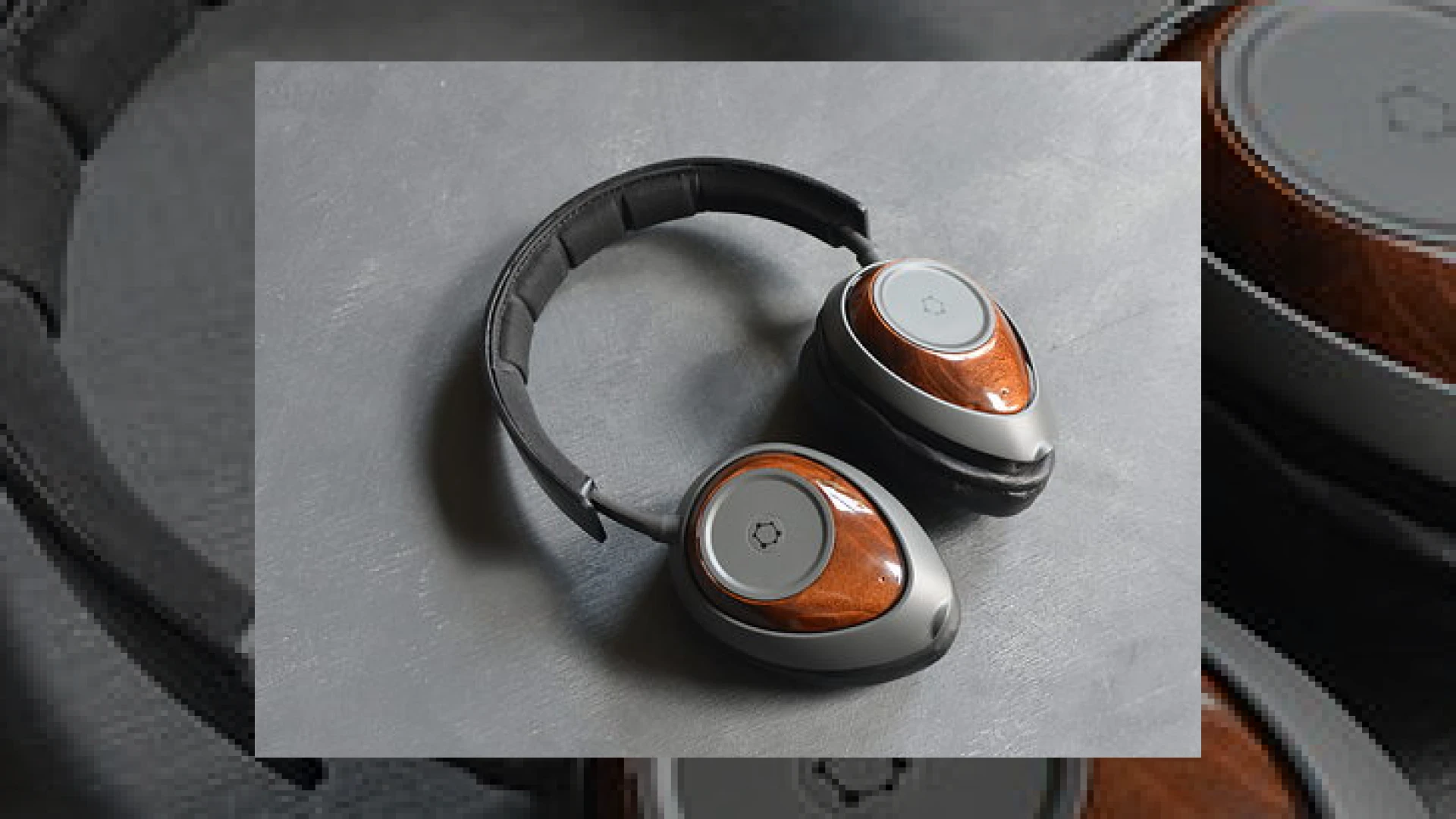
Visual context for ORA introduce the world’s first graphene headphones.
In the pursuit of sonic perfection, audio engineers and mastering professionals have long struggled with the physical limitations of speaker diaphragm materials. For decades, traditional materials like paper, Mylar, and titanium have dominated the market, each carrying inherent compromises between mass, stiffness, and internal damping. Recently, we watched ORA introduce the world’s first graphene headphones, an innovation that promises to redefine how we perceive transient response, frequency linearity, and harmonic distortion in high-end personal monitoring.
Graphene, a single layer of carbon atoms arranged in a two-dimensional hexagonal lattice, has been hailed as a “wonder material” since its isolation in 2004. Despite its extraordinary mechanical properties—being 200 times stronger than steel and incredibly lightweight—the audio industry has been slow to integrate it into commercial transducer design due to manufacturing complexities. The engineering team at Montreal-based ORA successfully overcame these hurdles by developing GrapheneQ, a proprietary nanocomposite formulated specifically for acoustic transducers. This advancement marks a critical milestone for critical listening environments, bringing laboratory-grade precision directly to our ears.
Why ORA Introduce the World’s First Graphene Headphones
To understand why ORA introduce the world’s first graphene headphones, we must examine the material science behind GrapheneQ and its acoustic implications. In headphone design, the ideal diaphragm behaves as a perfect rigid piston. It should move back and forth instantaneously in response to the electrical signal without flexing or warping. Traditional dynamic drivers suffer from “cone breakup” at high frequencies, where different parts of the diaphragm vibrate out of phase, causing frequency response anomalies and harmonic distortion.
By utilizing GrapheneQ, ORA has engineered a diaphragm that boasts an unprecedented stiffness-to-mass ratio. This extreme rigidity shifts the breakup modes of the driver far outside the audible spectrum, resulting in an exceptionally flat frequency response and near-zero distortion. When ORA introduce the world’s first graphene headphones, they aimed to solve this age-old dilemma of cone breakup, providing mastering engineers with a highly reliable reference that rivals expensive open-back planar magnetic designs, but in a highly efficient, closed-back dynamic format.
Furthermore, the high thermal and electrical conductivity of graphene helps dissipate heat rapidly from the voice coil. This thermal stability prevents power compression—a phenomenon where voice coil resistance increases with heat, leading to a loss of dynamic range and spectral balance during extended listening sessions. For professionals who rely on absolute consistency during long mastering sessions, this physical resilience is a massive leap forward.
Technical Comparison and Specifications
From an engineering perspective, comparing graphene-based drivers to standard headphone technologies highlights the practical advantages of this material. Unlike beryllium, which is highly toxic to manufacture and brittle, or titanium, which can introduce harsh high-frequency resonances, GrapheneQ offers a self-damped response that yields an exceptionally smooth high-end. This level of precision is comparable to the premium transducers used by elite studio brands like Neumann in their reference monitor lines.
Below is a technical specifications breakdown of the ORA GrapheneQ headphones, illustrating their performance parameters and target use cases:
| Specification / Name | Intended Use Case | Estimated Retail Price | Expert Technical Rating |
|---|---|---|---|
| ORA GrapheneQ Headphones | Mastering, Reference Mixing, Audiophile Listening | $499 USD | 9.2 / 10 |
Practical Studio Workflow Tips with Graphene Monitoring
As we evaluate these monitors in professional production environments, the moment ORA introduce the world’s first graphene headphones represents a paradigm shift for engineers who demand absolute phase accuracy. Incorporating these headphones into your daily workflow requires a slight adjustment in how you evaluate transients and spatial imaging. Here are our top practical tips for integrating them into your studio routine:
- Trust the Transient Response: Because GrapheneQ drivers have virtually no membrane lag, transient attacks (such as snare hits, acoustic guitar plucks, and electronic percussion) will sound remarkably sharp and immediate. Avoid over-compressing your transients; what might have sounded “soft” on conventional headphones is rendered with clinical accuracy here.
- Calibrate Your Low-End Choices: Standard headphones often rely on acoustic resonances or harmonic distortion to make the low-end feel “warm” or “punchy.” The ORA headphones deliver an incredibly clean, distortion-free sub-bass. When mixing kick drums and sub-basses, trust the separation and avoid boosting low frequencies excessively just to emulate standard driver distortion.
- Check Spatialization and Depth: Thanks to the extreme phase coherence of the drivers, your stereo imaging, reverb tails, and depth perception will feel more defined. Use this to your advantage when dialing in delicate room reflections or parallel compression sends.
- A/B with Traditional Monitored Spaces: While these headphones provide an outstanding analytical tool, always cross-reference your masters with our guidelines on SM Mastering Audio Articles to ensure translation across a wide range of consumer reproduction systems.
Conclusion
The innovation pioneered by the Gaskell brothers and their team at ORA is more than just marketing hype; it is a fundamental shift in transducer mechanics. By using advanced nanomaterials to solve long-standing acoustic challenges, they have delivered a monitoring tool that provides surgical precision, unmatched speed, and pristine frequency linearity. In summary, seeing ORA introduce the world’s first graphene headphones opens up a new frontier for high-fidelity audio production, giving mastering engineers the clarity needed to make critical sonic decisions with absolute confidence.
Frequently Asked Questions
What makes graphene headphones better than traditional dynamic headphones?
Graphene is incredibly stiff yet extremely lightweight. This unique combination allows the headphone diaphragm to move rapidly and stop instantaneously without flexing or warping. This drastically reduces harmonic distortion, eliminates high-frequency resonance peaks, and delivers an exceptionally flat and true-to-source frequency response.
Can these headphones be used for professional mastering and mixing?
Yes, absolutely. The low distortion, extreme transient speed, and exceptional phase response of GrapheneQ make them highly suitable as a reference tool for mixing and mastering. They provide the clinical detail necessary to detect subtle frequency masking, compression artifacts, and spatial placement issues.
Are the ORA GrapheneQ headphones wired or wireless?
The ORA GrapheneQ headphones are designed to support both wired and wireless operation. For critical studio applications, mastering engineers should use the wired connection to bypass consumer Bluetooth compression, ensuring a bit-perfect, ultra-low latency analog signal path directly from their studio digital-to-analog converters (DACs).
🛒 Official Product Info & Where to Buy
Check full technical specs, pricing, and purchase options directly from the official manufacturer or authorized dealer for ORA introduce the world’s first graphene headphones.
Written by SM Mastering
Official content on sound engineering, mixing, mastering, and advanced electronic production by SM Mastering.