At the landmark music trade show, Summer NAMM 2018: Zynaptiq Intensity was introduced to the world, promising to redefine how we perceive audio detail enhancement. Unlike traditional compressors or spectral saturators, this revolutionary plugin uses advanced algorithms commonly found in facial recognition software to carve out clarity, definition, and loudness from complex mixes. At SM Mastering, we immediately recognized its potential to transform modern digital master files, offering a unique dynamic touch that traditional processors simply cannot replicate.
Indeed, during Summer NAMM 2018: Zynaptiq Intensity captured the attention of high-end mastering engineers due to its sheer simplicity and massive computational power. Under the hood, the plugin splits the incoming signal into thousands of frequency bands, analyzing them in real-time to enhance the features that are most critical to human hearing. This is not simple multiband compression; it is a proprietary method of micro-dynamic enhancement that adds an expensive-sounding polish to any master track.
Why Summer NAMM 2018: Zynaptiq Intensity Changed the Audio Industry
The technology behind Summer NAMM 2018: Zynaptiq Intensity relies on neural network principles to prevent clipping while maximizing perceived loudness. Many engineers who initially compared it to tools from iZotope realized that Intensity operates in a class of its own. It dynamically adjusts the fast transient details and continuous tones separately, giving music a sense of three-dimensional depth and a wide stereo image without introducing phase cancellation issues.
When analyzing the historical context of Summer NAMM 2018: Zynaptiq Intensity represents a massive leap forward in digital mastering assistance. Unlike traditional limiters from companies like Universal Audio, which rely on analog modeling of physical hardware circuits, Zynaptiq embraces purely digital, mathematically complex approaches to signal manipulation. This makes it an invaluable asset when you need to quickly bring a dull mix to life.
Ultimately, the workflow established by Summer NAMM 2018: Zynaptiq Intensity has changed how we approach high-end digital mastering. By integrating this processor at the front or end of your mastering chain, you can achieve unmatched clarity and punch. To discover more about how we utilize these cutting-edge digital processors in our specialized analog-hybrid mastering chain, feel free to explore our collection of expert guides at SM Mastering Audio Articles.
Technical Specifications
| Specification Parameter | Details & Description |
|---|---|
| Product Name | Zynaptiq Intensity |
| Primary Use | Mastering, Mixing, Sound Design, Detail Enhancement |
| Price (MSRP) | $359 USD |
| Key Feature | Facial-recognition style algorithm for transient processing |
| Industry Rating | 4.8 / 5 Stars |
Practical Studio Workflow Tips for Zynaptiq Intensity
- Keep the Settings Subtle: Because Intensity is incredibly powerful, a little goes a long way. Start with the Intensity slider at 0% and slowly dial it up to between 10% and 25% for mastering applications.
- Utilize the Bias Control: The Bias control acts as a frequency-dependent weighting curve. Use it to prevent the algorithm from over-processing the low-end energy of your kick drums and basslines.
- Automate for Transitions: Automate the Intensity parameter to increase by 5% during chorus sections to give your track an organic, explosive lift when the hook drops.
Conclusion
Since its groundbreaking debut, Zynaptiq Intensity has cemented itself as an indispensable tool for professional engineers globally. Its unique ability to add loudness, density, and clarity without destroying the dynamic integrity of your mix makes it a standout choice for modern hybrid mastering environments.
Frequently Asked Questions (FAQ)
Is Zynaptiq Intensity a dynamic range compressor?
No, it does not function like a traditional compressor. Instead, it uses an intelligent algorithm to adjust the micro-dynamics of a signal on a highly detailed frequency scale, making quiet details more audible without flattening the overall transient peaks.
Can I use Zynaptiq Intensity on individual tracks or only on the master bus?
While it is highly popular on the master bus, it is incredibly effective on individual tracks such as vocals, acoustic guitars, and drum groups to bring out hidden textures and micro-details.
Does this plugin introduce high latency during live mixing?
Due to the advanced mathematical analysis occurring in real-time, Intensity does introduce moderate latency. It is highly recommended to use it during the mixing and mastering phases rather than live tracking.
🛒 Official Product Info & Where to Buy
Check full technical specs, pricing, and purchase options directly from the official manufacturer or authorized dealer for Summer NAMM 2018: Zynaptiq Intensity.
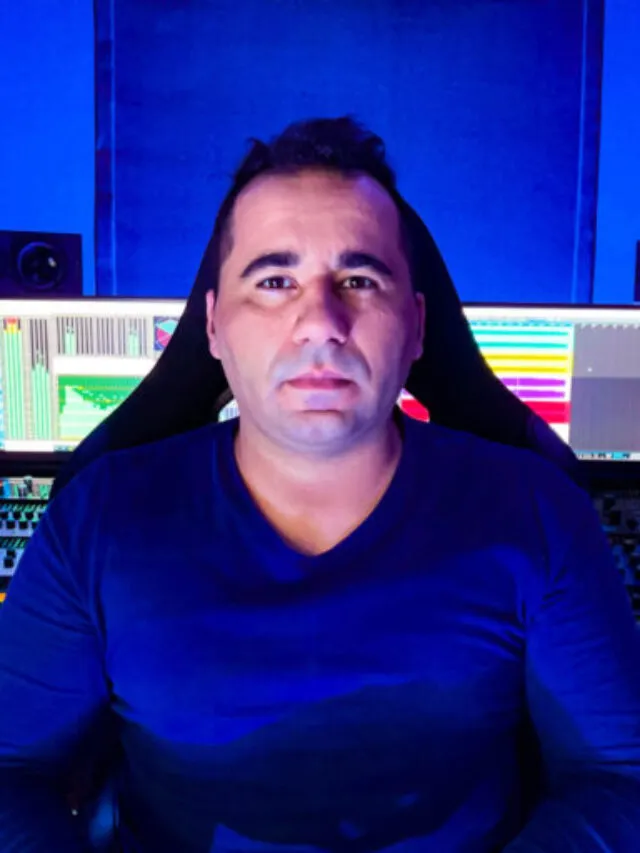
Written by SM Mastering
Official content on sound engineering, mixing, mastering, and advanced electronic production by SM Mastering.