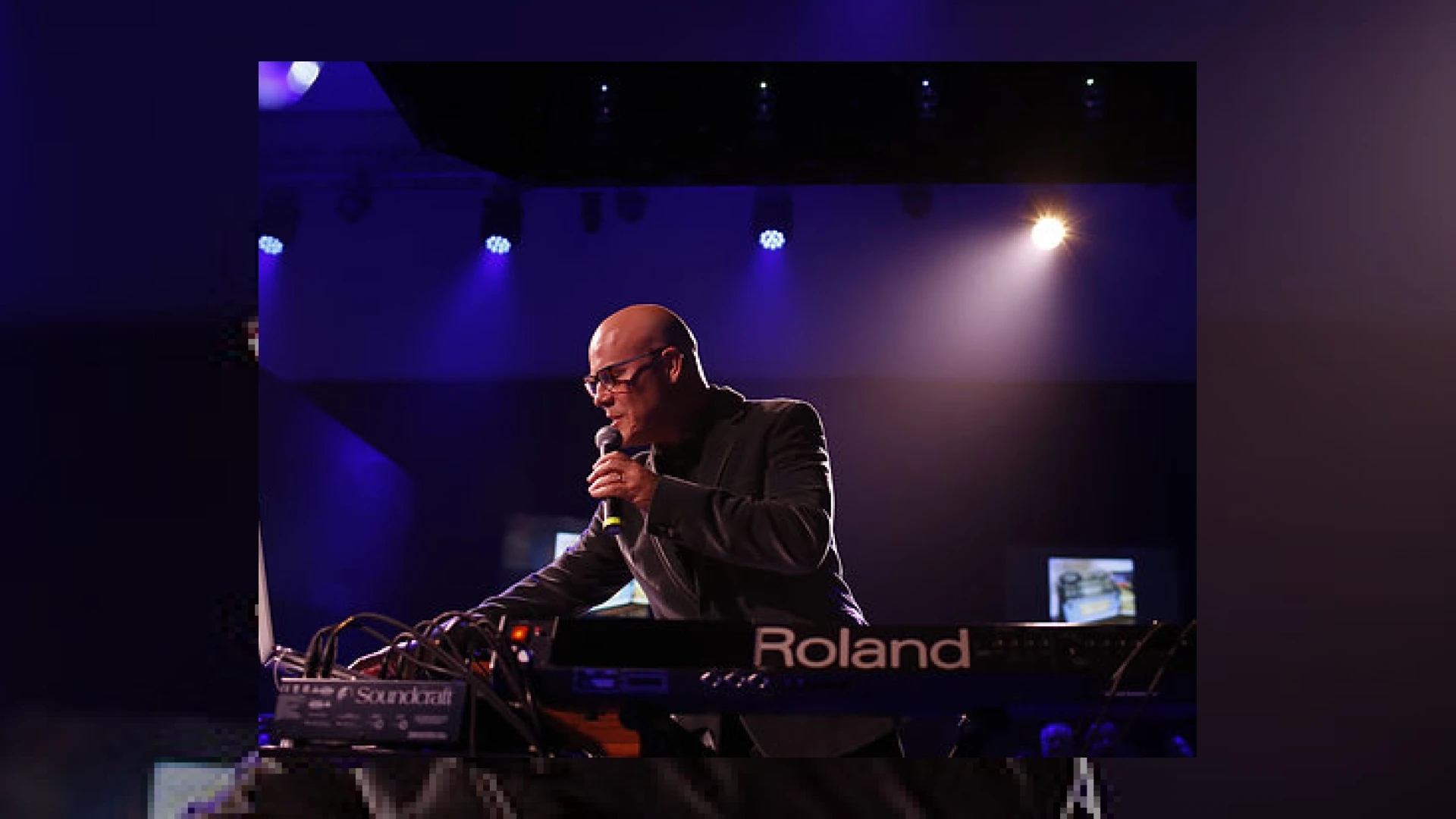
Visual context for Thomas Dolby performs live in Roland Cloud.
The intersection of classic synth-pop and modern cloud-based synthesis has reached a historic milestone. When we look at how thomas dolby performs live in roland cloud, it represents more than just a promotional virtual concert; it marks a paradigm shift in how legendary hardware-based workflows transition into the digital streaming era. As mastering engineers, analyzing these high-profile live digital broadcasts gives us invaluable insights into how modern virtual instruments translate in real-time, high-fidelity environments. This event highlights the absolute viability of cloud-based DSP systems under the pressure of live performance conditions.
Analyzing the Tech: Thomas Dolby Performs Live in Roland Cloud
For this unique virtual broadcast, thomas dolby performs live in roland cloud using a remarkably streamlined digital setup. Instead of the massive walls of analog synthesizers and hardware sequencers that defined his early career, his modern live rig relies on just a few physical keyboard controllers, a drum pad, and a MacBook running virtual instruments. By leveraging the computational power of modern CPU architectures, the entire sound generation process is offloaded to software emulations of legendary analog instruments.
During the event, Dolby showcases software versions of classic synthesizers like the Jupiter-8, Juno-106, and the D-50. For live streaming, latency and system stability are paramount. Offloading hardware processing to the cloud and local digital instruments is a methodology we regularly analyze at SM Mastering, especially when discussing modern synthesis techniques in our SM Mastering Audio Articles. The transition from heavy outboard gear to precise software emulations proves that virtual synthesis has reached a professional peak, matching the dynamic response and sonic weight of physical circuits.
Specifications of the Virtual Performance Environment
To understand the performance capabilities of the software instruments used during this historic digital showcase, let us break down the key tools utilized in the Roland Cloud ecosystem:
| Name | Use | Price | Rating |
|---|---|---|---|
| Roland Cloud Ultimate Suite | Virtual instrument library & analog synthesis | $19.99 / month | 4.8 / 5 |
| SYSTEM-8 Software Synthesizer | Modern PLUG-OUT engine control | Included in Ultimate | 4.6 / 5 |
| SRX Keyboard Suite | High-fidelity sample-based ROMpler sounds | Included in Ultimate | 4.5 / 5 |
Practical Studio Workflow Tips Inspired by the Performance
Seeing how thomas dolby performs live in roland cloud gives modern studio engineers dynamic proof of how to configure software synthesizers for zero-latency environments. Below are practical steps you can implement in your own DAW setup to replicate this stability and sonic richness:
- Optimize Buffer Size for Live Playback: Set your DAW’s buffer size to 64 or 128 samples when playing virtual instruments live. This minimizes physical key-to-audio latency, preserving the tactile response of the performance.
- Utilize Gain Staging Before Mastering: Software synths often output hot signals. Keep your digital instrument outputs peaking around -12 dBFS to maintain clean headroom before hitting dynamic processors or sending your tracks to professional mastering houses.
- Incorporate Analog Emulation Preamps: To give cloud-based digital synths the warmth of classic hardware, insert analog-modeled preamp plugins from developers like Universal Audio across your instrument channels.
- Commit and Freeze Tracks: Once your MIDI arrangement is finalized, freeze or bounce your software instrument tracks to high-resolution 24-bit WAV files to conserve CPU resources and guarantee phase-coherent playback.
The Impact of Cloud Synthesis on Modern Mastering
From an audio mastering perspective, virtual instruments present unique benefits and challenges. Synthesizers sourced from cloud platforms offer a level of pristine clarity and low-noise floor that hardware units struggle to achieve. However, they can sometimes lack the natural harmonic saturation and micro-timing variations inherent in physical analog circuits.
When thomas dolby performs live in roland cloud, the mix engineer must balance this digital precision with dynamic processing. To replicate this balance in your studio, utilizing saturation tools from industry leaders like Soundtoys can inject that coveted analog grit into your virtual instrument tracks prior to final mastering, ensuring your mixes sound deep, wide, and commercially competitive.
Conclusion
The digital landscape is evolving rapidly, and the realization of seamless live-streamed concerts using software-only rigs marks a vital turning point. When thomas dolby performs live in roland cloud, it serves as a masterclass in modern music production, showing that a minimal physical footprint can still deliver a monumental, stadium-ready sound. By adopting these high-efficiency cloud-based synthesis workflows and pairing them with meticulous mixing and professional mastering, you can elevate your productions to match the sonic standards of the industry’s great pioneers.
Frequently Asked Questions
What synthesizers are featured in the Roland Cloud catalog?
The Roland Cloud platform features incredibly accurate software recreations of legendary synthesizers, including the Jupiter-8, Juno-106, D-50, JV-1080, and modern hardware-software hybrid systems like the SYSTEM-8. These virtual instruments recreate the original circuit behavior of their physical counterparts.
How can I replicate the setup from when thomas dolby performs live in roland cloud?
To replicate this streamlined live workflow, you need a stable host DAW, a high-performance laptop, a MIDI controller keyboard, and an active subscription to Roland Cloud. Ensure your audio interface is configured to a low buffer size to minimize latency during live playback.
Does software-based synthesis hold up compared to original analog hardware?
Yes, modern virtual instruments feature advanced analog circuit behavior modeling that captures the subtle warmth, nonlinearities, and characteristics of physical components. For both live performance and studio mastering, software instruments offer unmatched reliability, recallability, and pristine signal-to-noise ratios.
Written by SM Mastering
Official content on sound engineering, mixing, mastering, and advanced electronic production by SM Mastering.