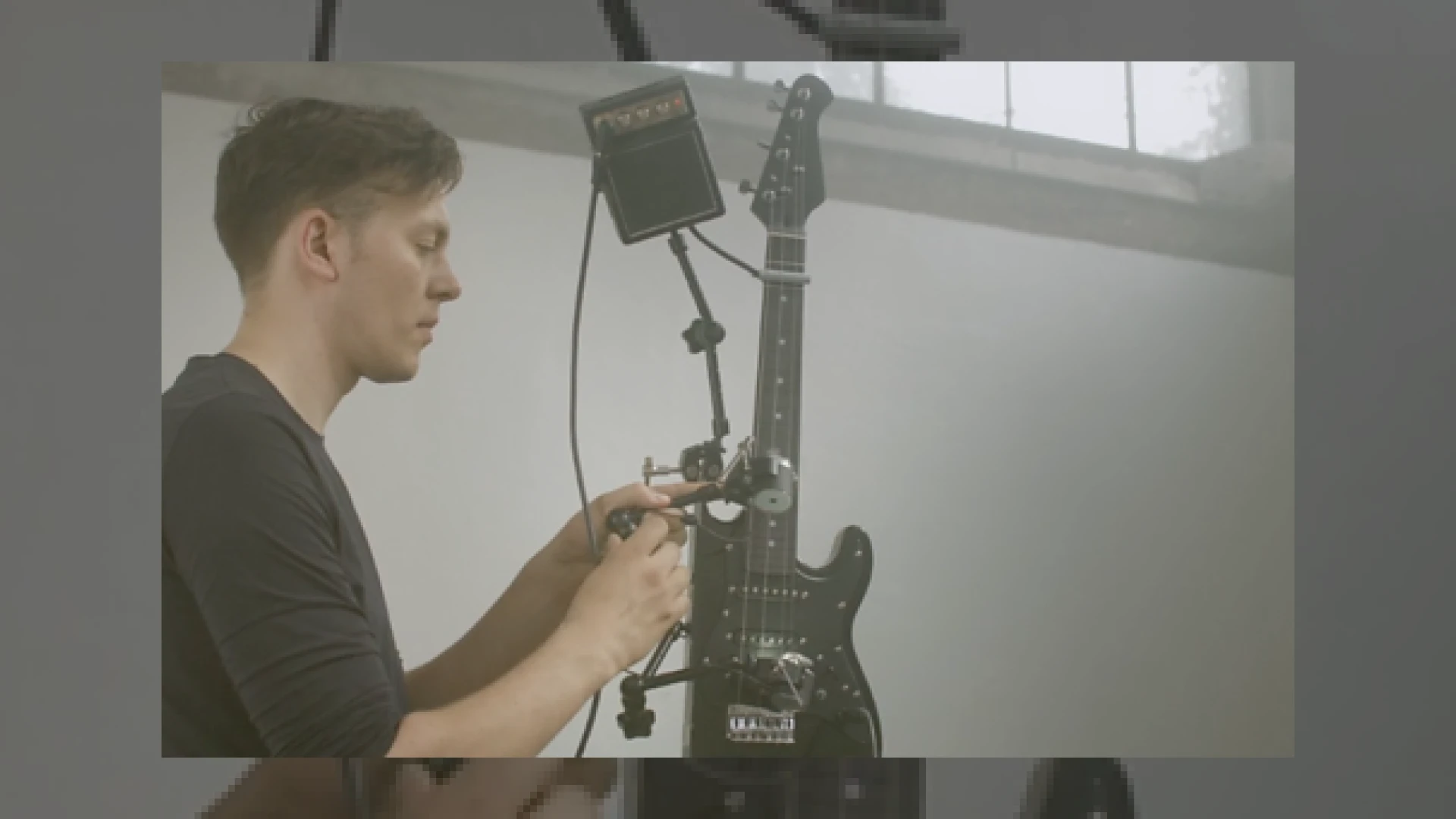
Visual context for Watch Moritz Simon Geist make robot music.
In the evolving landscape of electronic music production, the boundary between hardware synthesis and acoustic physical movement continues to blur. As mastering engineers, we constantly analyze how transients, acoustics, and mechanical actions shape the final master. A prime example of this convergence is found when you watch moritz simon geist make robot music, a fascinating process where self-made futuristic robotic instruments generate physical sounds that are then processed inside a modern Digital Audio Workstation (DAW) and prepared for distribution.
Why You Should Watch Moritz Simon Geist Make Robot Music
Moritz Simon Geist, an acclaimed media artist and researcher teaching at NYU Berlin, has pioneered what he calls Robotic Electronic Music (R.E.M). When we watch moritz simon geist make robot music, we are not just looking at novelty; we are witnessing a deep technological exploration of how physical materials—like metal, plastics, and solenoids—can replace virtual synthesizers. Geist uses specialized sequencing tools, often integrating his setups with platforms like Ableton Live, to send MIDI notes directly to physical actuators. These actuators strike physical objects, producing authentic acoustic transients that possess an organic depth unmatched by standard digital samples.
Geist’s forthcoming EP, The Material Turn, followed by his debut LP via Kompakt, marks a major milestone in mechanical music production. It is touted as the world’s first techno record played entirely by self-made robotic instruments. His video for the opening track “Entropy” serves as an educational blueprint for integrating robotics with club-ready arrangements.
The Technical Mechanics Behind Robotic Sound Generation
To truly appreciate this sonic art form, we must examine the signal chain. If you watch moritz simon geist make robot music in his studio sessions, you will see a complex array of microcontrollers, 3D-printed parts, and analog circuits. From a mastering engineer’s perspective, recording these robotic instruments presents unique challenges. The initial transient of a solenoid striking a metal plate is incredibly sharp and fast. Standard digital compression can easily squash these natural dynamics. Thus, capturing the raw acoustic performance of these robots requires high-headroom preamps and precise microphone placement to balance the mechanical noise with the desired musical pitch.
Because these sounds are generated in a real physical room, room acoustics play a massive role. Unlike a sample loaded from a drive, a robot striking a block of wood captures the natural early reflections of the space. This injects three-dimensional life into the mix, making the eventual mastering process much more dynamic and rewarding.
Essential Components of Robotic Music Production
To recreate or adapt these robotic workflows in your own production suite, specific hardware and software tools are required. When you watch moritz simon geist make robot music, the synergy of physical actuators and digital clocking becomes the focal point. Below is a specification table of the primary tools utilized in physical-robotic music setups.
| Name | Use | Est. Price | Expert Rating |
|---|---|---|---|
| Solenoid Actuators (DIY) | Physical striking of acoustic elements and metals | $5 – $15 each | 4.5 / 5 |
| Teensy / Arduino Microcontroller | Translating digital MIDI signals to electrical voltage pulses | $20 – $40 | 4.8 / 5 |
| Solid-State Preamp | Capturing clean, ultra-fast physical acoustic transients | $500 – $1,500 | 4.7 / 5 |
| Ableton Live Suite | MIDI sequencing, clock sync, and master routing | $749 | 4.9 / 5 |
For more deep dives into advanced studio techniques, acoustic treatments, and digital signal processing, check out our comprehensive guides on SM Mastering Audio Articles.
Practical Studio Workflow Tips for Physical Transients
If you want to watch moritz simon geist make robot music and apply those physical acoustic principles to your own mixing and mastering workflow, consider these professional tips:
- Control the Transients: Robotic strikes can produce extreme, unpredictable transient spikes. Use fast-acting limiters or tape saturation to tame these peaks without destroying the organic feel.
- Embrace the Mechanical Noise: The whirring of motors and clicking of relays adds unique texture. Instead of gating them out completely, use parallel compression to glue these ambient elements into the rhythm.
- Phase Alignment: If you are multi-mic’ing a robotic installation, always check phase relationships. Real physical sound sources captured in real-time are highly susceptible to phase cancellation.
- Incorporate Hybrid Sequencing: Mix digital synthesis with physical triggers to create a rich, layered acoustic-electronic hybrid.
Conclusion
Moritz Simon Geist’s Robotic Electronic Music bridges the gap between mechanical engineering and modern electronic club culture. By using physical elements to generate acoustic signals, he introduces a level of micro-timing and sonic complexity that digital systems can only hope to emulate. Exploring his methods offers producers invaluable insights into transient control, room acoustics, and the power of physical performance in the digital age.
Frequently Asked Questions
How does Moritz Simon Geist synchronize his robots with a DAW?
He utilizes microcontrollers like Arduino or Teensy connected to custom-built driver circuits. The DAW sends standard MIDI note messages, which are translated into electric currents that fire solenoids and triggers in perfect synchronization with the project’s master tempo.
What are the challenges of mastering robotic electronic music?
The primary challenge lies in dynamic range control. Physical robotic strikes produce exceptionally fast, unpredictable transients. Mastering engineers must utilize soft clipping, high-headroom analog gear, and precise dynamic EQ to control these peaks without sacrificing punch.
Can I build my own music-making robots at home?
Yes. With open-source microcontrollers, cheap solenoid actuators, and basic coding knowledge, anyone can construct simple striking mechanisms to trigger acoustic instruments, percussion, or found objects from a sequencer.

Written by SM Mastering
Official content on sound engineering, mixing, mastering, and advanced electronic production by SM Mastering.