Visual context for The birth of the Moog One.
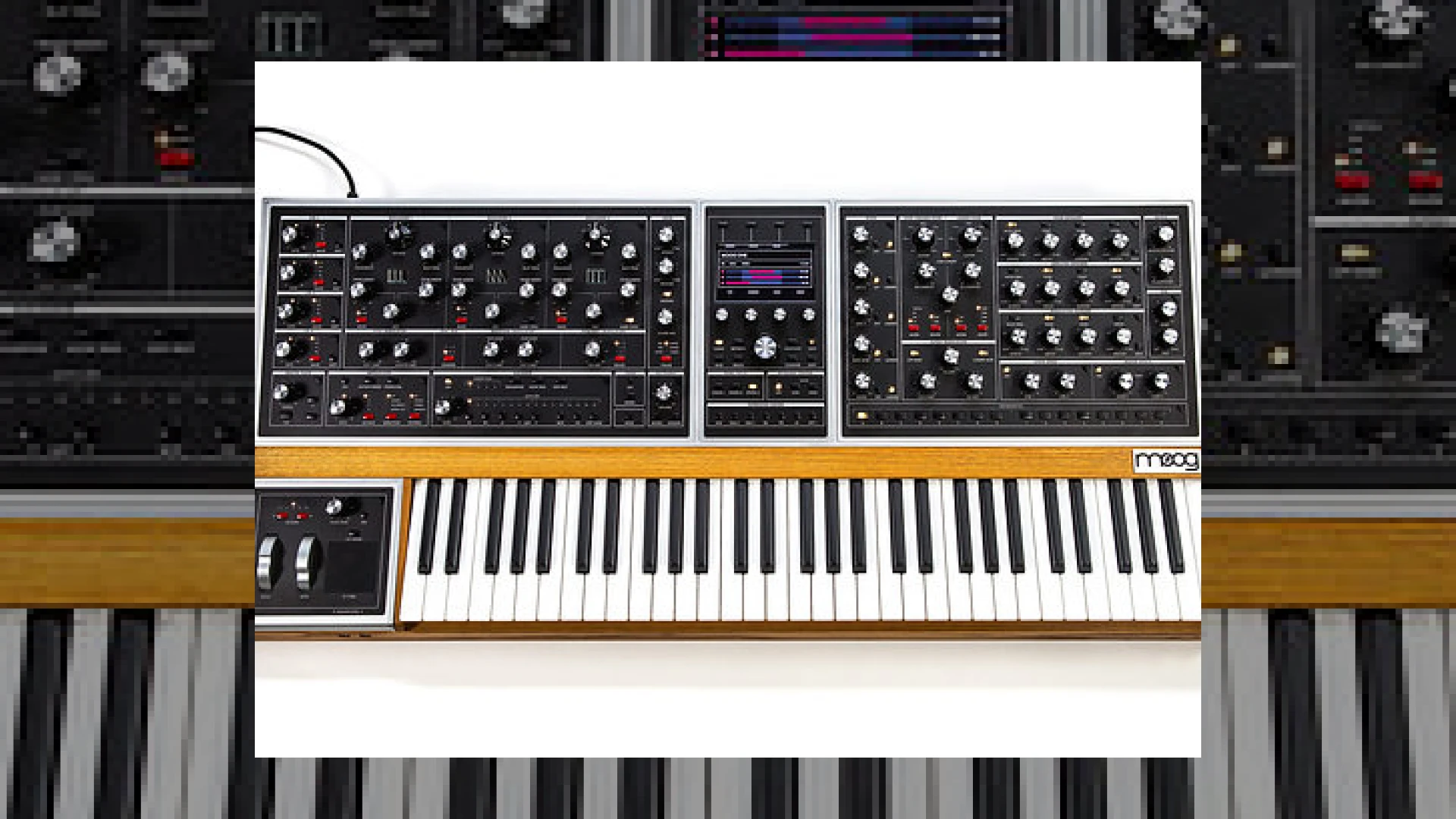
In September 2014, during the bustling environment of the AES Convention in Los Angeles, an understated yet revolutionary conversation took place. Tucked away in a quiet hotel room far from the noisy exhibition floors, Trent Thompson, the Product Marketing Manager at Moog Music, met with industry insiders to discuss the future of analog synthesis. What started as late-night brainstorming over diet colas—debating whether a new polyphonic synthesizer should be a budget-friendly unit, a multi-timbral powerhouse, or a complex machine with deep menus—ultimately conspired to initiate the birth of the moog one. The goal was highly ambitious: to create an instrument that would not only succeed but also transcend the legendary heritage of the Memorymoog.
For decades, the Memorymoog had cast a long, imposing shadow over the synthesizer market. Any subsequent attempt to build an analog polysynth under the Moog name had to be an uncompromising masterpiece. The engineering team understood that modern synthesists demanded more than just vintage nostalgia; they required routing flexibility, pristine onboard digital effects, and multi-timbral capabilities that could keep up with modern DAW environments. To understand how this synthesis powerhouse integrates into modern production, you can explore our technical deep-dives over at SM Mastering Audio Articles.
Analyzing the Birth of the Moog One
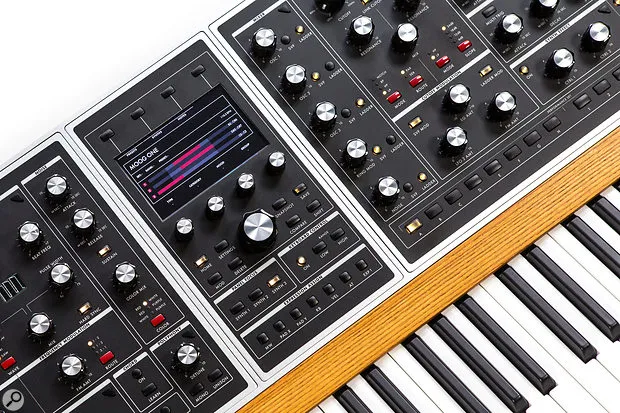
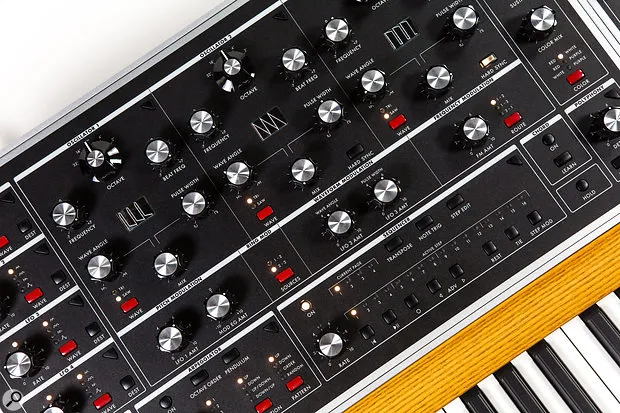
During the initial phases that heralded the birth of the moog one, the core design philosophy focused on creating a tri-timbral, virtual-analog-beating analog synthesizer. Moog’s engineers chose to offer it in both 8-voice and 16-voice configurations. Each voice features three newly designed triangle-core analog VCOs, variable waveshaping, dual analog filters (the classic Moog Ladder filter and a state-of-the-art State Variable Filter), and three DAHDSR envelope generators. This massive voice architecture means that a single patch can sound wider and deeper than almost any other hardware synthesizer in existence.
Additional product view and interface angle for The birth of the Moog One.
From a mix-engineering perspective, the birth of the moog one changed how we handle low-end management in analog recordings. Because the synthesizer is capable of producing immense frequency sweeps across three distinct layers (Synth Parts A, B, and C), mastering and mixing engineers must exercise careful dynamic control. The sheer density of the analog oscillators can easily overwhelm a stereo bus if not managed correctly with high-pass filtering and subtle multiband compression.
Moog One Technical Specifications
To fully appreciate the scope of this synthesizer, let us look at the fundamental specifications of the flagship 16-voice version:
Additional product view and interface angle for The birth of the Moog One.
| Name | Use | Price | Rating |
|---|---|---|---|
| Moog One (16-Voice) | Analog Polyphonic Sound Design & Production | $8,499.00 | 4.9 / 5.0 |
Integrating the Moog One into Your Studio Workflow
Operating a synthesizer of this magnitude requires a strategic approach to audio routing and gain staging. Because the instrument features a fully integrated digital effects engine (including Eventide reverbs) alongside its pure analog signal path, you have a wealth of routing options. Here are several practical studio workflow tips to get the most out of your Moog One sessions:
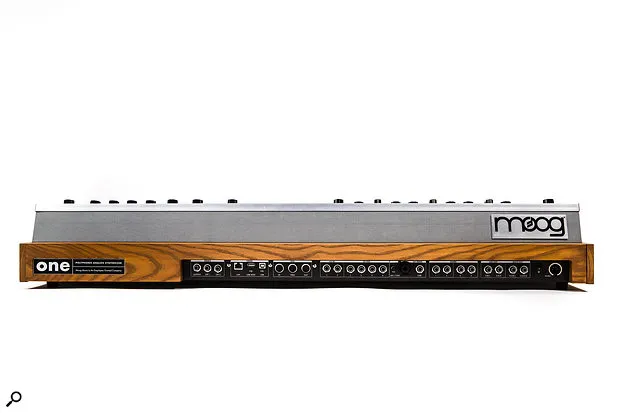
- Utilize Individual Outputs: Instead of summing all three timbral parts to the main stereo outputs, route them to individual physical outputs. This allows you to apply precise EQ and compression to individual layers in your DAW.
- Watch Your Headroom: The triple-VCO structure per voice can generate massive voltage peaks. Back off on the synth’s hardware output volume and compensate with high-headroom preamps to preserve transient response.
- Mid/Side Processing in Mastering: When mastering tracks featuring heavy Moog One pads, use mid/side EQ to keep the low frequencies centered while allowing the lush, modulated high-mid frequencies to spread wide into the sides.
To tame the massive dynamics of a Moog One, mastering engineers often pair it with high-end emulations from industry leaders like Universal Audio to add vintage tape saturation or subtle leveling before final limiting.
Additional product view and interface angle for The birth of the Moog One.
Conclusion
Years after the birth of the moog one, it remains a benchmark achievement in analog synthesizer design. It represents the successful realization of a dream shared by engineers, sound designers, and artists during those late-night sessions back in 2014. By combining modern digital control with uncompromising analog circuitry, it continues to shape the sonic landscapes of film scores, electronic music, and master recordings worldwide.
Frequently Asked Questions
Is the Moog One fully analog?
The signal path of the Moog One is 100% analog. However, it features a digital control system for modulation routing, presets, and a premium digital effects suite (which can be completely bypassed via an analog dry path).
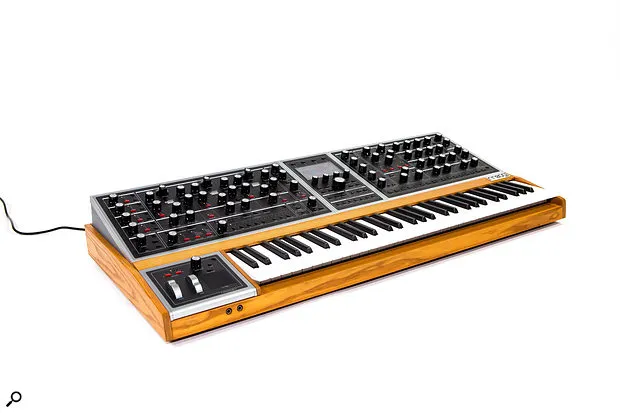
Additional product view and interface angle for The birth of the Moog One.
What makes the Moog One different from the vintage Memorymoog?
While the Memorymoog was notoriously unstable and limited in routing, the Moog One offers tri-timbral architecture, stable digital-controlled analog oscillators, dual-source filters, and an expansive modulation matrix that far surpasses vintage designs.
How does the Moog One handle multi-timbrality?
The Moog One is tri-timbral, meaning it can play three completely independent analog synthesizer patches simultaneously. These can be split across the keyboard, layered on top of each other, or addressed via separate MIDI channels.
🛒 Official Product Info & Where to Buy
Check full technical specs, pricing, and purchase options directly from the official manufacturer or authorized dealer for The birth of the Moog One.
Written by SM Mastering
Official content on sound engineering, mixing, mastering, and advanced electronic production by SM Mastering.