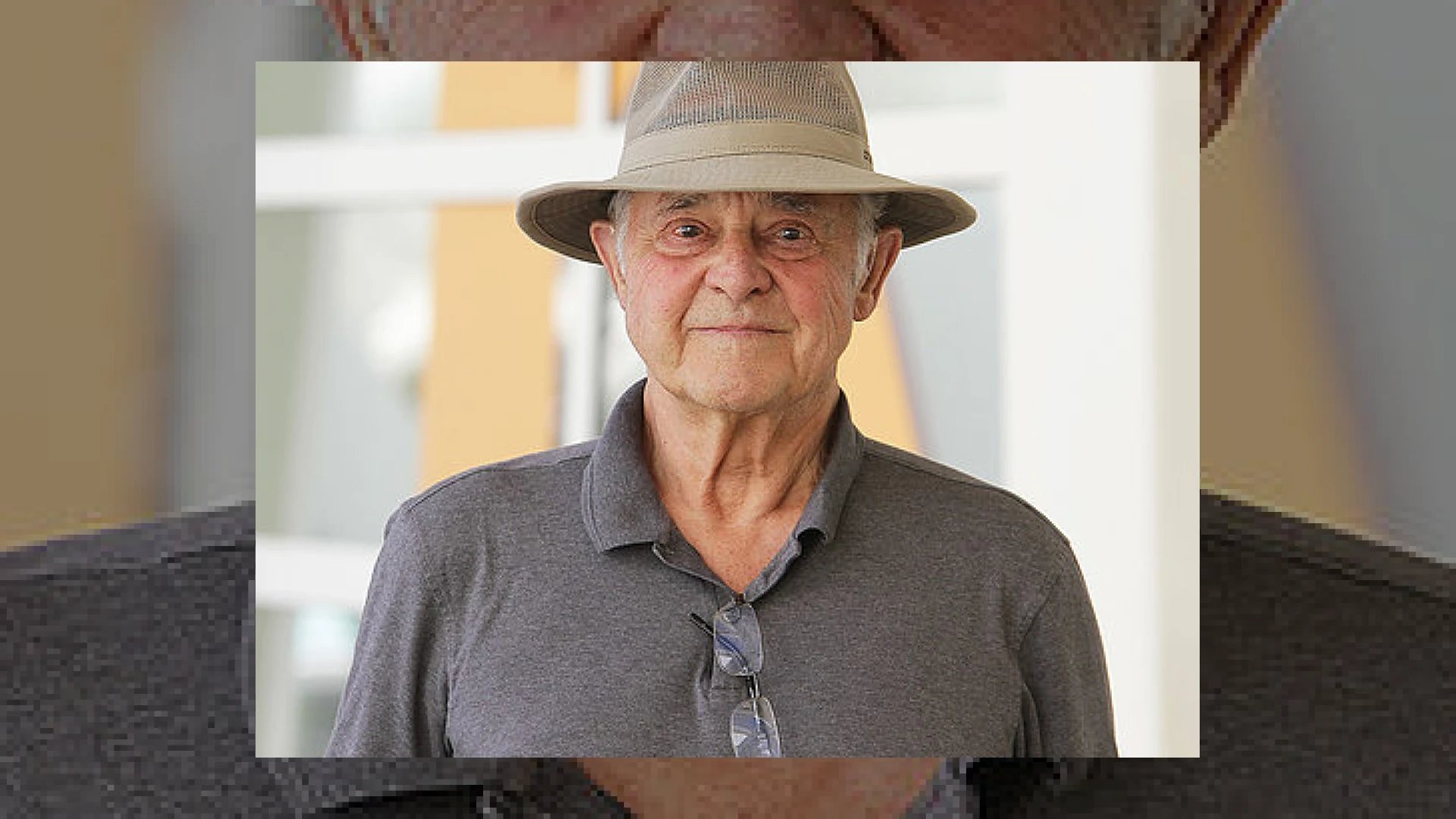
Visual context for Inventor of FM synthesis to give lecture and concert.
Frequency modulation (FM) synthesis represents one of the most significant technological breakthroughs in the history of electronic music and digital synthesis. As mastering engineers and sound designers, we continuously trace the roots of modern digital timbre back to the seminal work conducted at Stanford University. It is an absolute honor for the global audio community to hear that the inventor of fm synthesis to give lecture and concert presentations is officially scheduled to appear live, celebrating a half-century of this groundbreaking digital technology.
Professor John Chowning, the legendary mind behind FM synthesis and the founder of the Stanford Center for Computer Research in Music and Acoustics (CCRMA), will be presenting his insights and compositions. For electronic music producers who design patches using modern FM tools like those found in Ableton, understanding Chowning’s original work offers invaluable creative perspective. This landmark event provides a rare, deep-dive exploration into how mathematical equations became the iconic brass, bells, and basslines of the 1980s and beyond.
The Impact of the Inventor of FM Synthesis to Give Lecture and Concert
For those deeply embedded in the audio production and mastering world, having the inventor of fm synthesis to give lecture and concert performances live is an extraordinary opportunity to learn directly from the source. Taking place at the Arts Two Performance Space at Queen Mary University of London, this event is part of the prestigious Distinguished Lecturer Series. The presentation will commemorate the 50th anniversary of FM synthesis, tracing its development from early experiments in acoustic spatialization to its commercial realization.
The 3:00 PM lecture will demonstrate how Chowning’s early research into moving sound sources through 3D space led directly to his discovery of frequency modulation. By utilizing sound-synchronous animations, Chowning will demystify the complex wave interactions that define FM timbre. Additionally, the lecture features a live demonstration of vocal-tracking technology, using a singing voice as a real-time modulator in his acclaimed composition, ‘Voices’. At SM Mastering Audio Articles, we frequently analyze how complex harmonic structures impact the mastering headroom, and seeing Chowning’s foundational methods live highlights why the decision of the inventor of fm synthesis to give lecture and concert sessions is incredibly meaningful to contemporary audio specialists.
Event Schedule and Seminal Works Concert
Following the educational lecture, a concert at 6:00 PM will feature Chowning’s wife, the esteemed Coloratura soprano Maureen Chowning. This performance stands as a rare sonic retrospective of computer music history. The concert program contains several of the most influential compositions in the digital avant-garde:
- Turenas (1972): Celebrated for its early use of quadraphonic sound and spatial modulation, creating moving target fields of FM tones.
- Stria (1977): Commissioned by IRCAM, this piece utilizes the golden ratio to construct inharmonic pseudo-bell tones, showcasing pure FM math as fine art.
- Phonē (1981): A landmark work that successfully synthesized the singing voice using FM carrier-to-modulator ratios.
- Voices for Soprano & Computer, v.3 (2011): A modern interactive composition showcasing live vocal integration with computer-generated FM soundscapes.
This curation demonstrates why the news of the inventor of fm synthesis to give lecture and concert highly relevant to our curriculum is generating immense excitement across both academic circles and commercial mastering studios worldwide.
Essential FM Synthesis Tools & Hardware
To celebrate the heritage of Chowning’s invention, we have compiled a specification table of legendary FM hardware and modern software emulations that producers use today to achieve those signature digital textures:
| Name | Use | Price | Rating |
|---|---|---|---|
| Yamaha DX7 (Vintage) | Hardware Synthesizer (Classic 6-Operator) | $600 – $1,200 (Used) | 5.0 / 5.0 |
| Korg Volca FM2 | Compact Portable Hardware Synth | $169 | 4.5 / 5.0 |
| Native Instruments FM8 | Software Synthesizer Plugin | $149 | 4.7 / 5.0 |
| Arturia DX7 V | Software Emulation Plugin | $199 | 4.8 / 5.0 |
Practical Studio Workflow Tips for FM Synthesis
FM synthesis is notorious for its complexity, but integrating it into your modern workflow doesn’t have to be daunting. Here are a few technical tips from our mastering desk to optimize your FM sound design:
- Keep Integer Ratios for Harmonic Sounds: When adjusting the frequency ratio between the Carrier and Modulator, stick to whole numbers (e.g., 1:1, 1:2, 1:3) to keep the sound harmonically pleasing and pitch-coherent.
- Use Non-Integer Ratios for Percussion: If you are designing metallic bells, transient hits, or industrial SFX, use fractional decimals (e.g., 1:1.414) to introduce complex, inharmonic sidebands.
- Control the Modulator Envelope: To avoid harsh digital aliasing, ensure the Modulator’s decay envelope is shorter than the Carrier’s. This mimics the natural physical decay of high frequencies in acoustic instruments.
- Manage Transients for Mastering: FM synthesis can generate incredibly fast, sharp transient peaks. Use a fast limiter or soft clipper on your FM tracks to prevent digital overs while maintaining sonic punch.
Conclusion
Ultimately, this historic event featuring the inventor of fm synthesis to give lecture and concert performances serves as a bridge connecting modern DAWs back to the revolutionary academic laboratories of the 1970s. By understanding Chowning’s spatial and mathematical approaches, modern electronic music producers can master the complex timbres that continue to shape today’s sonic landscapes.
Frequently Asked Questions
Who is the inventor of FM synthesis?
Professor John Chowning is the inventor of FM (Frequency Modulation) synthesis. He discovered the musical applications of FM while working at Stanford University, which later led to the development of commercial digital synthesizers like the iconic Yamaha DX7.
What is the difference between FM synthesis and Subtractive synthesis?
Subtractive synthesis starts with a harmonically rich waveform (like a saw or square wave) and filters out frequencies to shape the tone. FM synthesis generates complex harmonics by modulating the frequency of one oscillator (the carrier) with another oscillator (the modulator), building complex timbres from scratch.
Is FM synthesis still used in modern music production?
Yes, FM synthesis is incredibly popular in modern electronic music, synthwave, pop, and sound design. Contemporary software instruments such as Ableton Operator, Native Instruments FM8, and Xfer Serum’s FM capabilities are heavily utilized to create clean, sharp, and punchy digital textures.
Written by SM Mastering
Official content on sound engineering, mixing, mastering, and advanced electronic production by SM Mastering.