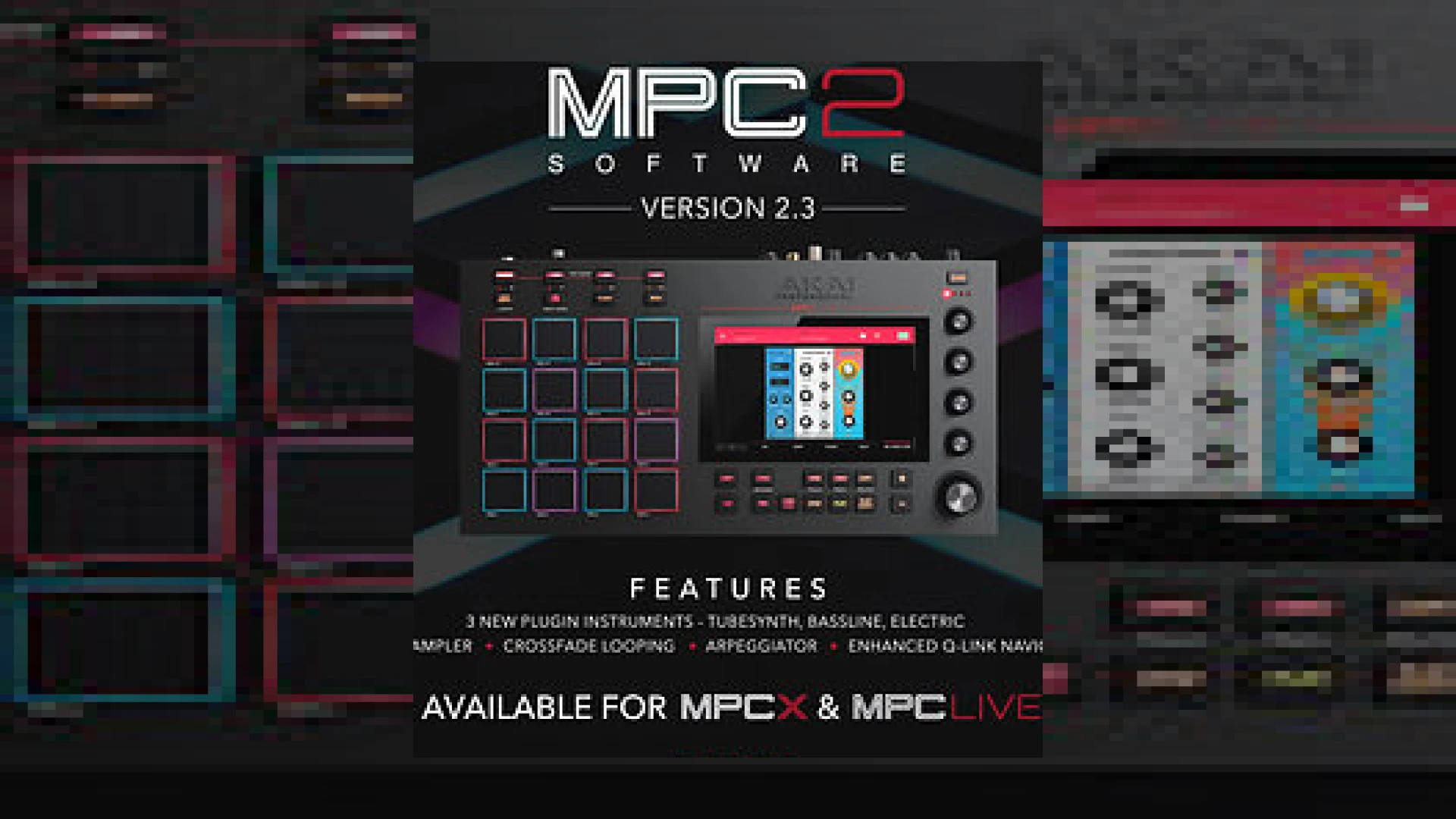
Visual context for Akai’s MPC 2.3 update adds three new synths and autosampling.
At SM Mastering, we closely monitor how firmware advancements impact modern sound design and hybrid workflows. As music production setups continue to evolve, the release of akai’s mpc 2.3 update adds three new synths and autosampling, fundamentally transforming how electronic musicians bridge the gap between software flexibility and standalone performance reliability. By moving away from a pure software controller workflow and embracing a self-sufficient ecosystem, Akai Professional has redefined what hardware units like the MPC Live and MPC X can achieve without requiring a computer connection.
Why akai’s mpc 2.3 update adds three new synths and autosampling to Your Live Rig
For producers who frequently transition from heavy DAW arrangements to laptop-free live performances, the fact that akai’s mpc 2.3 update adds three new synths and autosampling makes hardware units like the MPC X and MPC Live significantly more versatile. The standout feature of this update is undoubtedly the brand-new Autosampler. This professional tool allows you to capture any virtual instrument preset from your computer, or physical patches from external hardware synthesizers, and automatically convert them into playable MPC keygroup programs. Instead of manually sampling note-by-note, the MPC handles the velocity layers, note intervals, and looping ranges automatically.
When reviewing how akai’s mpc 2.3 update adds three new synths and autosampling, we must look closely at the underlying DSP design engineered by sister brand AIR Music Technology. Rather than basic sample playback, owners of these hardware devices and MPC Software 2 users now get three distinct virtual modeling engines. The first, TubeSynth, emulates the warm, classic character of vintage analog polysynths using advanced modeling technology derived from the acclaimed Vacuum Pro plugin. The second, Bassline, delivers aggressive, squelchy monophonic tones perfect for acid house and deep bass patches. The third, Electric, relies on physical modeling to deliver organic, authentic simulations of classic electric pianos.

Additional product view and interface angle for Akai’s MPC 2.3 update adds three new synths and autosampling.
Specifications & Features Table
To help you understand the value of these additions, we have summarized the features below:
| Name | Use | Price | Rating |
|---|---|---|---|
| TubeSynth | Vintage Polyphonic Analog Modeling Synth | Free (Included in Update) | 4.8 / 5.0 |
| Bassline | Monophonic Bass & Lead Emulator | Free (Included in Update) | 4.5 / 5.0 |
| Electric | Physical Modeling Electric Piano | Free (Included in Update) | 4.6 / 5.0 |
| Autosampler | Automated Keygroup Patch Creator | Free (Included in Update) | 4.9 / 5.0 |
Practical Studio Workflow Tips
- Minimize CPU Overhead: If your project uses processor-heavy synth plugins, use the Autosampler to convert those sounds into keygroup programs inside your MPC. This saves CPU resources for other heavy plugins or external analog processing chains.
- Achieve Infinite Sustain: When utilizing the Autosampler, enable real-time crossfade looping. This ensures that sustained notes like pads or string sounds loop seamlessly without sudden volume clicks or phase cancellations.
- Preserve Your Outboard Hardware: Use the Autosampler to capture the exact sound of your delicate analog synthesizers or outboard DSP patches from systems like Universal Audio. Once sampled, you can take those rare boutique sounds on stage without risking damage to your physical hardware.
For comprehensive guides on project optimization, sample preparation, and mastering, explore our catalog of SM Mastering Audio Articles.
Conclusion
Ultimately, akai’s mpc 2.3 update adds three new synths and autosampling to create a completely self-sufficient environment where CPU-heavy software instruments can be safely flattened into standalone presets. With the integration of an arpeggiator, real-time crossfade looping, and pristine AIR-designed synth engines, the MPC platform has evolved from a robust sampler into a fully-fledged synthesizer workstation. Whether you are performing on stage or composing in a world-class studio, this update is a vital step forward for the modern hybrid producer.
Frequently Asked Questions
Does the Autosampler work with external hardware synthesizers?
Yes. The Autosampler can send MIDI note messages out of the MPC’s hardware MIDI ports to trigger any external synth, capture the incoming audio from your interface inputs, and construct a multi-sampled keygroup instrument entirely on its own.
Are the new synths available for MPC Software on a computer?
Absolutely. The three new virtual instruments (TubeSynth, Bassline, and Electric) are built directly into the MPC 2.3 software upgrade, allowing you to use them on your Mac or PC as well as in standalone mode on supported hardware.
What is real-time crossfade looping?
Real-time crossfade looping automatically smooths out the splice point when a sample loops. By crossfading the end of the loop back into the start, it eliminates annoying pops or clicks, giving long sustained notes a smooth and continuous decay.
🛒 Official Product Info & Where to Buy
Check full technical specs, pricing, and purchase options directly from the official manufacturer or authorized dealer for Akai’s MPC 2.3 update adds three new synths and autosampling.

Written by SM Mastering
Official content on sound engineering, mixing, mastering, and advanced electronic production by SM Mastering.