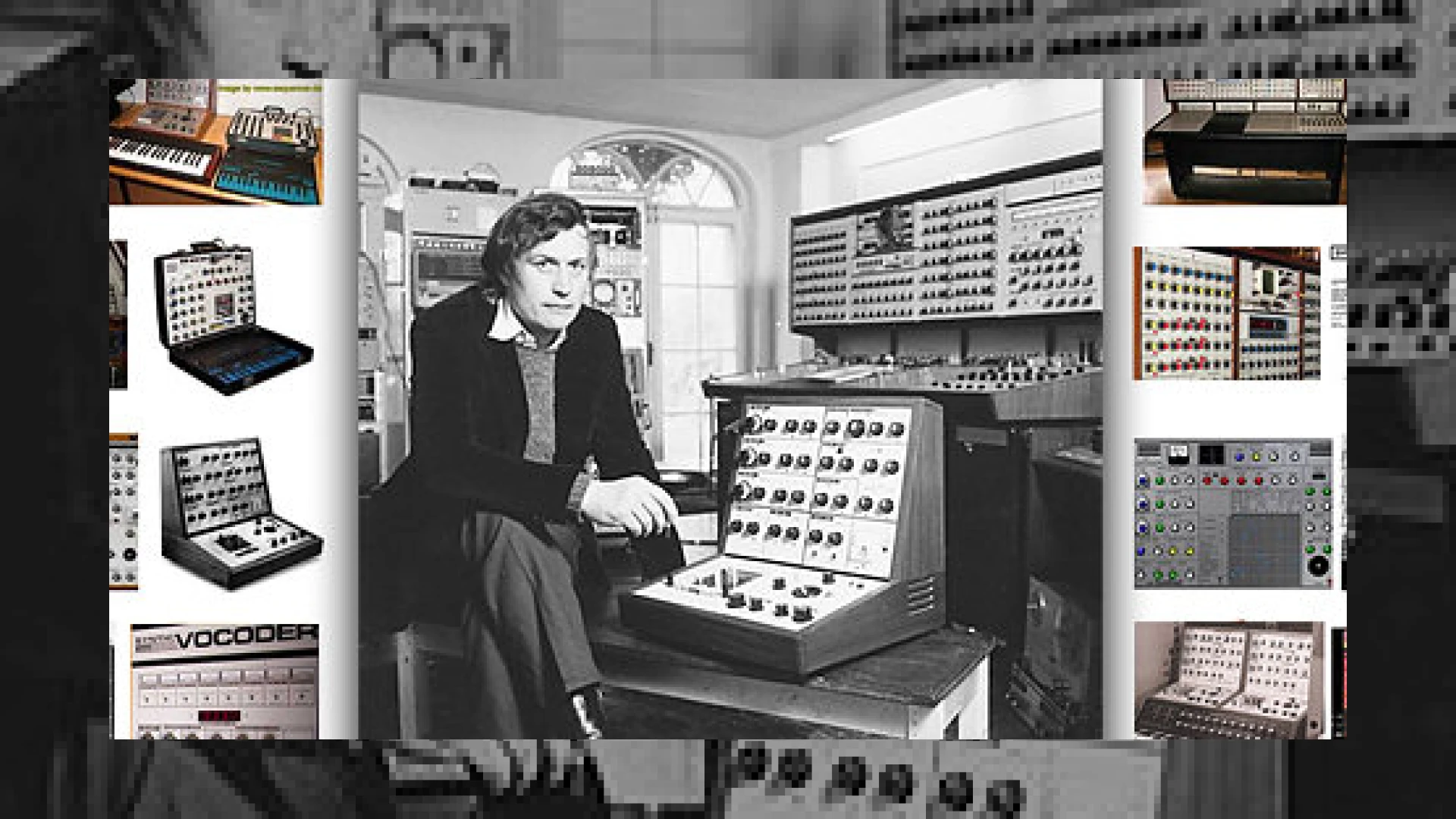
Visual context for EMS synth company 50th Anniversary.
At SM Mastering, we often look back at the historical roots of electronic music, which makes celebrating the ems synth company 50th anniversary incredibly exciting for our team of engineers. Founded in London back in 1969 by Dr. Peter Zinovieff, David Cockerell, and Tristram Cary, Electronic Music Studios (EMS) completely redefined the landscape of music production. Before EMS, synthesizers were massive, room-filling machines reserved for academic institutions and heavily funded research labs. EMS shattered this barrier by introducing the VCS3, the world’s first commercially available portable synthesizer. This legendary instrument, housed in its iconic wooden cabinet, brought avant-garde sound generation to mainstream musicians, setting the stage for decades of progressive rock, ambient music, and modern electronic subgenres.
The genesis of EMS was fueled by sheer academic brilliance and creative necessity. Prior to establishing the company, Peter Zinovieff had assembled an advanced home studio powered by two DEC PDP8 minicomputers to control custom analog modules. Working alongside industrial designer Tristram Cary and engineering genius David Cockerell, the trio formed a formidable collective. Zinovieff’s collaborations with Delia Derbyshire and Brian Hodgson of the BBC Radiophonic Workshop further cemented their forward-thinking philosophy. If you want to learn more about how vintage analog characteristics impact modern mastering, feel free to explore our collection of resources at SM Mastering Audio Articles.
The Legacy of Innovation: Celebrating the ems synth company 50th anniversary
Reflecting on the ems synth company 50th anniversary allows us to appreciate how these early voltage-controlled modules changed sound design forever. Unlike its American contemporaries, EMS utilized an innovative patch pin matrix instead of standard patch cords. This matrix allowed musicians to route signals instantly, encouraging experimental routing and unpredictable modulation paths. It is this specific non-linear behavior that modern digital audio workstations and software creators, such as those at Ableton, constantly strive to emulate in the virtual domain. The iconic VCS3, and its suitcase-bound sibling the Synthi A, became staples for legendary acts like Pink Floyd, Brian Eno, and Jean-Michel Jarre.
The hardware catalog of EMS expanded significantly throughout the 1970s. The crowning jewel of their technical achievement was undoubtedly the massive Synthi 100, an absolute powerhouse of analog synthesis featuring 12 voltage-controlled oscillators and an integrated digital sequencer. When treating these classic sounds in mastering, acknowledging the ems synth company 50th anniversary is a great reminder of how far analog warmth has come, and why those vintage sub-bass and mid-range frequencies still command so much respect in a modern master chain.
Iconic EMS Hardware Specifications
To celebrate this historic milestone, let’s look at the key specifications of the most influential instruments produced by EMS during their golden era:
| Name | Use | Price | Rating |
|---|---|---|---|
| EMS VCS3 (The Putney) | Portable Sound Generation & Processing | Vintage ($10,000+) | 5.0 / 5.0 |
| EMS Synthi A / AKS | Suitcase Synthesis for Touring Musicians | Vintage ($9,000+) | 4.8 / 5.0 |
| EMS Synthi 100 | Large-Scale Studio Production & Composition | Priceless / Extremely Rare | 5.0 / 5.0 |
| EMS Vocoder 5000 | Advanced Vocal Processing and Synthesis | Vintage ($8,000+) | 4.7 / 5.0 |
Practical Studio Workflow Tips for Vintage EMS Sounds
Integrating the raw, unstable power of vintage EMS synthesis into modern productions requires careful handling, especially during the mixing and mastering stages. Here are three expert tips from our mastering engineers:
- Manage the Sub-Harmonics: EMS oscillators are famous for their drift and heavy low-end behavior. Use a high-pass filter with a gentle slope (around 18Hz to 24Hz) to clean up sub-bass rumble without sacrificing the analog weight.
- Embrace the Pin-Matrix Distortion: The internal summing of the VCS3 patchboard often introduces pleasing harmonic saturation. Instead of cleaning it up entirely, use dynamic EQ to tame harsh resonant peaks while letting the mid-range warmth shine through.
- Stereo Widening with Caution: Vintage EMS synths are primarily monophonic or dual-mono. If you are using stereo widening tools to give them space, ensure you check mono compatibility regularly to avoid phase cancellation in the lower mid-range.
Conclusion
Though the original corporate entity of EMS closed its doors in 1979, the spirit of the company was kept alive by dedicated long-time employee Robin Wood. Having joined in 1970, Wood acquired the rights in 1995 and continues to service and hand-build these classic British instruments to this day. In conclusion, as we honor the ems synth company 50th anniversary, we celebrate a half-century of pure, unadulterated sonic exploration that continues to inspire electronic music producers and mastering engineers worldwide.
Frequently Asked Questions
What makes the EMS VCS3 unique compared to Moog synths?
The EMS VCS3 stands out due to its patch pin matrix rather than traditional patch cables. This design allowed for rapid, complex modulation routing in a highly compact, wooden tabletop chassis. Its unique vernier dials and three-way joystick also offered hands-on control that encouraged experimental sound design over traditional keyboard playing.
Who were the main founders of Electronic Music Studios?
EMS was founded in London in 1969 by Dr. Peter Zinovieff, Tristram Cary, and David Cockerell. Zinovieff provided the conceptual and computer music foundation, Cockerell designed the innovative analog circuitry, and Cary crafted the distinct physical enclosures, including the famous wooden cabinet of the VCS3.
Can you still buy original EMS synthesizers today?
Yes, but they are exceptionally rare and expensive collector’s items. However, Robin Wood, who joined EMS in 1970, still runs the official company operations today, offering maintenance services and occasionally hand-building genuine replacement parts and units for dedicated analog enthusiasts.
Written by SM Mastering
Official content on sound engineering, mixing, mastering, and advanced electronic production by SM Mastering.