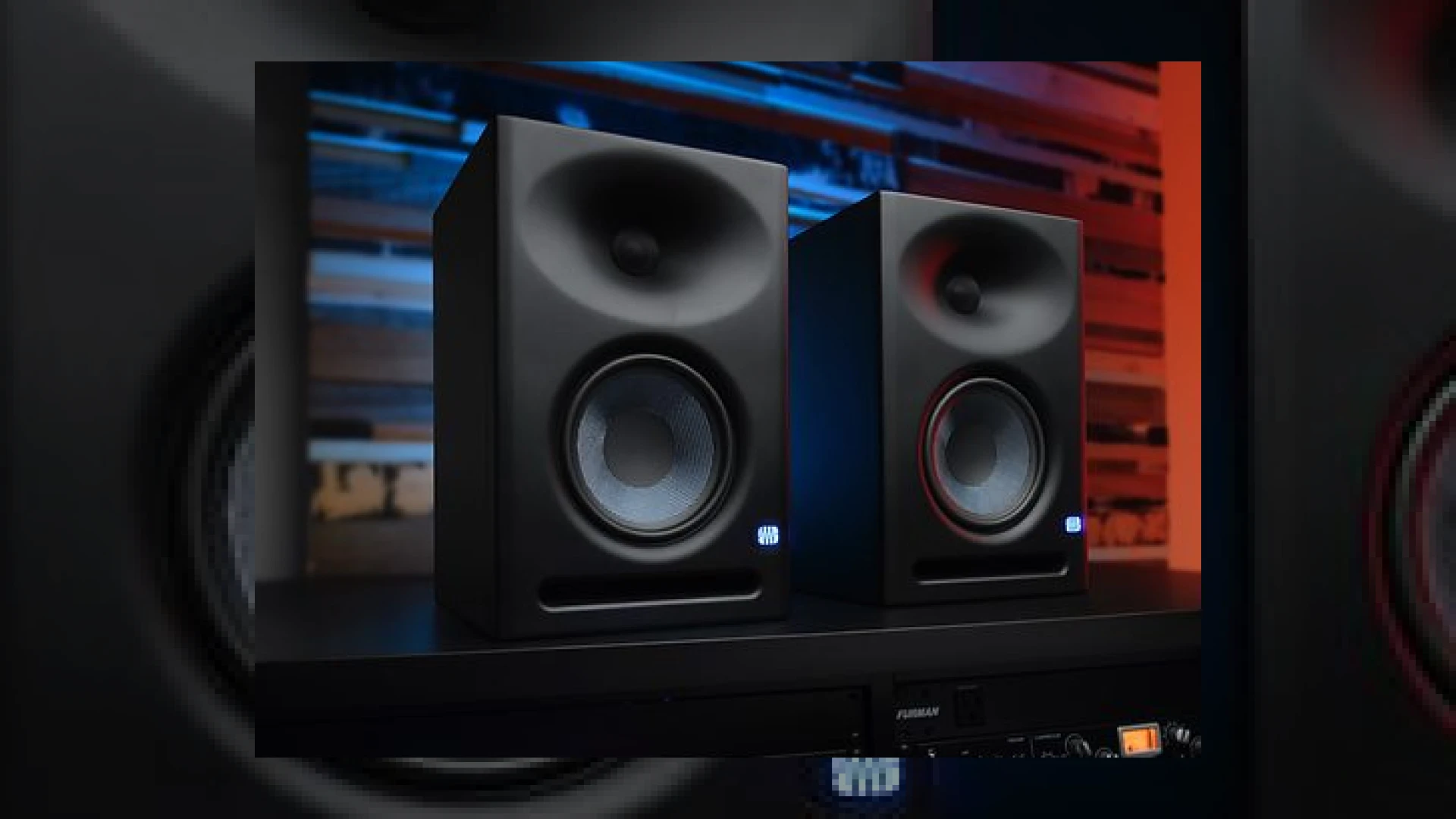
Visual context for PreSonus expand Eris monitor series with E7 XT.
With the industry evolving rapidly, the announcement that presonus expand eris monitor series with e7 xt has generated significant buzz among independent mixing and mastering engineers. Studio monitors are the window into your mix, and finding the sweet spot between size, power, and acoustic adaptation is a constant challenge for project studio owners. By introducing this new intermediate model, PreSonus fills a crucial niche for producers who require precise low-end representation without the physical footprint of an 8-inch system.
When presonus expand eris monitor series with e7 xt, they are bridging a critical gap between the smaller E5 XT and the larger E8 XT models. Featuring a 6.5-inch woven composite low-frequency transducer and a 1.25-inch ultra-low-mass silk dome high-frequency driver, the E7 XT offers a highly balanced and articulate frequency response. This driver configuration allows the monitor to achieve a remarkable frequency range of 42 Hz to 22 kHz, ensuring that critical mid-bass and sub-harmonic decisions can be made with high confidence during the mastering stage.
Technical Breakdown: PreSonus Expand Eris Monitor Series with E7 XT
As presonus expand eris monitor series with e7 xt, the physical and acoustic adjustments engineered into the cabinet become central to its performance. The most notable inclusion is the custom-designed Elliptical Boundary Modelled (EBM) waveguide. Designed by Hugh Sarvis of WorxAudio, this advanced waveguide provides a wide 100-degree horizontal dispersion. This design expands the sweet spot significantly, enabling collaborators to sit off-axis without losing high-frequency imaging clarity. Meanwhile, a focused 60-degree vertical dispersion minimizes early reflections from mixing desks and consoles, offering a cleaner direct sound path.
For engineers working in untreated rooms, the realization that presonus expand eris monitor series with e7 xt brings advanced Acoustic Tuning controls to a budget-friendly tier is excellent news. The rear-panel control suite features high, mid, and low-frequency trim controls, allowing users to compensate for room resonances. Furthermore, a three-position Acoustic Space switch is provided to adjust the monitor’s response based on physical boundary placement—minimizing boundary loading when speakers are placed near walls or corners.
Specifications & Technical Summary
The following table provides an analytical breakdown of the E7 XT’s specifications and market positioning compared to reference industry benchmarks:
| Name | Primary Use | Est. Price (per unit) | SM Mastering Rating |
|---|---|---|---|
| PreSonus Eris E7 XT | Nearfield Mixing & Mastering | $229 / €199 | 4.7 / 5.0 |
| PreSonus Eris E5 XT | Small Project Studio Monitoring | $149 / €139 | 4.3 / 5.0 |
Practical Studio Workflow Tips for E7 XT Integration
To maximize the performance of your monitors, proper placement and room alignment are vital. Here are several professional tips for integrating these new units into your workflow:
- Boundary Compensation: If your E7 XT monitors must sit closer than 0.5 meters to a wall, set the Acoustic Space switch to -2 dB. If tucked directly into corners, set it to -4 dB to counteract the natural low-frequency build-up.
- Tweeter Alignment: Ensure the 1.25-inch silk dome tweeters are positioned exactly at ear level. This aligns your listening position with the center of the EBM waveguide’s vertical dispersion path.
- Decoupling: Use high-density foam isolation pads or dedicated speaker stands to decouple the cabinets from your desk, reducing acoustic energy transfer that muddy the low-mid frequencies.
- Reference Testing: Always test your mixes against industry-standard reference tracks. For more information on configuring your listening environment and learning advanced reference-room setups, feel free to read through our SM Mastering Audio Articles.
Conclusion
Many project studios will find that when presonus expand eris monitor series with e7 xt, it solves the common dilemma of choosing between insufficient low-end and overwhelming bass build-up. Its pristine transient response, customizable acoustic tuning, and budget-conscious pricing make it a formidable entry-to-mid-tier option. While high-end options like Neumann remain the gold standard for dedicated mastering facilities, the E7 XT punches far above its weight class, offering exceptional clarity and control for home and project studios worldwide.
Frequently Asked Questions
Is the PreSonus Eris E7 XT suitable for professional mastering?
While dedicated mastering facilities typically use high-end full-range systems, the Eris E7 XT offers a flat, reliable frequency response down to 42 Hz. When paired with proper room acoustic treatment and accurate calibration, it serves as an excellent nearfield monitor for mastering in mid-sized project studios.
How does the EBM waveguide improve my mixing environment?
The Elliptical Boundary Modelled (EBM) waveguide expands the horizontal sweet spot to 100 degrees, meaning you can move around your console or sit with a client without losing spatial and high-frequency accuracy. It also limits vertical dispersion to 60 degrees to cut down on reflections from your mixing desk.
Do I need a subwoofer with the Eris E7 XT?
For most acoustic, pop, and rock music, the E7 XT’s low-frequency extension to 42 Hz is entirely sufficient. However, if you are mixing or mastering heavy sub-bass genres like modern EDM, Trap, or cinematic soundscapes, pairing them with an active subwoofer like the PreSonus Temblor T10 will help you accurately monitor sub-bass frequencies below 40 Hz.
🛒 Official Product Info & Where to Buy
Check full technical specs, pricing, and purchase options directly from the official manufacturer or authorized dealer for PreSonus expand Eris monitor series with E7 XT.

Written by SM Mastering
Official content on sound engineering, mixing, mastering, and advanced electronic production by SM Mastering.