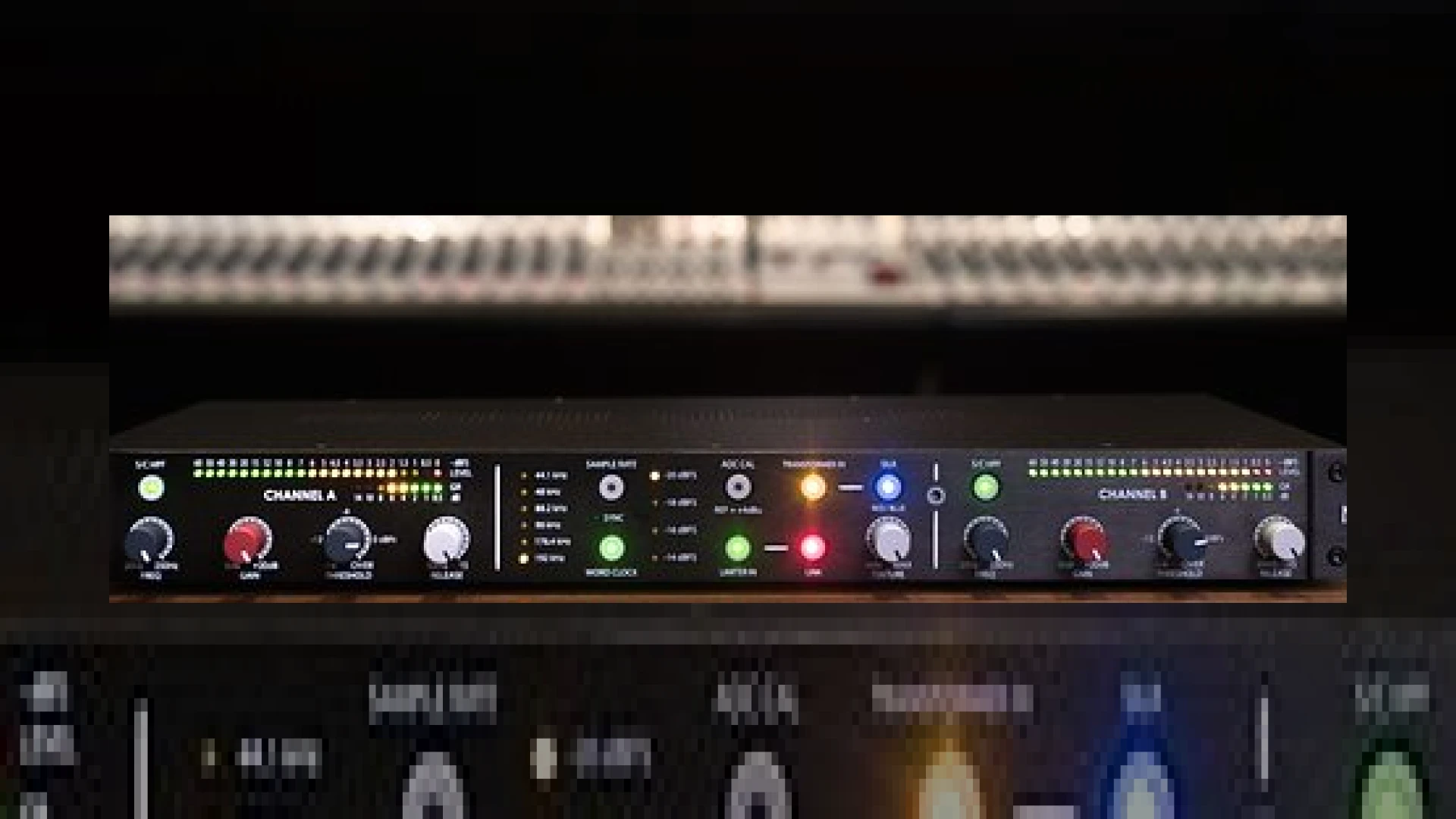
Visual context for Rupert Neve Designs announce MBC.
The landscape of modern hybrid mastering has reached a new pinnacle of precision and analog warmth. As engineers constantly seek the perfect bridge between tactile outboard gear and the digital workstation, news of groundbreaking hardware is always met with immense excitement. It is a historic moment for high-end audio as SM Mastering Audio Articles tracks the latest industry developments; indeed, when Rupert Neve Designs announce MBC, engineers worldwide take notice of a unit designed to redefine the final stage of the audio chain.
Legendary analog pioneer Mr. Rupert Neve, renowned for creating some of the most musical console circuits in history, has delivered a masterstroke that targets the digital domain without sacrificing analog soul. The Master Buss Converter (MBC) is engineered to sit at the absolute end of your mixing or mastering chain. It provides a flawless transition from stereo analog inputs into high-definition digital audio, combining a musical limiter, a custom transformer, and proprietary Silk saturation circuitry with pristine A-D conversion.
Analyzing the Hardware: Rupert Neve Designs Announce MBC
The announcement carries weight because when Rupert Neve Designs announce MBC, they are not just releasing another converter; they are redefining the analog-to-digital interface. The first processing stage your analog audio encounters upon entering the MBC is a highly sophisticated, mastering-grade limiter. This limiter can operate in either dual-mono or stereo-linked modes, giving engineers flexibility depending on the stereo image’s complexity. Featuring dedicated controls for threshold, release, and make-up gain, it allows for seamless level maximization.
To ensure that low-end energy does not trigger unwanted pumping, the limiter features a switchable side-chain high-pass filter. This filter can be swept continuously from 20 Hz to 250 Hz, keeping kick drums and heavy sub-bass from dominating the limiter’s behavior. An accurate, fast-acting eight-LED ladder meter displays precisely how much gain reduction is being applied, ensuring you always stay in control of your dynamics.
Custom Transformers and the Power of Silk
We often look to innovative brands like Universal Audio for digital emulation, but when Rupert Neve Designs announce MBC, we get physical Class-A analog excellence combined with state-of-the-art conversion. At the heart of the analog section is a custom-designed transformer that can be entirely engaged or bypassed. When engaged, the transformer introduces the legendary Silk circuitry, allowing you to choose between two distinct harmonic profiles: Red and Blue.
Silk Red accentuates saturation in the mid and high frequencies, adding sparkle, open air, and presence to vocals and acoustic instruments. Silk Blue focuses on the low-mids and bass, adding weight, thickness, and analog punch to the bottom end. The intensity of this harmonic saturation is continuously variable via the Texture control knob. If you require absolute transparency, bypassing the transformer routes your audio through a pristine, Class-A transformerless circuit designed for clinical accuracy.
Mastering-Grade A-D Conversion
The final destination of your signal path within the unit is its world-class A-D conversion stage. When Rupert Neve Designs announce MBC, they ensured that their famous Silk and Texture controls were integrated directly into the converter’s path. The converter delivers ultra-low jitter, incredibly low phase distortion, and a highly stable internal clock, ensuring that the depth, three-dimensionality, and transient response of your analog master are preserved perfectly in the digital bounce.
Technical Specifications
| Specification / Component | Primary Use | Estimated Retail Price | Expert Rating |
|---|---|---|---|
| Rupert Neve Designs MBC | Mastering A-D Conversion & Limiting | $3,999 USD | 4.9 / 5 Stars |
| Dual-Mono / Stereo Limiter | Dynamic Peak Control & Level Maximization | Included | Excellent |
| Custom Transformer with Silk | Harmonic Saturation (Red / Blue Modes) | Included | Outstanding |
| Class-A Transformerless Path | Ultra-Transparent Signal Transmission | Included | Reference Grade |
Practical Studio Workflow Tips
Integrating a reference-grade converter into your daily workflow requires a strategic approach to gain staging. In our studio sessions, seeing Rupert Neve Designs announce MBC means having a definitive solution for printing mixes. Here are a few professional tips to get the most out of this hardware:
- Subtle Peak Limiting: Use the built-in limiter to shave off only the fastest transients (about 1 to 2 dB of gain reduction) before conversion. This allows you to print a louder digital file without audible artifacts.
- Choosing the Right Silk: Use Silk Red with the Texture control set around 11 o’clock to inject air into dull mixes. For thin or digital-sounding acoustic mixes, use Silk Blue to reinforce the low-mid warmth.
- Calibrate Your Levels: Ensure your analog chain preceding the MBC is gain-staged correctly. The converter responds beautifully to hot signals, but keeping your averages around -18 dBFS will yield the best dynamic headroom.
Conclusion
Ultimately, the Master Buss Converter represents a beautiful marriage of traditional analog design and modern digital precision. In summary, the moment Rupert Neve Designs announce MBC, the standards for premium mastering converters were elevated, offering engineers an unmatched level of tonal flexibility and dynamic control at the final capture stage.
Frequently Asked Questions (FAQ)
What makes the Rupert Neve Designs MBC different from standard converters?
Unlike standard converters that focus solely on transparent conversion, the MBC combines a reference-grade A-D stage with a custom analog limiter and a selectable transformer path featuring Silk Red and Blue circuitry, allowing you to add color or maintain complete transparency.
Can the limiter and transformer sections be completely bypassed?
Yes. Both the limiter and the transformer circuits have dedicated bypass controls. When the transformer is bypassed, the signal passes through a Class-A transformerless circuit designed for absolute transparency and minimal coloration.
What is the purpose of the side-chain high-pass filter on the limiter?
The side-chain high-pass filter (adjustable from 20 to 250 Hz) prevents heavy low-frequency energy, such as kick drums and bass, from triggering the limiter prematurely. This keeps your masters sounding open, dynamic, and free from pumping effects.
🛒 Official Product Info & Where to Buy
Check full technical specs, pricing, and purchase options directly from the official manufacturer or authorized dealer for Rupert Neve Designs announce MBC.

Written by SM Mastering
Official content on sound engineering, mixing, mastering, and advanced electronic production by SM Mastering.