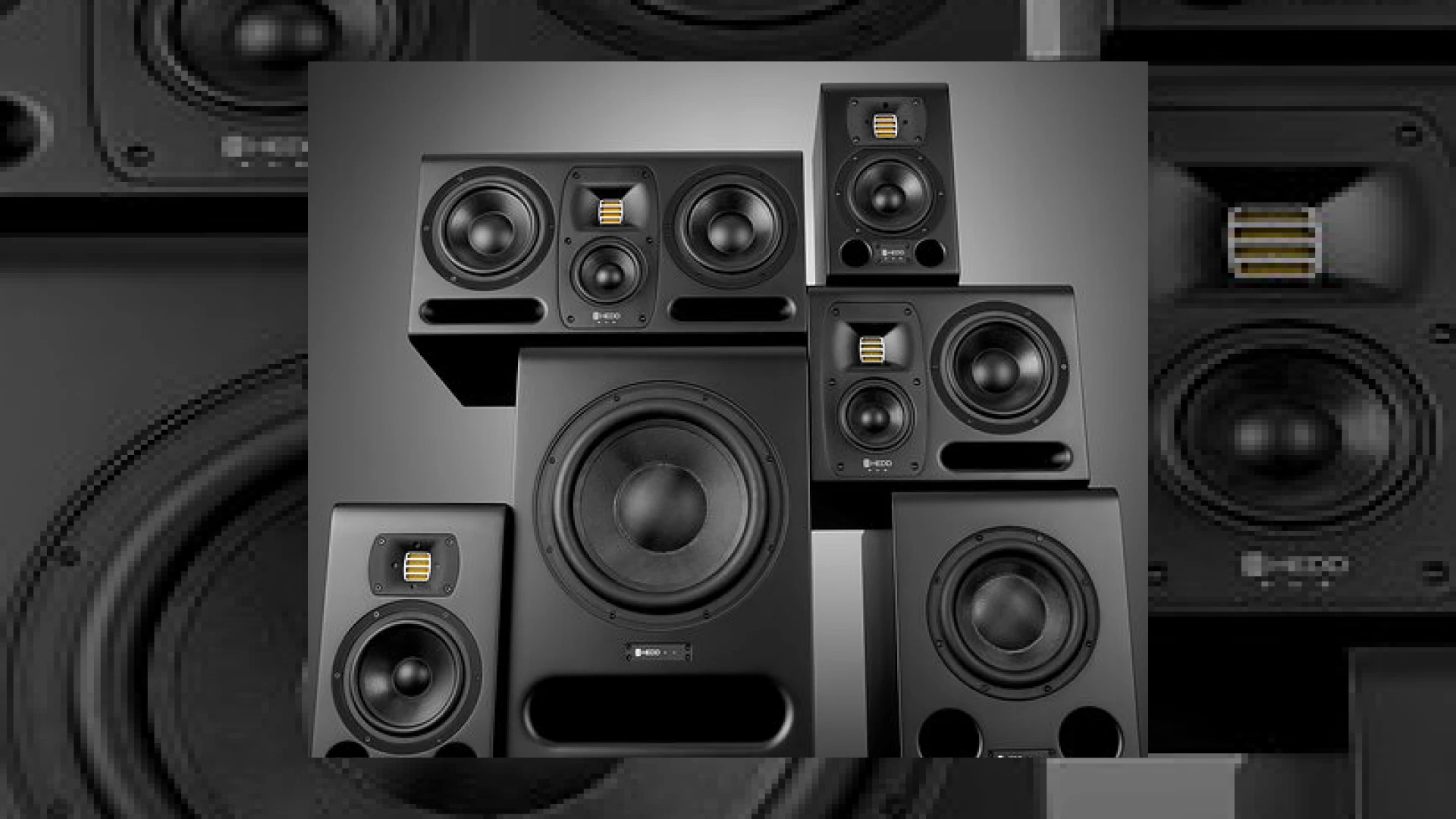
Visual context for HEDD unveil Mk2 monitors.
At SM Mastering, we are constantly analyzing hardware innovations that redefine acoustic precision, and seeing HEDD unveil Mk2 monitors has certainly raised the bar. Heinz Electrodynamic Designs (HEDD), led by the legendary designer Klaus Heinz, has systematically overhauled their entire Type series. This launch introduces built-in Digital Signal Processing (DSP), phase-linearization options, and a highly versatile bass-port design that bridges the gap between ported punch and closed-box analytical accuracy.
Why the Industry is Talking About How HEDD unveil Mk2 monitors
When HEDD unveil Mk2 monitors, they didn’t just update the cabinet aesthetics; they brought the legendary HEDD Lineariser directly into the internal hardware. In the previous generation, running this phase-correction software required a standalone DAW plugin, which introduced slight latencies and host processor overhead. By embedding a high-powered DSP board directly inside the speakers, HEDD has made real-time phase alignment accessible to standalone setups, hardware synthesizers, and external mastering consoles without requiring a computer.
Indeed, the moment HEDD unveil Mk2 monitors, mastering engineers immediately noticed the Closed or Ported (CoP) design system. Historically, studio designers had to choose between the transient speed of an infinite-baffle (closed) cabinet or the low-frequency extension of a bass-reflex (ported) system. The Mk2 series provides physical foam port plugs paired with an intelligent DSP toggle on the rear plate. This toggle adjusts the frequency and phase response algorithm dynamically, tailoring the woofers’ behavior based on whether the ports are sealed or open.
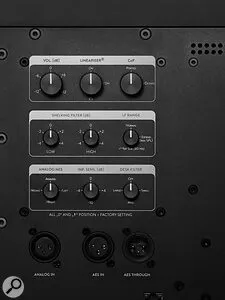
Additional product view and interface angle for HEDD unveil Mk2 monitors.
Advanced DSP and Phase Linearization
Just as legacy manufacturers like Neumann have advanced acoustic engineering through physical cabinet geometry, HEDD leverages digital algorithms to achieve perfect time-alignment. The onboard DSP eliminates phase distortion between the Air Motion Transformer (AMT) tweeter and the honeycomb-composite woofers. This means the high, mid, and low frequencies reach your ears at the exact same fraction of a millisecond, resulting in unparalleled stereo imaging and depth localization.
For professionals who read our SM Mastering Audio Articles, understanding this flexibility is paramount. A perfectly phase-linear monitor allows for faster compression choices, highly accurate EQ carving, and confidence that your low-end will translate to any playback environment.
HEDD Mk2 Technical Specifications
Below is a comparative breakdown of the newly unveiled lineup, highlighting their target studio applications and estimated pricing.
| Model Name | Recommended Use | Estimated Price (Per Pair) | Expert Rating |
|---|---|---|---|
| Type 05 Mk2 | Nearfield / Edit Suites / Home Studios | $1,300 | 4.7/5 |
| Type 07 Mk2 | Standard Nearfield / Mixing Rooms | $1,700 | 4.8/5 |
| Type 20 Mk2 | Midfield / Premium Mastering Rooms | $4,200 | 4.9/5 |
| Bass 08 (Subwoofer) | LFE Extension / Phase-Aligned 2.1 Systems | $1,100 | 4.6/5 |
Practical Studio Workflow Tips for HEDD Mk2 Monitors
- Port Configuration: Use the “Closed” (infinite baffle) mode during the critical mastering stage. The closed configuration sacrifices a few decibels of sub-bass extension but offers much faster transient response, allowing you to hear compressor release times and micro-dynamics with surgical clarity. Switch to “Ported” mode when tracking or demonstrating a mix to clients who demand high-pressure low-end vibration.
- Subwoofer Integration: If you pair the Type monitors with the new Bass 08 or Bass 12 subwoofers, take advantage of the Lineariser link. The subwoofer’s onboard DSP can delay the satellites automatically to compensate for physical distance, creating a coherent, single-source soundstage.
- Analog vs. Digital Inputs: Whenever possible, run an AES digital feed directly from your audio interface or mastering console into the Mk2 monitors. This bypasses an unnecessary digital-to-analog-to-digital conversion stage, preserving maximum dynamic range.
Conclusion
In the masterclass of modern studio design, the day HEDD unveil Mk2 monitors arrived marks a significant shift toward integrated digital signal processing. By pairing pristine German AMT tweeter technology with flexible porting designs and zero-phase-linearization hardware, HEDD has engineered an uncompromising solution for modern mixers and mastering engineers alike.
Frequently Asked Questions
What is the HEDD CoP feature?
CoP stands for “Closed or Ported”. It is a dual-operational design that allows engineers to seal the bass ports with physical foam plugs and switch the internal DSP curve. This lets you alternate between the high-transient accuracy of a closed cabinet and the deeper low-frequency output of a ported speaker.
Can I use the HEDD Lineariser without a DAW?
Yes. The Mk2 series features a built-in DSP chip that runs the phase-linearisation software directly inside the speaker cabinet. This operates completely independent of your computer, host DAW, or operating system.
What are the benefits of the matching Bass 08 and Bass 12 subwoofers?
These subwoofers include dedicated DSP control that allows complete phase-alignment with the satellite monitors. They let you build a fully linear 2.1 or surround system where crossover phase cancellations are digitally corrected and eliminated.
🛒 Official Product Info & Where to Buy
Check full technical specs, pricing, and purchase options directly from the official manufacturer or authorized dealer for HEDD unveil Mk2 monitors.
Written by SM Mastering
Official content on sound engineering, mixing, mastering, and advanced electronic production by SM Mastering.