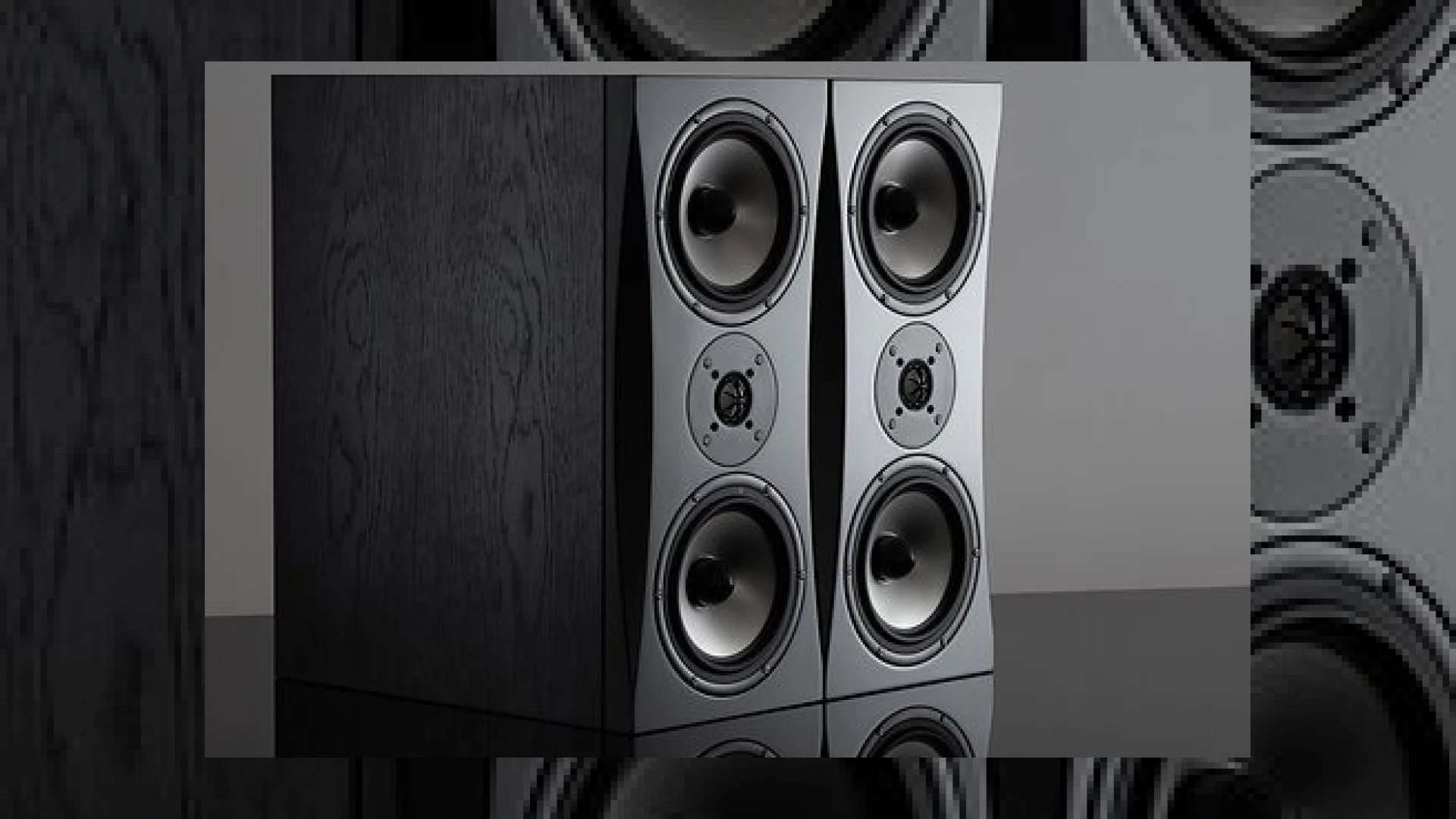
Visual context for New high-end MTM monitor from OS Acoustics.
At SM Mastering, our pursuit of sonic perfection requires us to constantly evaluate the latest advancements in electro-acoustic engineering. Following the critical success of their debut DB7 nearfield monitors, Bournemouth-based manufacturer OS Acoustics has unveiled a striking new addition to their lineup. We are thrilled to analyze the new high-end mtm monitor from os acoustics, the DBS8, which marks a significant departure from standard two-way reflex designs by embracing a closed-box cabinet and a Mid-Tweeter-Mid (MTM) driver alignment.
A Technical Analysis of the New High-End MTM Monitor from OS Acoustics
In comparison to its predecessor, the new high-end mtm monitor from os acoustics adopts a D’Appolito configuration. This specialized layout places a high-tech Eton ceramic-coated magnesium-dome tweeter symmetrically between two 6.5-inch SEAS woofers. By configuring the drivers in this manner, OS Acoustics has achieved a narrowed vertical dispersion pattern. This tight vertical control dramatically reduces destructive acoustic reflections from mixing desks, consoles, and studio ceilings, resulting in a significantly wider and more stable horizontal sweet spot.
Furthermore, distributing the low and low-mid frequencies across two smaller SEAS drivers rather than a single large woofer minimizes thermal compression. This ensures that the monitor maintains linear dynamics even during demanding, high-SPL mastering sessions. When auditing complex mid-range frequencies, this configuration behaves similarly to a coaxial design but with superior power handling and diminished intermodulation distortion.
Sealed Cabinet Precision and Advanced DSP Integration
While many modern manufacturers rely on ported designs to artificially boost low-end response, the DBS8 utilizes a completely sealed, closed-box cabinet. Closed-box monitors are highly regarded in mastering circles for their impeccable transient response and minimal group delay. Without the resonant overhang of a bass reflex port, sub-bass frequencies stop and start instantaneously. The LF response of the DBS8 is incredibly robust, measuring only 6dB down at 35Hz, which provides an exceptionally true-to-source low-frequency foundation.
To complement this physical design, the onboard electronics feature high-resolution DSP control. Similar to reference monitors developed by industry pioneers like Neumann, the DBS8 incorporates advanced linear-phase crossovers and FIR filtering. The rear panel features an eight-way rotary encoder allowing users to select tailored DSP curves. Most notably, users can opt for a time-aligned preset that perfectly phase-aligns the outputs of the woofers and tweeter, optimizing the impulse response at the listening position at the expense of minor system latency.
Acoustic Specifications Overview
To understand where this monitor fits into a professional mastering or high-end mixing environment, let us examine the core physical and electrical specifications of this system:
| Name | Primary Use | Price (Est. Per Pair) | Rating |
|---|---|---|---|
| OS Acoustics DBS8 | Critical Mastering, High-End Mixing, Stereo & Surround Monitoring | £4,200 / $5,400 | 4.8 / 5 Stars |
Practical Studio Workflow Tips for MTM Monitors
Integrating a specialized MTM monitor into your production environment requires a slightly different approach than standard nearfields. When setting up the new high-end mtm monitor from os acoustics, we recommend the following professional workflow adjustments:
- Precise Height Alignment: Because MTM configurations restrict vertical dispersion to minimize ceiling and desk reflections, the tweeter must be aligned exactly at ear level. Utilize high-mass decoupled stands to prevent mechanical energy transfer to your bridge or floor.
- DSP Latency Management: When tracking live instruments or vocalists, utilize the low-latency DSP mode on the rear panel. Switch to the high-accuracy, time-aligned phase mode during the mixing and mastering stages where latency is no longer a constraint.
- Boundary Compensation Tuning: When integrating the new high-end mtm monitor from os acoustics into an untreated or semi-treated room, the DSP boundary controls should be carefully configured. If placed near front walls, apply the stepped low-frequency shelf attenuation to keep the low-end translation tight and balanced.
Conclusion
Ultimately, the new high-end mtm monitor from os acoustics represents a paradigm shift for boutique British monitor design. By pairing ultra-premium SEAS and Eton drivers with an uncompromised closed-box cabinet and advanced linear-phase DSP, OS Acoustics has created a tool of surgical precision. For engineers seeking flawless transient replication, reliable phase accuracy, and effortless low-end authority, the DBS8 is a formidable contender. For more hardware insights and software shootouts, check out our comprehensive library at SM Mastering Audio Articles.
Frequently Asked Questions
What are the main acoustic benefits of an MTM driver configuration?
An MTM (Mid-Tweeter-Mid) or D’Appolito configuration controls vertical dispersion, minimizing unwanted reflections from your studio ceiling and mixing console. It also improves off-axis frequency response, reduces thermal compression, and delivers a highly focused, stable center image.
Is a closed-box design better than a ported cabinet for mastering?
Yes, closed-box (sealed) cabinets are highly preferred for mastering because they do not suffer from port turbulence or resonant phase smear. This results in superior transient accuracy and faster, more defined low-frequency decay times.
Does the DSP time-alignment feature introduce latency?
Yes, the high-precision linear-phase FIR filters used to time-align the drivers introduce a small amount of system latency. While negligible for mixing and mastering, OS Acoustics provides alternative low-latency DSP modes for recording sessions.
🛒 Official Product Info & Where to Buy
Check full technical specs, pricing, and purchase options directly from the official manufacturer or authorized dealer for New high-end MTM monitor from OS Acoustics.
Written by SM Mastering
Official content on sound engineering, mixing, mastering, and advanced electronic production by SM Mastering.