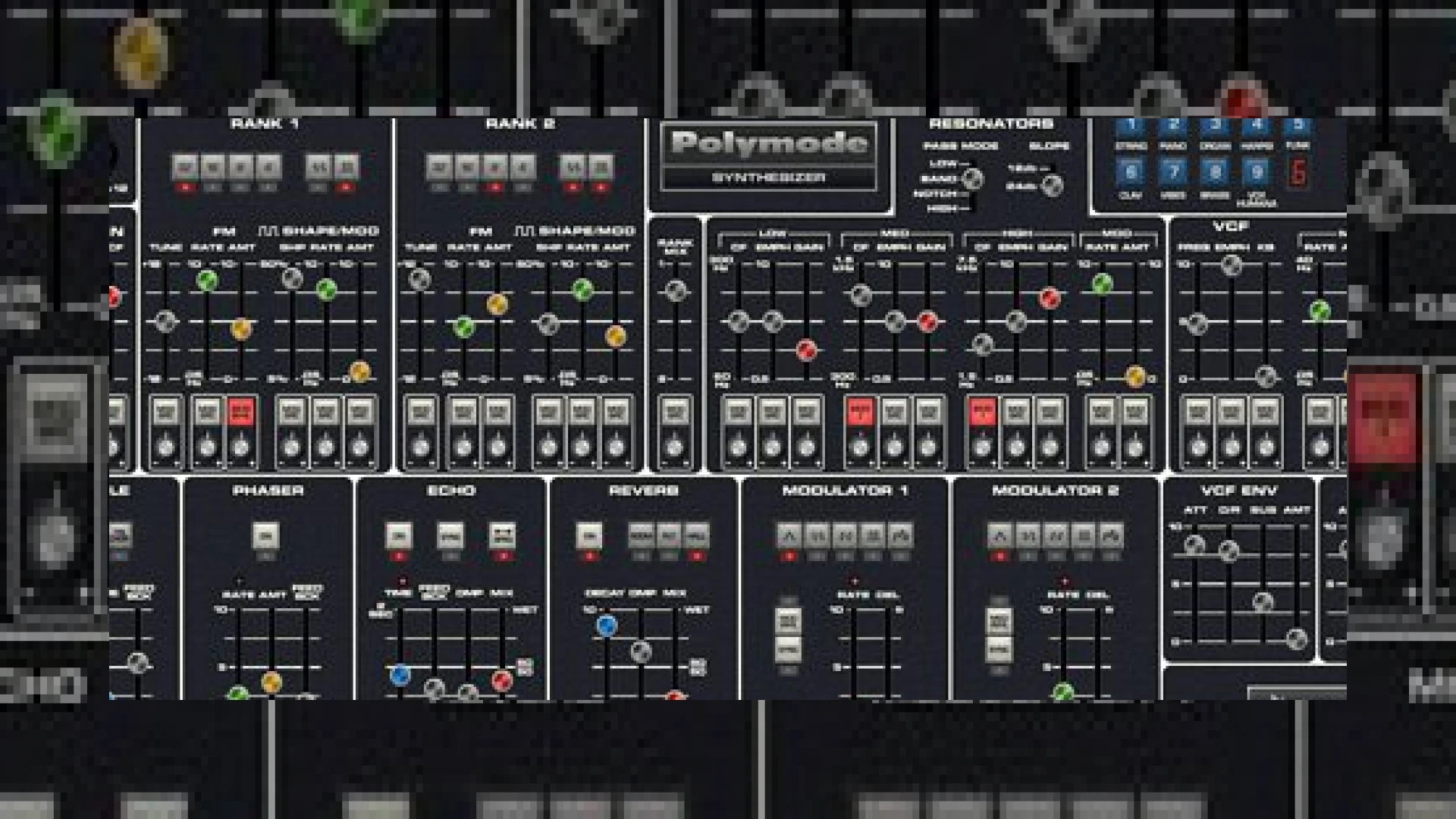
Visual context for Cherry Audio recreate the Polymoog.
The release of a vintage synthesizer emulation is always a major event in the music production community. However, when developers like Cherry Audio recreate the Polymoog, the electronic music community sits up and takes notice because of the sheer complexity of the original hardware. Released in 1975, Moog’s original Polymoog was an ambitious, highly complex, and notoriously fragile instrument. It used a unique divide-down electronic organ-style architecture to achieve full polyphony, making it radically different from the voice-allocation designs of later polyphonic synths.
Why Cherry Audio Recreate the Polymoog for Modern DAWs
To appreciate this virtual release, one must understand the absolute maintenance nightmare of the original hardware. In how Cherry Audio recreate the Polymoog, they have bypasses the mechanical failures, tuning instabilities, and heat-dispersion issues of the 1970s unit, replacing them with a reliable, ultra-stable software counterpart called the Polymode. For modern electronic music producers working in digital audio workstations like Ableton Live, this offers instant, hassle-free access to classic, lush analog tones that were once reserved only for top-tier studios with dedicated hardware technicians.
The engineering task was massive. The divide-down circuitry of the original instrument created a highly distinct harmonic behavior when multiple keys were depressed. When Cherry Audio recreate the Polymoog, they carefully modeled this unique interactive behavior of the filter and envelope structures, ensuring that the software doesn’t just sound like a generic subtractive synthesizer, but faithfully captures the quirky, symphonic movement of the vintage hardware.
Advanced DSP Enhancements Beyond the Original Hardware
The original synthesizer featured a brilliant three-band Resonator section, which allowed players to sculpt acoustic-like resonance curves across the frequency spectrum. And when Cherry Audio recreate the Polymoog, they make sure to expand upon this legendary feature. The virtual Polymode software introduces steeper filter slope options for the Resonator section, a brand-new Notch mode for sophisticated sound-shaping, and a dedicated, assignable LFO specifically designed to modulate the Resonator frequencies.
Furthermore, the modulation routing has been vastly improved. The vintage hardware had very rigid routing options, but the software equivalent features an extensive modulation matrix that allows producers to modulate almost any slider-controlled parameter. For those wanting to dive deeper into how classic hardware synthesis compares to modern mastering workflows, you can read our technical guides over at the SM Mastering Audio Articles portal.
Technical Specifications
| Name | Use | Price | Rating |
|---|---|---|---|
| Cherry Audio Polymode Synthesizer | Polyphonic Virtual Analog Plugin (VST/AU/AAX) | $29 (Introductory) / $49 (Standard) | 4.8 / 5.0 |
Practical Studio Workflow Tips
- Stereo Widening with the Resonator: Use the newly added LFO to gently modulate the Resonator cutoff frequencies. This creates a wide, organic stereo field that mimics the imperfections of a physical acoustic space.
- The Vox Humana Texture: Load the classic “Vox Humana” preset (famed by artists like Gary Numan) and layer it behind a modern digital wavetable synth. The raw, divide-down texture of the Polymode adds mid-range warmth that digital synths often lack.
- Gain Staging in your DAW: Because vintage emulations can build up massive low-mid accumulation when playing dense chords, monitor your master bus headroom carefully. Keep input levels slightly lower to allow the master bus compressor to breathe.
Conclusion
Integrating vintage character into clean, modern productions has never been easier. Understanding how Cherry Audio recreate the Polymoog’s classic interface highlights the perfect marriage of historical accuracy and modern digital convenience. Ultimately, to watch Cherry Audio recreate the Polymoog so seamlessly is a testament to how far virtual DSP technology has progressed, offering a gorgeous, maintenance-free piece of synth history for a fraction of the cost of the original hardware.
Frequently Asked Questions
Is the Cherry Audio Polymode a direct clone of the Polymoog?
Yes, it is a highly faithful emulation of the Polymoog’s unique architecture, but it includes several modern DSP enhancements such as an expanded modulation matrix, additional filter slopes, and extra LFOs.
Does this plugin require a lot of CPU power?
Unlike the heavy DSP load of some modern analog emulations, Cherry Audio has highly optimized the Polymode code, allowing you to run multiple instances across your project without crashing your CPU.
What plugin formats are supported?
The Polymode synthesizer is available in AU, VST, VST3, and AAX formats, alongside a fully functional standalone application for both macOS and Windows systems.
🛒 Official Product Info & Where to Buy
Check full technical specs, pricing, and purchase options directly from the official manufacturer or authorized dealer for Cherry Audio recreate the Polymoog.

Written by SM Mastering
Official content on sound engineering, mixing, mastering, and advanced electronic production by SM Mastering.