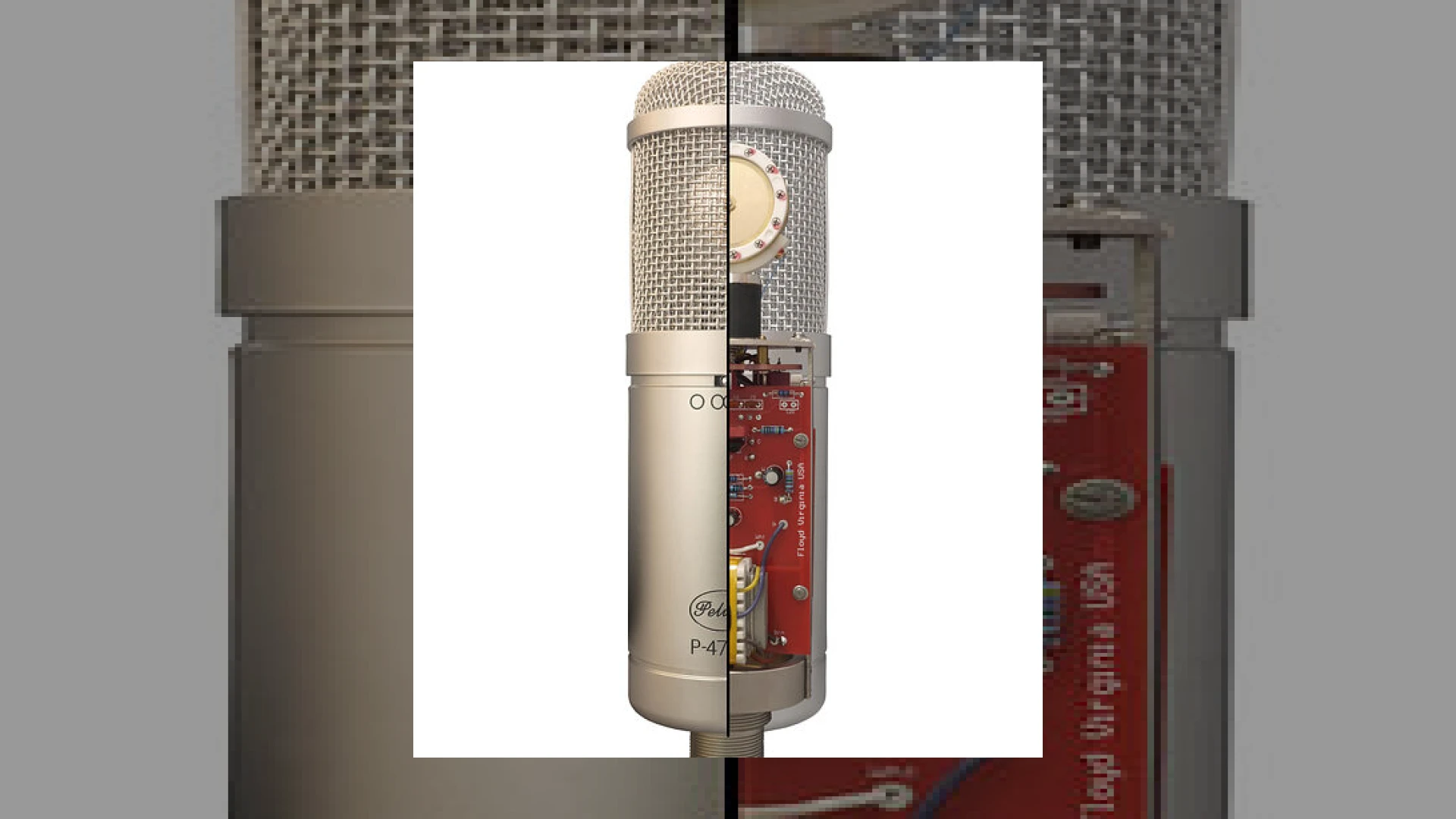
Visual context for Peluso revisit the U47.
The quest for the legendary vocal sound of the mid-20th century has led many manufacturers to replicate vintage tube microphones. In this technical analysis, we look closely at how Peluso revisit the u47 with their latest solid-state microphone, the P-47 SS. By utilizing modern Field Effect Transistor (FET) technology instead of a traditional vacuum tube, this new release aims to deliver the sonic signature of the classic Neumann U47 without the typical maintenance, noise, and cost associated with vintage tube equipment.
Historically, recreating this specific microphone has been a central focus for high-end builders. While previous tube-based homages from Peluso successfully captured the warmth of the original VF14 and 6072A valves, they remained premium investments. As Peluso revisit the u47 in this new format, they address a growing demand for reliable, lower-noise studio workhorses that do not sacrifice the rich mid-range and smooth top-end presence that made the original capsule design world-famous.
How Peluso Revisit the U47 with Solid-State Engineering
The core philosophy behind the P-47 SS is to maintain the acoustic characteristics of a vacuum-tube U47 while leveraging the practical benefits of solid-state circuitry. Many engineers assume that a FET-based U47 style microphone would automatically mimic the later U47 FET model, which was notoriously different in transient response and tone. However, when Peluso revisit the u47 using a custom solid-state design, their goal remains strictly aligned with the softer, more musical character of the tube original, rather than the punchy, broadcast-oriented U47 FET.
By pairing a highly optimized FET circuit with a large-core output transformer, Peluso achieves an incredibly low noise floor and reduced harmonic distortion. This approach allows the capsule’s natural frequency response to take center stage. This development demonstrates how Peluso revisit the u47 to capture a vintage vibe while meeting the strict noise-floor requirements of modern, high-resolution digital audio interfaces.
Technical Specifications
To understand the build quality and design choices of this microphone, let us look at the official specifications of the Peluso P-47 SS:
| Name | Use | Price | Rating |
|---|---|---|---|
| Peluso P-47 SS | Lead Vocals, Brass, Acoustic Instruments, Drum Overheads | £1149 (inc. VAT) | 4.8 / 5.0 |
Capsule Design and Polar Patterns
At the heart of any great microphone is its capsule. The P-47 SS utilizes Peluso’s premium 34mm Braunmühl-Weber style capsule, which features center termination. This is the exact same high-quality capsule found in their more expensive tube-driven U47 tributes. Because the capsule behaves identically to its premium siblings, the microphone retains the off-axis rejection and proximity effect characteristics that engineers expect from a high-end studio tool.
The microphone features three switchable polar patterns: cardioid, omnidirectional, and figure-8. This flexibility makes it an excellent choice for a variety of studio setups, from intimate vocal tracking to ambient room miking. Furthermore, a switchable 75Hz high-pass filter is integrated into the body to help control low-end rumble and excessive proximity buildup in tight tracking environments.
Practical Studio Workflow Tips
To get the most out of this versatile microphone in your daily tracking and mixing sessions, consider the following technical workflow strategies:
- Vocal Placement: Position the microphone 6 to 8 inches away from the vocalist, angled slightly downward toward the chest to capture a rich chest resonance while minimizing harsh plosives.
- Acoustic Instruments: Engage the 75Hz high-pass filter when tracking acoustic guitars to eliminate muddy low frequencies, allowing the transient details of the strings to sit perfectly in the mix.
- Stereo Room Setup: Utilize a pair of P-47 SS mics in figure-8 or omnidirectional mode to capture natural room acoustics, which can later be processed with saturation to emulate vintage tape sessions.
For more deep dives into tracking, mixing, and preparing your acoustic files for final distribution, be sure to read our detailed guides available at the SM Mastering Audio Articles library.
Conclusion
The P-47 SS represents a highly successful balancing act between vintage tone and modern utility. Studios looking to see how Peluso revisit the u47 will find that this solid-state version offers a stunningly quiet, reliable, and affordable entry point to classic vocal tones. It delivers the smooth mid-range presence of a vintage classic with the rugged durability and low-noise performance demanded by modern engineers.
Frequently Asked Questions
Does the Peluso P-47 SS sound like a vintage U47 FET?
No. While the P-47 SS is a solid-state (FET) microphone, it is voiced to emulate the warmer, smoother sound of the original vacuum-tube U47. It is not designed to sound like the later, more aggressive U47 FET which was commonly used on kick drums and brass instruments.
What accessories are included with the microphone?
The Peluso P-47 SS comes complete with a robust flightcase, a soft velvet storage bag, a heavy-duty shockmount, a standard microphone clip, and a custom-fit foam windshield to prevent plosives during vocal tracking.
Can this microphone be powered by standard 48V phantom power?
Yes. Because the P-47 SS is a solid-state microphone rather than a valve-powered design, it does not require an external multi-pin power supply. It runs entirely on standard 48V phantom power via a standard 3-pin XLR cable.
🛒 Official Product Info & Where to Buy
Check full technical specs, pricing, and purchase options directly from the official manufacturer or authorized dealer for Peluso revisit the U47.

Written by SM Mastering
Official content on sound engineering, mixing, mastering, and advanced electronic production by SM Mastering.