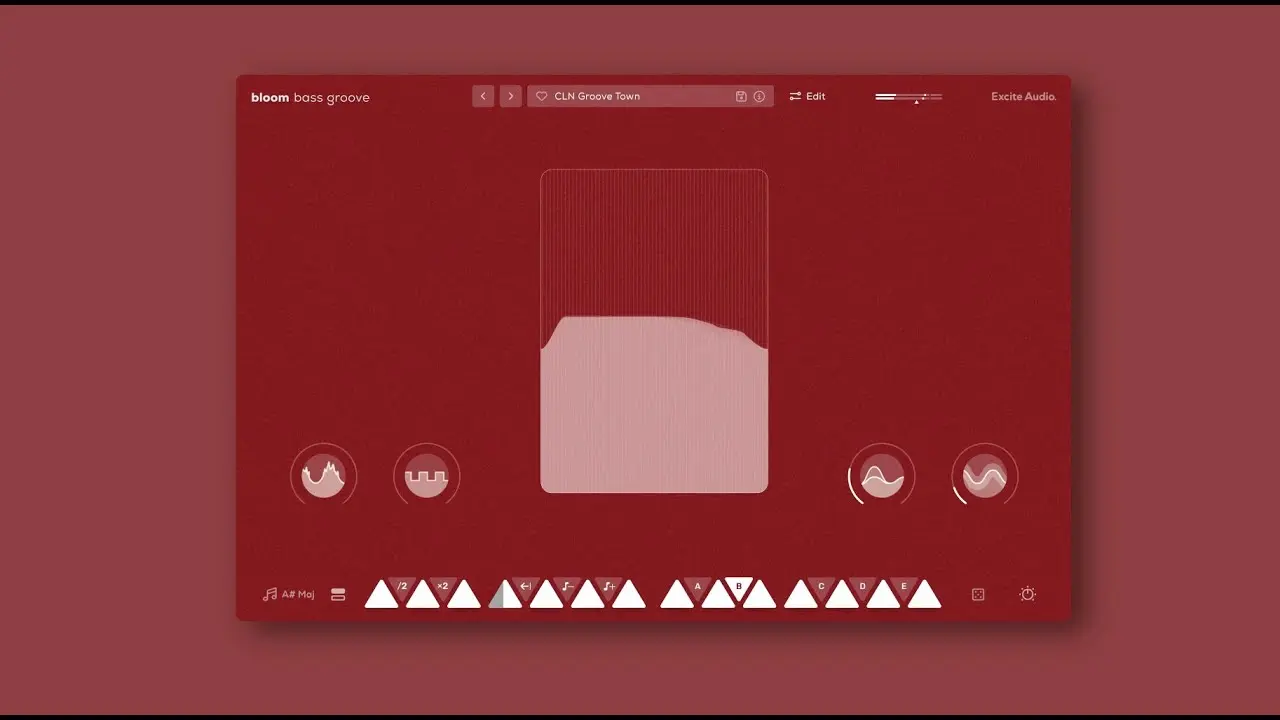
Excite Audio Bloom Bass Groove
Table of Contents – Excite Audio Bloom Bass Groove
Technological Paradigms in Performance-Oriented Virtual Instruments: A Comprehensive Analysis of Excite Audio Bloom Bass Groove Lite and the Integrated Bloom Ecosystem
The evolution of virtual instrument technology has reached a critical juncture where the traditional boundaries between static sample playback and dynamic synthesis have effectively dissolved. In the current era of music production, professional practitioners demand tools that do not merely reproduce sounds but capture the inherent “soul” and rhythmic nuances of human performance. The Bloom series by Excite Audio represents a significant contribution to this paradigm shift, specifically through its innovative approach to phrase-based sampling and real-time performance modulation.1 Among this ecosystem, Bloom Bass Groove Lite emerges as a pivotal entry point, offering a distilled yet powerful version of a sophisticated performance engine designed to provide instant access to professionally recorded electric bass grooves.3 This report examines the technical architecture, workflow philosophy, and market positioning of Bloom Bass Groove Lite, while situating it within the broader context of Excite Audio’s comprehensive plugin portfolio and the competitive landscape of modern digital audio workstations.
The Architectural Genesis of the Bloom Ecosystem
To understand the specific utility of Bloom Bass Groove Lite, it is first necessary to analyze the underlying architecture common to the entire Bloom series. Excite Audio has developed a unified engine that serves as the foundation for a diverse range of instruments, including Vocal Aether, Drum Percussion, Synth Atmosphere, and Bass Impulse.1 This engine is characterized by a dual-layered interface: a primary performance page designed for immediate creative output and an advanced edit page for granular sound design and sample manipulation.5
The Bloom philosophy is predicated on the “Phrase Player” logic, which eschews the traditional multi-sampling approach—where individual notes are mapped to specific keys—in favor of triggering BPM-synced phrases and loops.2 This transition from note-based programming to phrase-based performance addresses one of the most persistent challenges in MIDI-based production: the “uncanny valley” of digital instruments, where the absence of natural performance variations makes programmed lines sound robotic and sterile.8 By utilizing high-quality recordings of professional musicians and subjecting them to a sophisticated modulation engine, Bloom ensures that the rhythmic integrity and articulation of the original performance are preserved even when manipulated by the user.2
Standardization Across the Product Line
The consistency of the Bloom interface across different sound sources allows for a highly efficient cross-plugin workflow. Whether a producer is working with the vocal textures of Bloom Vocal Aether or the rhythmic foundations of Bloom Drum Percussion, the fundamental controls remain the same.5 This standardization includes the 14-key sample trigger system, the five-modifier black key system, and the four-macro control system.8
| Plugin Title | Primary Sound Source | Specialized Macro Controls | Primary Use Case |
| Bloom Vocal Aether | Recorded Vocal Loops 7 | Warmer, Speaker, Doubler, Ethereal 7 | Atmospheric hooks and textures |
| Bloom Drum Percussion | Latin & African Percussion 5 | Drive, Slap Delay, Multi Delay, Lo-Fi 5 | Organic rhythmic layers |
| Bloom Synth Atmosphere | Drones and Textures 6 | Drive, Modulation, Width, Submerge 6 | Ambient soundscapes and pads |
| Bloom Bass Groove | Electric Bass Performances 8 | Tube, Digital, Sub-EQ, Realism 8 | Soul, Funk, and Pop foundations |
| Bloom Bass Impulse | Modern Synth Bass 10 | Sub-EQ, Noise, Crush, Width 10 | EDM, DnB, and Dubstep |
This unified approach ensures that the “Bloom Bundle”—a collection of ten such plugins—functions as a cohesive creative environment rather than a disjointed set of tools.1 For the professional user, this means that the cognitive load associated with learning new software is significantly reduced, as the operational logic remains constant regardless of the sonic material being manipulated.1
Technical Deep Dive: Bloom Bass Groove Lite
Bloom Bass Groove Lite is a streamlined version of the flagship Bass Groove instrument, specifically tailored for producers who require high-quality electric bass content without the full complexity of the advanced version.3 Despite its “Lite” designation, the instrument maintains the core audio quality and performance engine that define the series, utilizing professionally recorded samples of slap, fingerstyle, picked, and muted bass articulations.3
The Core Performance Engine and Sample Library
The heart of Bloom Bass Groove Lite lies in its 56-sample library, organized into four distinct sample banks.3 These samples are not static one-shots but are rhythmic phrases and one-shot articulations that have been meticulously captured to reflect the dynamics and intricacies of a real-life bass performance.2 The instrument covers a wide variety of styles, from the “Chic-fuelled funk” of slap bass to the “smooth sounds of golden-age hip-hop”.2
The content is categorized into 75 presets across seven stylistic categories, providing a broad range of starting points for various production scenarios.3 These categories are essential for navigating the plugin’s capabilities:
- Clean (CLN): These presets emphasize the natural tone of the bass guitar, typically recorded via high-end DI (Direct Injection) or clean studio amping, ideal for soul and jazz-influenced tracks.2
- Experimental (EXP): This category showcases the engine’s ability to push organic samples into abstract territories through heavy modulation and unconventional effects processing.2
- High Energy (HI): These are characterized by fast, busy basslines that are well-suited for upbeat pop and dance music.2
- Low Energy (LO): In contrast, these presets offer spacious, slower phrases that provide a subtle foundation for minimalist or ambient arrangements.2
- Melodic (MLD): These presets are designed to be played as lead lines or melodic motifs, taking advantage of the white keys’ pitch-tracking capabilities.2
- Processed (PRO): Presets that utilize aggressive saturation, filtering, and dynamic shaping to create “produced” sounds that fit immediately into modern mixes.2
- Rhythmic (RHY): These focus on highly percussive performances, often featuring slap techniques and syncopated grooves that define the “rhythm” of a track.2
The Role of Macro Controls in Tonal Transformation
One of the most powerful features of Bloom Bass Groove Lite is its four-macro control system.3 These macros are not simple parameters; they are complex control points tied to an internal effects chain that has been expertly tuned to the specific sample material.7
The Tube macro is designed to impart the harmonic richness associated with analog vacuum tube amplification.3 Increasing this parameter introduces even-order harmonics and soft-clipping, which can add “weight” and “warmth” to the bass, helping it to stand out in a dense mix without merely increasing volume.3 The Digital macro, by contrast, focuses on clarity and modern precision.3 It may introduce bit-reduction, high-frequency excitation, or other digital artifacts that help the bass cut through modern electronic arrangements.2
The Sub-EQ macro is a specialized tool for managing the low-frequency relationship between the bass and the kick drum.3 By providing a tailored low-end boost or cut, it allows producers to quickly carve out space for other elements or to provide the massive sub-foundation required in contemporary pop and hip-hop.3 Finally, the Realism macro is a unique feature that controls the presence of performance-related artifacts—such as finger noise, fret buzz, and subtle timing offsets—that contribute to the perception of a live performance.3
The Phrase Player Workflow: Performance vs. Programming
The “Phrase Player” is the conceptual centerpiece of the Bloom series, offering a workflow that bridges the gap between traditional loop libraries and playable virtual instruments.3 In Bloom Bass Groove Lite, this system is mapped across a two-octave keyboard, with a clear functional distinction between white and black keys.3
The Trigger System (White Keys)
The 14 white keys are used to trigger the 14 BPM-synced samples or phrases available in the currently selected bank.7 This system ensures that the bassline is always in time with the host project, as the engine automatically stretches or compresses the audio material to match the DAW’s tempo.3 Furthermore, the phrases are key-locked, meaning they automatically transpose to match the project’s musical key, eliminating the need for manual pitch shifting of individual samples.3
This “trigger and hold” mechanic allows producers to audition multiple variations of a bassline in real-time. Instead of clicking through folders of loops, a producer can “play” different phrases on the keyboard, instantly hearing how they interact with the existing drums and melodies in the track.2
The Modifier System (Black Keys)
The five black keys serve as performance modifiers, allowing the user to alter the behavior of the triggered phrase in real-time.3 In the Lite version, these modifiers are pre-assigned to essential performance variations.11
| Modifier Key | Function | Creative Application |
| Half-time | Reduces playback speed by 50% 8 | Creating “breakdown” sections or double-time feel shifts |
| Double-time | Increases playback speed by 200% 8 | Adding intensity to build-ups or high-tempo sections |
| Reverse | Reverses the sample playback 8 | Experimental transitions or unique “sucking” textures |
| Octave Down | Transposes the phrase one octave lower 8 | Enhancing the sub-frequency presence of a riff |
| Octave Up | Transposes the phrase one octave higher 8 | Creating melodic variations or lead-like bass parts |
This system allows for a level of expressive performance that is difficult to achieve with static loops. By combining trigger keys with modifiers, a producer can perform complex, evolving basslines that sound like they were played by a session musician who is responding to the energy of the track.2
Deep Sound Design via the Edit Page
For users who require more granular control than the main interface provides, the Edit Page offers a comprehensive suite of tools for sample manipulation.2 This section of the plugin is where the “instrument” aspects of Bloom truly shine, allowing the user to deconstruct the factory samples and rebuild them into something entirely unique.5
Sample Editing and Manipulation
In the Sample Edit panel, users can adjust the start and end points of the 14 source samples.3 This is particularly useful for isolating a specific “groove” or articulation from a longer phrase.3 For example, if a loop contains a complex slap riff followed by a simple sustained note, the user can trim the sample to only trigger the slap, effectively creating a custom articulation key.3
Additional controls available on the Edit Page include:
- Playback Direction and Speed: Beyond the real-time modifiers, these can be set globally for each sample.3
- Formant Control: This allows the user to shift the spectral characteristics of the bass without changing its pitch, which is useful for making the bass sound “larger” or “smaller” or for matching it to the timbre of other instruments.3
- Choke Groups: Essential for percussive bass playing, choke groups ensure that when a new sample is triggered, the previous one is instantly cut off, preventing muddy overlaps and ensuring a tight, professional sound.3
- Randomize Function: A powerful tool for overcoming creative blocks, this function instantly remaps samples across the keyboard, often generating new and unexpected rhythmic ideas that the producer might not have considered.3
The Internal Effects Architecture
Bloom Bass Groove Lite incorporates a specialized effects chain designed specifically for the low-end requirements of the electric bass.8 This chain includes three primary modules:
- Speaker: This module simulates various reamping techniques and loudspeaker characteristics.8 It can replicate the sound of anything from a small handheld device to a massive classic guitar amp or a high-fidelity studio monitor.11 This allows the producer to place the bass in different “acoustic spaces” and provides a range of tonal characters from thin and “lo-fi” to thick and “hi-fi”.8
- Dynamics: Specifically tuned for bass, this module provides tools for transient shaping, gating unwanted noise, and applying compression.8 These controls are vital for ensuring that the bass has the necessary punch and consistency to drive a track.8
- Envelope Filter: This audio-responsive filter sculpts the frequency content based on the intensity of the input signal.8 It is a staple of funk and disco production, providing the classic “quack” or “wah” sound that responds dynamically to the performance.8
Comparative Analysis: Bloom vs. The Market
The virtual bass market is broad, ranging from high-fidelity multisampled libraries to AI-driven virtual session players. Bloom Bass Groove Lite occupies a unique middle ground, emphasizing performance and immediate creative results over exhaustive note-by-note programming.2
Bloom vs. UJAM Virtual Bassist
UJAM’s Virtual Bassist series (including “Slap”) is perhaps the closest competitor to Bloom in terms of philosophy.13 Both utilize phrases and performance styles to simplify the creation of basslines.2
| Feature | Bloom Bass Groove Lite | UJAM Virtual Bassist (Series) |
| Logic | Phrase Player / Modifier Engine 2 | Virtual Session Musician 13 |
| Flexibility | Deep Sample Manipulation (Edit Page) 2 | MIDI Drag & Drop to DAW 12 |
| Customization | Randomize / Choke Groups 3 | Style and Character presets 13 |
| Expansion | Integrated into 10-plugin Bloom series 1 | Standalone specialized instruments 13 |
While UJAM focuses on providing a “virtual session player” who can interpret MIDI notes into stylistic performances, Bloom emphasizes the “instrument” nature of its engine, encouraging the user to manipulate and transform the recorded phrases through its unique modifier and macro system.2 Bloom’s Edit Page offers a level of granular sample manipulation that is typically absent in UJAM’s more streamlined, performance-oriented interface.2
Bloom vs. Toontrack EZBass
Toontrack’s EZBass is a powerhouse of compositional tools, offering features like MIDI generation from audio files and deep articulation control.12 However, EZBass requires a significant amount of “programming” and understanding of bass arrangement.12 Bloom Bass Groove Lite, conversely, is designed for rapid “vibe-setting”.3 It is particularly effective in genres like house, disco, and hip-hop, where the core of the track is often a single, powerful loop or phrase that needs to be effectively integrated and processed.3
User Experience and Community Reception
The release of Bloom Bass Groove Lite, particularly its holiday promotion on Plugin Boutique, has generated significant discussion within the music production community.3 The general consensus highlights the plugin’s ability to provide high-quality “instant results,” which is increasingly valued in fast-paced production environments.3
Positive Feedback and Creative Potential
Users have praised the plugin as one of the “best freebies of the year,” noting the high quality of the recorded electric bass performances and the intuitive nature of the Phrase Player.3 The “Soulful Bass” marketing appears to resonate with users who are looking for the nuances of real performance—slaps, muted one-shots, and dynamic playing styles—that are difficult to replicate with synthesis alone.2
The “Lite” version’s generosity has also been noted; with 75 presets and 56 samples, it offers more creative potential than many competing “entry-level” plugins.3 This has led many users to consider upgrading to the full version, which includes 112 samples and advanced features like user sample import.2
Critiques and UX Challenges
Despite the overall positive reception, some users have identified areas for improvement within the Bloom engine.4 Technical discussions on platforms like KVR and Reddit have pointed out specific UX (User Experience) issues, particularly within the sequencer and edit pages.4
Critiques include:
- Sequencer UX: Some users find the sequencer unintuitive, noting that dragging steps can accidentally delete others and that there is no “shift step” feature to easily adjust the timing of a pattern.4
- Sample Selection: The reliance on dropdown menus for sample selection is seen as a bottleneck compared to more modern “drag and drop” or “scrollable” interfaces.4
- CPU Usage: While generally efficient, some users on high-end hardware (such as Apple M3) have reported surprisingly high CPU spikes, suggesting that certain DSP algorithms within the internal effects chain could be further optimized.4
- Sample Import Limitations: In the full version, the sample import is limited to files under 30 seconds, which, while sufficient for phrases and loops, may frustrate some experimental producers looking to use longer textures.4
The Plugin Boutique Ecosystem
The availability of the Lite version for free (using the code PB-XMAS-25 until January 11, 2026) is a strategic move that leverages the Plugin Boutique ecosystem.3 While the promotion has been successful in driving adoption, some users have voiced frustration with the Plugin Boutique platform itself, specifically the captcha systems and login persistence, which can hinder the acquisition of these promotional items.15
Deployment and Professional Integration
From a technical perspective, Bloom Bass Groove Lite is built for modern studio environments, offering broad compatibility and a straightforward installation process.3
System Requirements and Compatibility
Excite Audio has ensured that the plugin runs on all major operating systems and DAW environments.3
| Category | Requirements |
| macOS | 10.15 or higher (Intel & Native Apple Silicon support) 3 |
| Windows | 7 or higher 3 |
| Formats | VST, VST3, AU, AAX, Standalone 3 |
| Architecture | 64-bit only 3 |
| Supported DAWs | Ableton Live, Logic Pro, FL Studio, Cubase, Pro Tools, Reaper, etc. 11 |
| Recommended Buffer | 512 Samples or higher for optimal performance 11 |
Installation and Activation Workflow
The installation process follows a standard procedure for both Windows and Mac.11 Users download the installer from their Plugin Boutique account, run the executable or package file, and then activate the plugin within their DAW using the provided serial number.11 This streamlined activation ensures that the instrument is ready for use within minutes of acquisition.3
One notable feature is the standalone application mode, which allows producers to jam with the bass grooves or design new sounds without the overhead of a full DAW.3 This is particularly useful for practice sessions or for portable setups where minimal software load is desired.11
Strategic Implications for the Producer
The Bloom Bass Groove Lite instrument is more than just a sound library; it is a creative catalyst that encourages a performance-first mindset.2 Its integration into a track can be approached in several ways, depending on the stage of production.
For Groove Generation
In the early stages of a production, the Bloom engine is an excellent tool for “finding the pocket”.2 By cycling through phrases and modifying them in real-time with the black keys, a producer can quickly identify a rhythmic foundation that works with their drum pattern.3 The ability to instantly lock these phrases to the project’s key and tempo means that the creative momentum is never interrupted by technical hurdles.3
For Arrangement and Dynamic Variation
During the arrangement phase, the modifier system becomes invaluable.3 A producer can use the octave and speed modifiers to create variations across different sections of a song—such as half-time bass in the chorus for a “heavier” feel or reversed bass hits to lead into a drop.8 This mirrors the dynamic shifts that a live band would naturally employ, adding a layer of professional polish to the arrangement.2
For Sound Design and Texture
By utilizing the Edit Page and the four macro controls, producers can transform the organic bass recordings into something entirely synthetic or experimental.2 This makes the plugin versatile enough to be used in genres far removed from the soul and funk it was originally sampled from, such as industrial, ambient, or cinematic sound design.2
Conclusions and Future Outlook
Excite Audio Bloom Bass Groove Lite represents a sophisticated synthesis of performance-based sampling and intuitive software design.2 By prioritizing the “soul” of real electric bass performances and providing a flexible, modifier-driven engine to manipulate them, it addresses the needs of modern producers who require both speed and authenticity.2
The success of the Bloom series as a whole indicates a growing market for instruments that are “curated but playable”.1 The ability to bridge the gap between static loops and complex programming is a significant value proposition, particularly as the tools for high-quality production become increasingly accessible.3
Looking forward, the continued evolution of the Bloom engine will likely focus on refining the user experience and expanding the sonic palette.1 The introduction of features like sample import suggests that Excite Audio is committed to making the Bloom engine a primary hub for performance-based sampling.2 For the professional user, the Bloom series offers a powerful, standardized, and highly creative set of tools that can significantly enhance the rhythmic and emotional impact of their music.1 Whether as a free entry point during its promotional window or as a deliberate investment in the full bundle, Bloom Bass Groove Lite stands as a hallmark of modern virtual instrument design.3
Find My Labels | findmylabels.com | SM Mastering – Mix & Master Services
