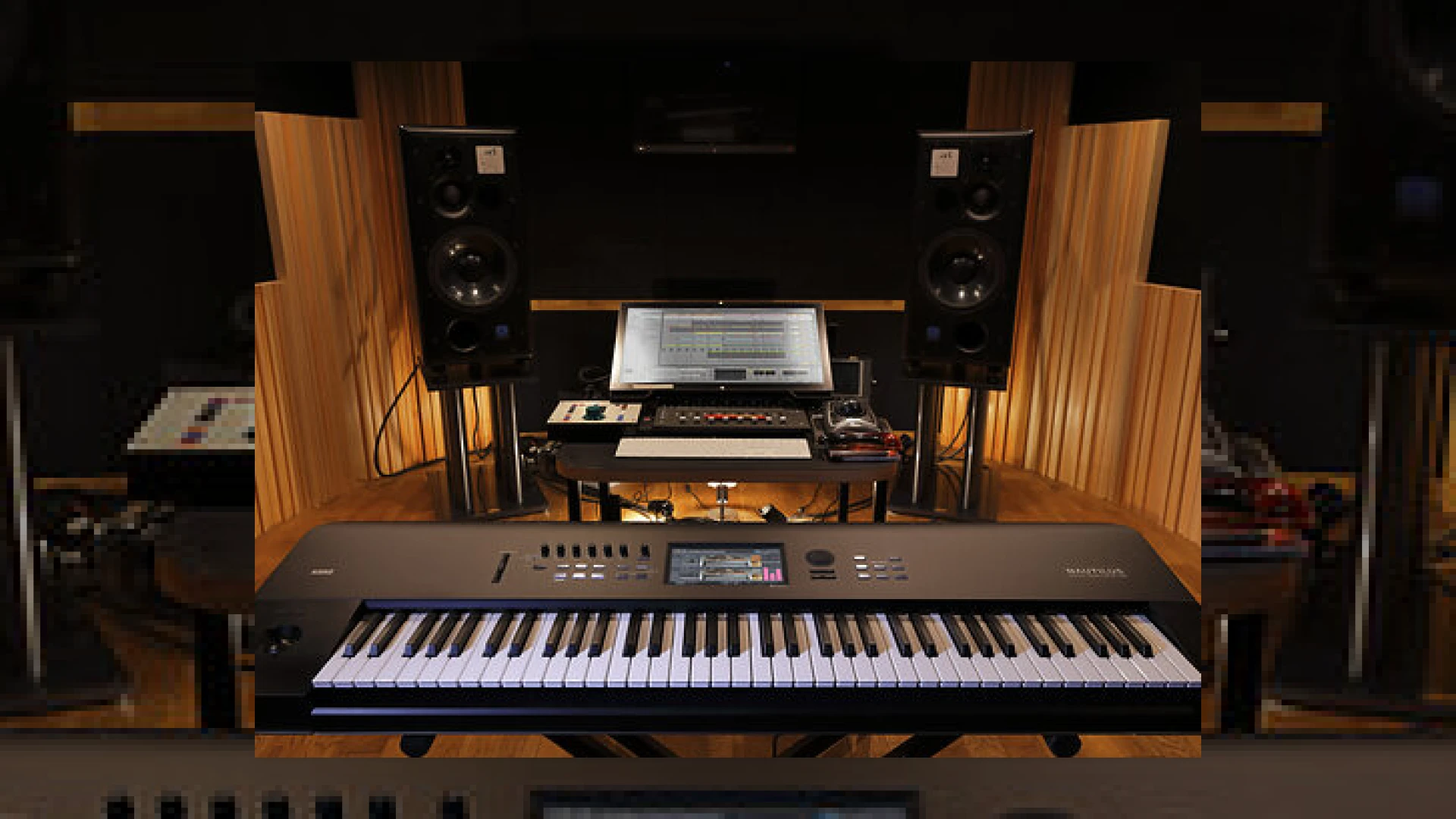
Visual context for Korg Nautilus unveiled.
With the official news of the korg nautilus unveiled, modern music producers and live performers have gained access to one of the most powerful digital audio workstations ever packed into a standalone keyboard. Drawing direct inspiration from Korg’s legendary flagship Kronos, this new powerhouse offers an unprecedented level of sonic capability. By packing nine distinct sound engines into a streamlined chassis, Korg has successfully bridged the gap between high-end digital synthesis and intuitive, performance-ready hardware operation.
The core philosophy behind this release is to provide uncompromised sound quality. Whether you are tracking acoustic pianos using the premium SGX-2 engine or building complex physical-modeling patches using the STR-1 plucked-string engine, this workstation delivers high-fidelity output. For professional mix engineers and mastering houses, receiving tracks generated from a source of this caliber ensures clean, rich, and highly dynamic stems that require minimal corrective processing during post-production.
Technical Advantages of the Korg Nautilus Unveiled
When we look closely at the korg nautilus unveiled, it is clear that Korg sought to streamline the user interface while preserving the sheer sonic power of the Kronos. The interface centers around a highly responsive, large color touchscreen that provides immediate access to sequencing, synthesis parameters, and multi-effects routing. Flanking the screen is a bank of dynamic rotary encoders, allowing users to tweak filters, envelopes, and modulation matrices on the fly without digging deep into nested menus.
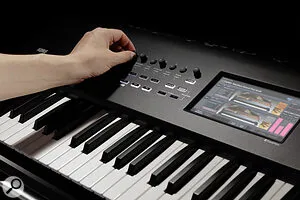
Additional product view and interface angle for Korg Nautilus unveiled.
Under the hood, the system features nine independent sound generators. These include classic analog emulations of the MS-20 and Polysix, a robust tonewheel organ engine (CX-3), the waveshaping MOD-7 engine, and high-performance PCM and FM options. This diverse architecture makes the instrument a complete studio in itself, capable of handling complex multitembral arrangements. Additionally, the workstation boasts a generous voice polyphony—with some engines supporting up to 200 notes dynamically—ensuring that complex sustain-pedal passages and layered sequences never experience premature note dropouts.
Hardware Specifications
The unit is designed to accommodate various studio setups and live performance styles, coming in three sizes: an 88-key weighted hammer-action model, alongside highly responsive 73- and 61-key semi-weighted variations. Below is a detailed overview of the core hardware specifications and real-world utility of the series.

Additional product view and interface angle for Korg Nautilus unveiled.
| Name | Primary Use | Estimated Price | Rating |
|---|---|---|---|
| Korg Nautilus 88 | Studio Piano Tracking & Master Keyboard | $2,699.99 | 4.8 / 5.0 |
| Korg Nautilus 73 | Live Touring & Sound Design Workstation | $2,399.99 | 4.7 / 5.0 |
| Korg Nautilus 61 | Compact Production & Desktop Synthesis | $2,199.99 | 4.6 / 5.0 |
Practical Studio Workflow Tips
Integrating the keyboard into your DAW setup highlights why having the korg nautilus unveiled is such a game-changer for hybrid studios. To maximize efficiency and sound quality, consider the following technical workflows:
- Utilize the Multi-Output Routing: Instead of bouncing a stereo mixdown, route individual sound engines through the four auxiliary quarter-inch outputs. This allows you to apply external hardware processing or precise EQ within DAWs like Ableton Live or Pro Tools.
- Leverage the 16-Track Audio Recorder: Record external analog synths or vocal takes directly into the onboard 16-track audio sequencer to assemble rough drafts before transferring them to your main audio workstation.
- Keep Dynamic Ranges Open: Since the internal engines offer high dynamic ranges, avoid over-compressing the sounds internally. Allow the natural transients of the SGX-2 and EP-1 engines to breathe to make your eventual mastering stage far more effective.
For more advice on getting your synthesized tracks radio-ready and optimizing your stereo image, read our specialized guides at SM Mastering Audio Articles.

Additional product view and interface angle for Korg Nautilus unveiled.
Conclusion
Ultimately, with the korg nautilus unveiled, producers have a versatile, state-of-the-art synthesizer workstation that excels in both creation and performance. Its impressive integration of nine engines, intuitive touchscreen-driven workflow, and flexible I/O configurations make it a highly valuable asset for modern studios. By utilizing clean signal paths and smart routing, you can elevate your sound design to professional standards before your tracks ever reach the mixing and mastering stage.
Frequently Asked Questions (FAQ)
What are the differences between the Korg Nautilus and Korg Kronos?
While the Nautilus shares the same nine powerful sound engines and core synthesis architecture of the flagship Kronos, it simplifies physical controls. It omits the secondary sliders and karma control surface in favor of a streamlined, user-friendly menu system, a redesigned touchscreen interface, and a more accessible price point.
Can the Korg Nautilus act as an audio interface?
Yes. It features USB audio and MIDI functionality, allowing you to stream multiple channels of high-quality digital audio directly to and from your computer. This simplifies hybrid setups, reducing the need for extensive external converters.
How does the polyphony management work across the different engines?
The workstation dynamically allocates polyphony based on active engines. While processor-heavy engines like the SGX-2 piano model require substantial processing, others like the AL-1 virtual analog engine offer extensive polyphony up to several dozen voices simultaneously without performance lag.
🛒 Official Product Info & Where to Buy
Check full technical specs, pricing, and purchase options directly from the official manufacturer or authorized dealer for Korg Nautilus unveiled.
Written by SM Mastering
Official content on sound engineering, mixing, mastering, and advanced electronic production by SM Mastering.