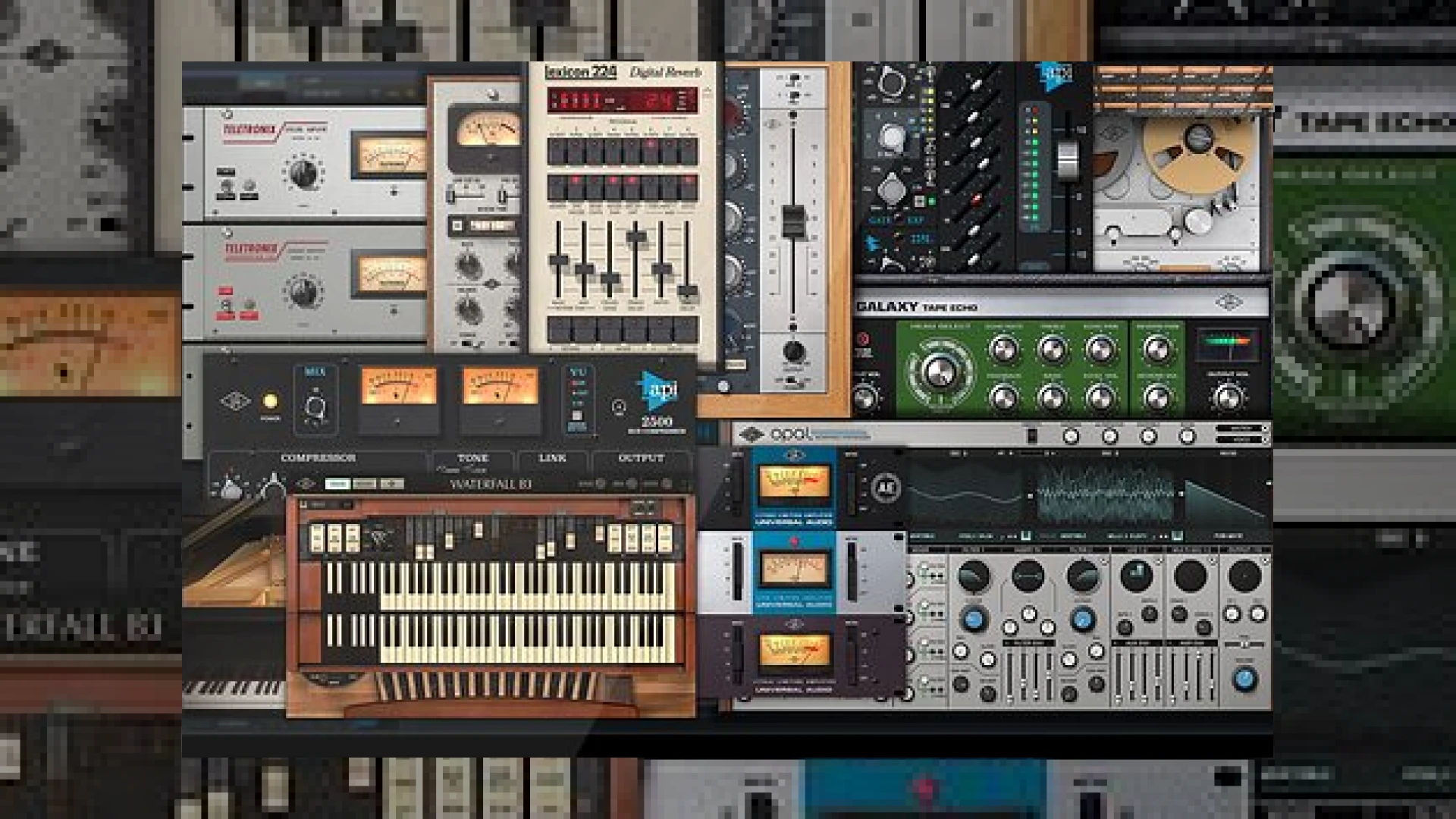
Visual context for UA introduce Spark native plug-in suite.
When the digital audio processing landscape shifts, discerning engineers take notice. The news that Universal Audio has officially decided to move beyond hardware-locked DSP ecosystems is a monumental moment for modern production. Ever since the announcement that ua introduce spark native plug-in suite, mixing and mastering professionals have been re-evaluating how they integrate legendary analog emulations into native DAW environments.
For decades, running authentic UA algorithms required proprietary hardware accelerators like the Apollo or Satellite interfaces. However, as modern CPU capabilities have expanded exponentially, the industry has gravitated toward flexible, subscription-based, and native workflows. The decision to ua introduce spark native plug-in suite bridges the gap between legendary hardware tone and the convenience of mobile, laptop-based mixing setups.
Why Producers Are Excited That UA Introduce Spark Native Plug-In Suite
The core appeal of this rollout lies in the meticulous modeling of vintage studio hardware. When industry leaders first heard that ua introduce spark native plug-in suite, many wondered if the sound quality of DSP-heavy algorithms would translate cleanly to native CPU processing. Rigorous testing proves that the fidelity remains uncompromised. Whether you are driving an SSL channel strip or smoothing out transients with a classic LA-2A, the mathematical models retain every ounce of harmonic saturation and nonlinear warmth.

Additional product view and interface angle for UA introduce Spark native plug-in suite.
Furthermore, the inclusion of powerhouse virtual instruments like the Minimoog Model D and the innovative Opal Morphing Synthesizer transforms this bundle from a mixing toolkit into an entire production ecosystem. For a deeper dive into modern synthesis and mixing techniques, check out our insights at SM Mastering Audio Articles.
Specifications Table
| Plug-in / Instrument | Primary Use | Pricing Model | Audio Quality Rating |
|---|---|---|---|
| Minimoog Model D | Virtual Analog Synthesis | Subscription ($19.99/mo) | 10/10 |
| Opal Morphing Synth | Wavetable & Analog Hybrid | Subscription ($19.99/mo) | 9.5/10 |
| Waterfall B3 | Hammond Organ & Rotary | Subscription ($19.99/mo) | 9.8/10 |
| Classic Studio Processors | Compression & EQ | Subscription ($19.99/mo) | 10/10 |
Practical Studio Workflow Tips for Native UAD Processing
Integrating these native tools into your session requires a strategic approach to buffer sizes and routing. Because these processors rely entirely on your computer’s CPU rather than an external DSP chip, keep these professional tips in mind:

Additional product view and interface angle for UA introduce Spark native plug-in suite.
- Buffer Size Management: While tracking, keep your native buffer size low (64 or 128 samples) if monitoring through lightweight plugins. For heavy mixing sessions with multiple instances of Opal or tape emulations, step your buffer up to 512 or 1024 samples to prevent CPU spikes.
- Gain Staging: Just like their hardware counterparts, these emulations respond dynamically to input levels. Aim for an average input level of around -18 dBFS to keep the emulated circuits operating in their sweet spot.
- Freezing Tracks: If you are using heavy chains of native plug-ins on complex vocal arrangements, utilize your DAW’s track freeze or render-in-place features to conserve processing power for final mastering stages.
Conclusion
The fact that ua introduce spark native plug-in suite marks a definitive turning point for Universal Audio and its vast user base. By stripping away hardware barriers, they have made world-class analog sound accessible to any producer with a compatible host application. Whether you are scoring films, producing electronic music, or mixing rock records, this native collection provides an extraordinary sonic palette.
Frequently Asked Questions
Do I need an Apollo interface to use the Spark native collection?
No, that is the primary benefit of this release. The entire Spark suite runs natively on your computer’s CPU, meaning you only need a standard audio interface (from any manufacturer) and a compatible DAW running AU, VST3, or AAX formats.
Are perpetual license holders entitled to the native versions?
Users who already own perpetual licenses for qualifying UAD plug-ins are generally granted access to their native counterparts, ensuring that existing studio owners are not forced to double-pay for plugins they already own.
Can I try the plug-ins before committing to a monthly subscription?
Yes, Universal Audio offers a fully functional 14-day free trial for new users. Additionally, purchasers of qualifying hardware like the UA Volt audio interfaces often receive extended trial periods.
🛒 Official Product Info & Where to Buy
Check full technical specs, pricing, and purchase options directly from the official manufacturer or authorized dealer for UA introduce Spark native plug-in suite.
Written by SM Mastering
Official content on sound engineering, mixing, mastering, and advanced electronic production by SM Mastering.