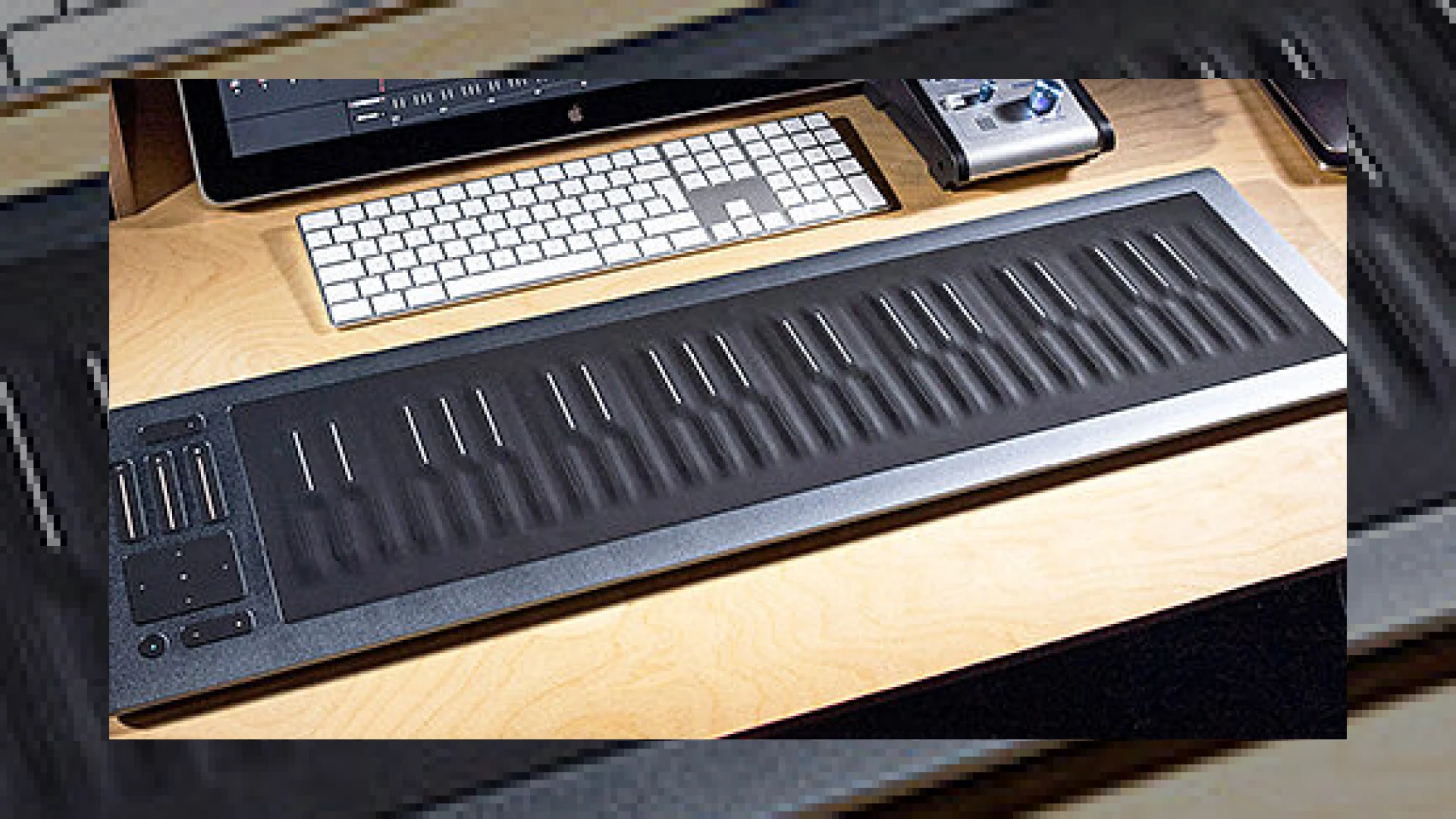
Visual context for ROLI launches Seaboard RISE 2.
When **roli launches seaboard rise 2**, the electronic music production community takes notice of a profound shift in MIDI expression. As mixing and mastering engineers at SM Mastering Audio Articles, we constantly evaluate how new hardware interacts with complex dynamic ranges, software synths, and modern mixing workflows. The re-engineered design of the Seaboard RISE 2 brings crucial tactile improvements to the table, solving many of the historical learning-curve barriers that traditional pianists faced with earlier iterations.
## Why the Tech World Cares That Roli Launches Seaboard RISE 2
The announcement that **roli launches seaboard rise 2** marks a major milestone for MIDI Polyphonic Expression (MPE). Powered by the advanced Equator2 soft-synth, this second-generation controller introduces a refined Keywave2 surface. This update gives players tactile orientation points that mimic the familiar spacing of a traditional piano, while still allowing for deep, continuous modulation across pitch, pressure, and slide dimensions.
When tracking these nuanced performances into your DAW, maintaining headroom is critical. Before printing your MPE synth tracks, consider referencing industry-standard processing techniques found on platforms like Ableton to ensure your transient responses remain pristine.
## Seaboard RISE 2 Specifications
| Feature / Metric | Specification Detail |
| :— | :— |
| **Product Name** | ROLI Seaboard RISE 2 |
| **Primary Use** | Expressive MPE MIDI Controller & Hardware Interface |
| **Price** | $1,399 / £1,099 / €1,299 |
| **Expert Rating** | 4.8 / 5.0 |
## Practical Studio Workflow Tips for MPE Controllers
Integrating an expressive controller like the RISE 2 into a professional mixing and production environment requires careful gain staging and routing. Here are a few studio tips from our mastering floor:
* **Manage Your Dynamics Early:** Because MPE controllers transmit continuous pitch bend, pressure (aftertouch), and slide data simultaneously, your soft-synths can easily spike in volume. Use volume automation or utility plugins before your compressor to keep input levels stable.
* **Calibrate Touch Sensitivity:** Spend time inside the ROLI Dashboard software adjusting the strike and glide sensitivity to match your personal playing style. This reduces unwanted MIDI data clutter.
* **Pair with Precision Effects:** To get the most out of spatial patches, feed your MPE tracks into lush reverbs and delays, ensuring you high-pass filter the wet signals to avoid muddying the low-mid frequencies.
## Conclusion
The release of this next-generation controller proves that expressive MIDI technology is maturing rapidly. By refining the playing surface and coupling the hardware with deeper software integration, this instrument opens up unprecedented creative avenues for modern producers and composers.
—
## Frequently Asked Questions
### How does the Seaboard RISE 2 differ from the original model?
The updated RISE 2 features a completely re-engineered Keywave2 surface with distinct frets and a platinum blue anodized aluminum chassis. These changes make it significantly easier for traditional keyboard players to find their orientation while executing precise bends and slides.
### Do I need a special DAW to use the Seaboard RISE 2?
No, most modern Digital Audio Workstations—including Ableton Live, Logic Pro, Cubase, and Bitwig Studio—fully support MIDI Polyphonic Expression (MPE). However, software compatibility can vary, so checking your DAW’s specific MPE routing capabilities is recommended.
### What software comes bundled with the hardware?
The controller is powered by and bundled with Equator2, ROLI’s flagship soft-synth engine, alongside Dashboard and a suite of production tools designed to maximize expressive performance capabilities out of the box.
🛒 Official Product Info & Where to Buy
Check full technical specs, pricing, and purchase options directly from the official manufacturer or authorized dealer for ROLI launches Seaboard RISE 2.
Written by SM Mastering
Official content on sound engineering, mixing, mastering, and advanced electronic production by SM Mastering.