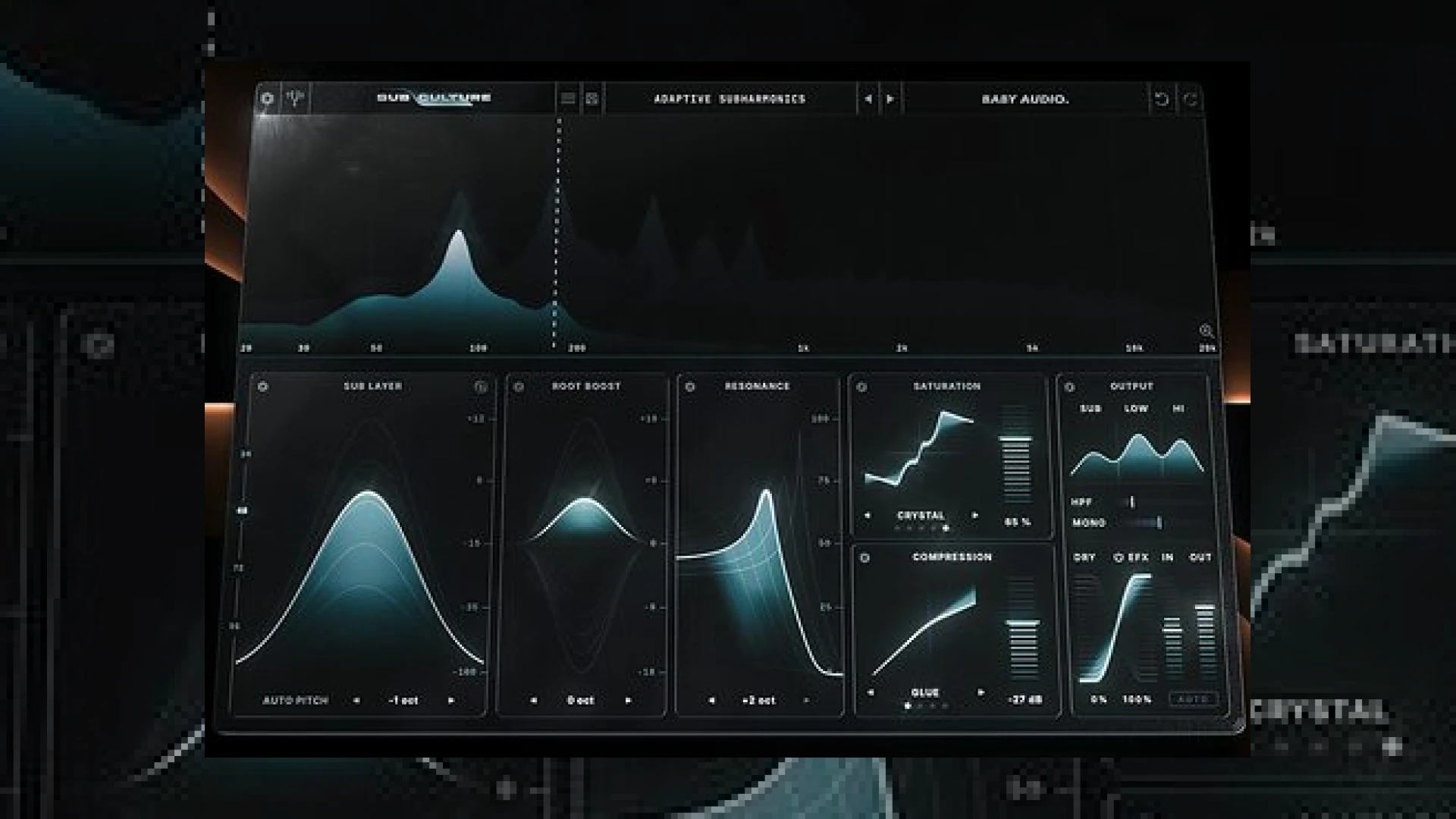
Visual context for Baby Audio release SubCulture.
At SM Mastering, we are constantly on the lookout for tools that redefine low-end control and spectral balance. The recent baby audio release subculture has caught our attention as a modern benchmark in bass enhancement. Engineered specifically to analyze and augment the low-frequency content of monophonic input signals, this software allows producers to sculpt deep, precise, and authoritative bass from virtually any source. Whether you are dealing with a thin synth line, a DI bass guitar, or a kick drum that lacks fundamental weight, this tool delivers unmatched control over the lowest octaves of your mix.
What sets this processor apart is its focus on acoustic musicality. When analyzing the baby audio release subculture workflow, it becomes clear that it avoids the traditional pitfalls of generic psychoacoustic harmonics or static sub-synth generation. Instead of synthesizing generic sine waves that run parallel to your track, this processor derives its sub-frequency content directly from the input signal. This ensures that the newly generated low end remains perfectly in phase and dynamically matched to the original performance, preventing the muddy, detached low-frequency clutter that often plagues modern electronic and urban mixes.
Unlocking Low-End Power with the Baby Audio Release SubCulture
Let’s dive deeper into the tri-engine architecture. By applying the baby audio release subculture to monophonic signals, users gain access to Sub Layer, Root Boost, and Resonance modules. The first engine, Sub Layer, adds a pitch-shifted sub-octave version of the source material up to two octaves below, reinforcing the track’s floor. The Root Boost engine functions as a highly precise, pitch-tracking EQ band that delivers up to 18dB of boost or cut directly at the fundamental frequency of each detected note. Finally, the Resonance engine utilizes a parallel filter network inspired by legendary vintage analog circuits, allowing for a lush, organic low-frequency sustain.

Additional product view and interface angle for Baby Audio release SubCulture.
To further shape the sonic texture, Baby Audio has equipped this plugin with dedicated Saturation and Compressor sections. These parameters allow engineers to glue the newly generated sub-harmonics to the original signal seamlessly. To learn more about advanced analog emulation and DSP, checking out tools from industry leaders like Soundtoys can provide great context on how classic harmonic saturation behaves in a digital environment. For more expert advice on low-frequency management, EQ techniques, and general audio mastering guidelines, explore our comprehensive SM Mastering Audio Articles.
Technical Specifications
| Product Name | Primary Use | Price (Introductory/Standard) | SM Mastering Expert Rating |
|---|---|---|---|
| Baby Audio SubCulture | Monophonic Bass Enhancement & Pitch-Tracking Sub-Generation | $39 (Intro) / $69 (MSRP) | 4.8 / 5 Stars |
Practical Studio Workflow Tips
Incorporating the baby audio release subculture into your mixing template can drastically speed up your low-frequency management. Here are a few professional techniques to get the most out of it:

Additional product view and interface angle for Baby Audio release SubCulture.
- The Monophonic Rule: Always feed the plugin a monophonic source. If you have a stereo bass track, consider summing the low-end below 120Hz to mono before processing to ensure the pitch-tracking engine operates flawlessly.
- Vocal Weight Enhancement: Don’t limit this plugin to synth bass. Use it gently on a thin male lead vocal or a spoken-word track. The pitch-tracking Root Boost can add a rich, authoritative broadcast weight without making the low-mids muddy.
- Parallel Saturation: Use the onboard Saturation section to generate upper harmonics. This makes your sub-bass audible on smaller playback systems like mobile phones and laptops without boosting the actual sub-bass frequencies to destructive levels.
Conclusion
In conclusion, the baby audio release subculture is an essential addition for producers and mastering engineers alike who demand absolute authority over their low end. By choosing signal-derived pitch-tracking over arbitrary synthesis, Baby Audio has created an incredibly musical processor that honors the performance of the source material while delivering earth-shaking depth.
Frequently Asked Questions
How does SubCulture differ from a standard sub-harmonic generator?
Traditional sub-harmonic generators often synthesize generic sine waves that play along with the incoming signal, which can lead to phase cancellation and a detached sound. SubCulture derives its processing directly from the input signal, maintaining perfect phase alignment and dynamic nuance.

Additional product view and interface angle for Baby Audio release SubCulture.
Can I use SubCulture on polyphonic material like full mixes?
SubCulture is optimized for monophonic signals because its pitch-detection algorithm locks onto a single fundamental frequency. Using it on complex polyphonic material like a full stereo master or group bus may confuse the tracking engine and produce unpredictable results.
What platforms and plugin formats are supported?
SubCulture is compatible with major DAWs on both macOS (including native Apple Silicon support) and Windows, supporting VST, VST3, AU, and AAX formats for seamless integration into any professional production workflow.

Additional product view and interface angle for Baby Audio release SubCulture.
🛒 Official Product Info & Where to Buy
Check full technical specs, pricing, and purchase options directly from the official manufacturer or authorized dealer for Baby Audio release SubCulture.

Written by SM Mastering
Official content on sound engineering, mixing, mastering, and advanced electronic production by SM Mastering.