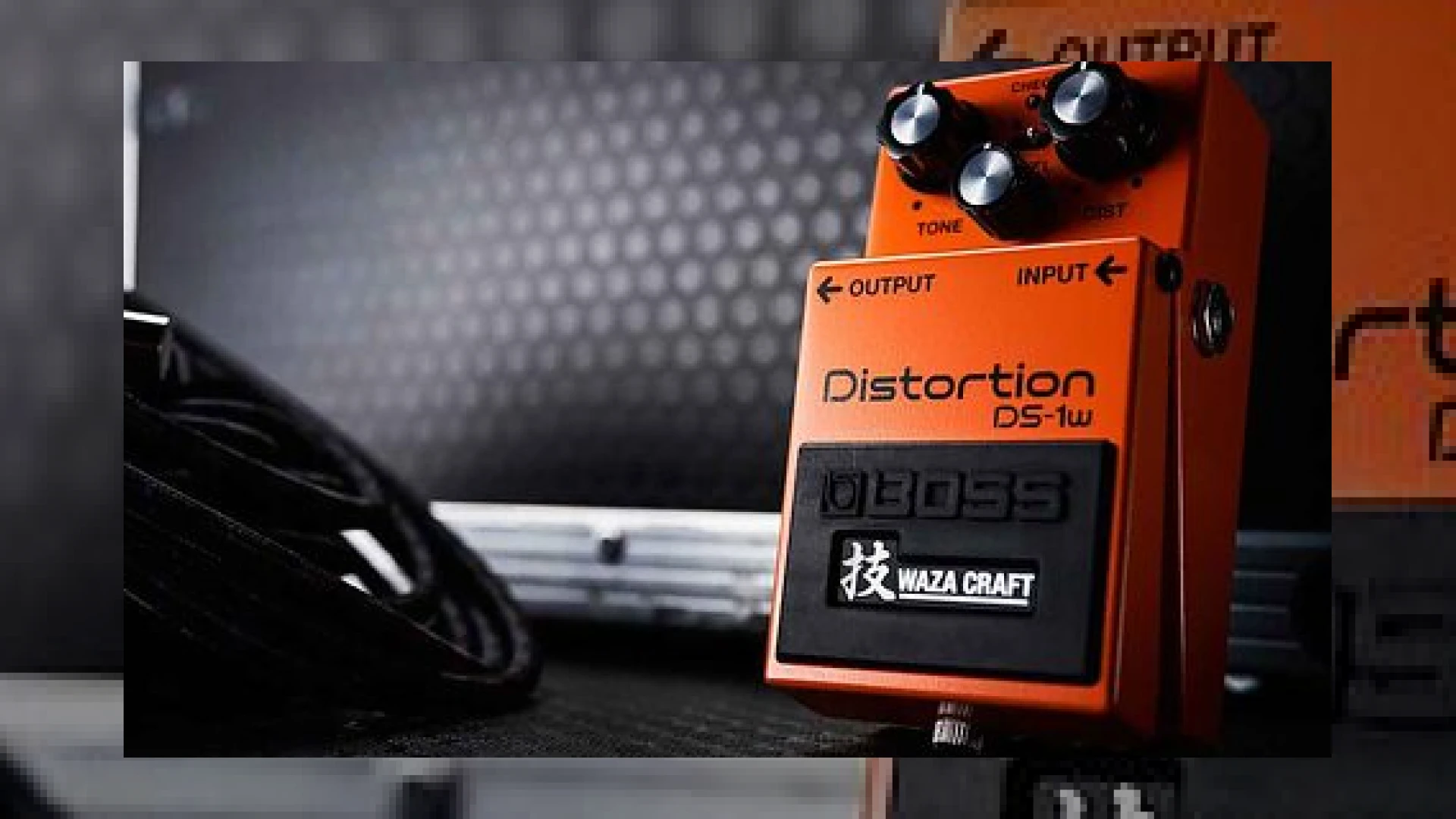
Visual context for Boss release DS-1W Distortion.
When musicians and audio engineers look back at the history of guitar effects, the orange stompbox layout remains an absolute icon. That is why the industry buzzed with excitement following the official news about the SM Mastering Audio Articles team tracking recent hardware innovations. The announcement and subsequent boss release ds-1w distortion brought a fresh analog spin to a legendary circuit, capturing the attention of tone-chasers worldwide. As an audio expert here at SM Mastering, evaluating how analog stompboxes translate into modern hybrid mixing environments is central to our daily workflow.
Evaluating the Features of the Boss Release DS-1W Distortion
The Waza Craft series has consistently delivered refined takes on classic Japanese circuits, and this model is no exception. Built around a newly revised discrete analog circuit, the pedal provides two distinct modes of operation that expand its sonic footprint far beyond the capabilities of the original 1978 unit.
The Standard mode offers the authentic, uncompromised sound of the vintage orange box. Utilizing an innovative two-stage gain circuit, it features a unique tone control that simultaneously boosts and cuts frequencies across the spectrum. Meanwhile, the Custom mode introduces a thicker, more mid-focused voice designed to cut through dense arrangements. For those interested in external processing standards, checking resources like Universal Audio can help contextualize how hardware saturation interacts with digital plugins.
Studio Workflow Tips for Hardware Distortion
Integrating hardware effects into a professional mixing and mastering workflow requires careful gain staging. Here are a few practical tips to get the most out of your gear:
* Re-Amping Setup: Send tracks from your DAW through a re-amp box into the pedal to inject analog warmth into virtual synths, vocals, or drum busses.
* Gain Staging: Utilize the +6dB boost in Custom mode to push tube amplifiers or analog summing mixers into pleasant harmonic saturation.
* Dynamic Response: Take advantage of the pedal’s touch sensitivity by automating input levels to subtly alter the distortion intensity during dynamic passages.
Boss Release DS-1W Distortion Specifications
| Specification | Details |
|---|---|
| Name | Boss DS-1W Waza Craft Distortion |
| Use | Electric Guitar Stabs, Hardware Saturation, Studio Re-amping |
| Price | Mid-tier Stompbox Range |
| Rating | 4.8 / 5 |
Conclusion
Ultimately, the boss release ds-1w distortion proves that classic analog designs can be thoughtfully updated without losing their original soul. By bridging the gap between vintage grit and modern versatility, it remains a valuable tool for both live performers and studio engineers seeking authentic harmonic enhancement.
Frequently Asked Questions
What is the difference between Standard and Custom modes on the DS-1W?
Standard mode delivers the exact frequency response and behavior of the vintage DS-1 circuit, while Custom mode offers a thicker, mid-focused voice with increased headroom and a +6dB output boost.
Can the boss release ds-1w distortion be used effectively in a DAW-based mixing session?
Yes, when paired with a quality re-amping interface, this pedal excels at adding analog grit, harmonic complexity, and edge to sterile digital tracks, synthesizers, and drum loops.
Is the circuit in the boss release ds-1w distortion fully analog?
Yes, the Waza Craft series prides itself on premium, all-analog discrete circuitry rather than digital modeling.
🛒 Official Product Info & Where to Buy
Check full technical specs, pricing, and purchase options directly from the official manufacturer or authorized dealer for Boss release DS-1W Distortion.

Written by SM Mastering
Official content on sound engineering, mixing, mastering, and advanced electronic production by SM Mastering.