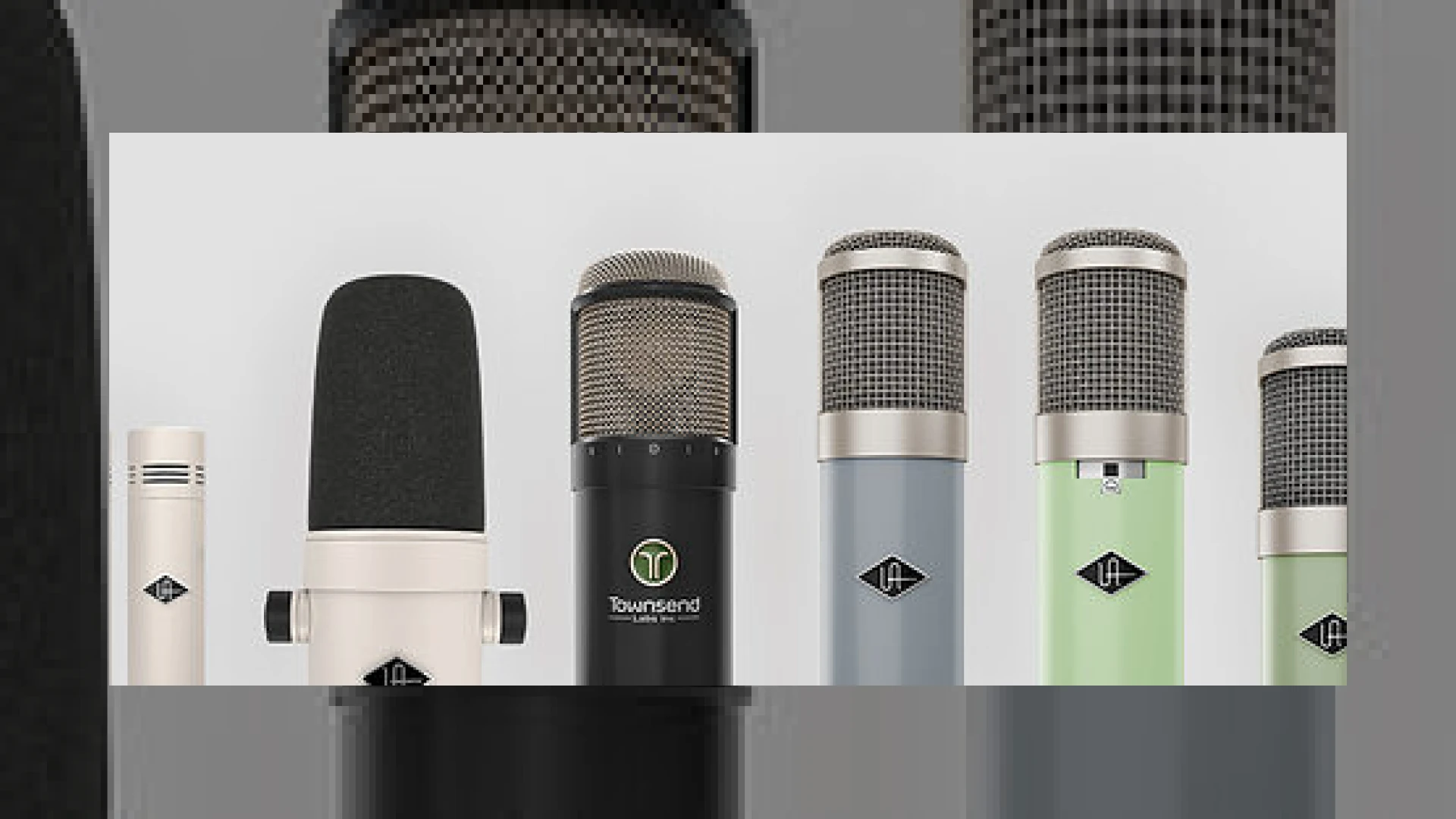
Visual context for Debut mics from Universal Audio.
When analogue hardware veterans and DSP pioneers step into a brand-new product category, the professional audio community takes notice. The rollout of the debut mics from Universal Audio marks a massive milestone in studio hardware engineering, blending vintage analog aesthetics with modern digital integration. Here at SM Mastering Audio Articles, we have put these fresh transducers through rigorous testing across various recording scenarios to analyze their true sonic footprint. Whether you are tracking delicate acoustic instruments or heavy brass, understanding how to integrate these tools into your signal chain is essential for achieving commercial-ready mixes.
The Engineering Behind the Debut Mics from Universal Audio
Universal Audio’s entry into the transducer market was significantly accelerated by their acquisition of microphone-modelling innovators Townsend Labs. This technological merger birthed the UA Sphere L22 modeling microphone, allowing engineers to emulate historic studio classics in real time via UAD DSP hardware or the LUNA recording system. Alongside modeling tech, legendary designer David Bock lent his expertise to craft the UA Bock 187, Bock 167, and Bock 251—solid-state and valve microphones modeled after timeless vintage circuits. For more insights on hardware compatibility and industry standards, you can explore updates directly from Universal Audio.
Rounding out the lineup are the SD-1 dynamic microphone, tailored for broadcast and close-mic applications, and the SP-1 small-diaphragm condenser pair. When deploying the debut mics from Universal Audio in a professional studio environment, engineers benefit from a low noise floor and exceptional transient response that simplifies downstream processing like EQ and compression.
Studio Workflow Tips for Modern Engineering
Maximizing the potential of your tracking chain requires careful placement and gain staging:

Additional product view and interface angle for Debut mics from Universal Audio.
- Utilize Real-Time DSP: When tracking with the Sphere modeling system, use UA Apollo interfaces to monitor through the emulation plugins with zero perceptible latency.
- Leverage Proximity Control: The SD-1 dynamic mic features selectable low-cut and articulation boost switches; dial these in at the source to save headroom before hitting your preamps.
- Matched Pair Placement: Use the SP-1 small-diaphragm condensers in an ORTF or spaced pair configuration to capture a wide, three-dimensional acoustic image with minimal phase cancellation.
Microphone Specifications and Ratings
| Microphone Name | Primary Application | Approximate Price | SM Mastering Rating |
|---|---|---|---|
| UA Sphere L22 | Multi-pattern Modeling | $1,499 | 9.5 / 10 |
| UA Bock 187 | Vocals, Instruments (FET) | $999 | 9.0 / 10 |
| UA Bock 167 | Vocals, Orchestral (Tube) | $3,999 | 9.8 / 10 |
| UA SD-1 | Broadcast, Speech, Cabs | $299 | 8.8 / 10 |
Conclusion
The introduction of the debut mics from Universal Audio proves that heritage-rich brands can successfully innovate in new sectors without losing their core identity. By bridging the gap between legendary vintage blueprints and modern DSP workflows, these microphones offer unmatched versatility for project studios and world-class tracking rooms alike. Proper gain staging, strategic placement, and thoughtful plugin integration will ensure these tools elevate your productions to professional standards.
Frequently Asked Questions
Can the modeling software for the UA Sphere be used in any DAW?
Yes, while optimized for UAD hardware and the LUNA recording system, the native plugin formats (VST3, AU, AAX) allow you to run the modeling software inside any major digital audio workstation.

Additional product view and interface angle for Debut mics from Universal Audio.
Are the David Bock signature microphones exact clones of vintage gear?
While the UA Bock 187, 167, and 251 are heavily inspired by classic Neumann and Telefunken designs, David Bock revised the internal circuitry to deliver improved technical specifications, lower noise floors, and greater reliability.
Do I need a special preamp for the valve microphones in this lineup?
The tube models come with their own dedicated external power supply units (PSUs), meaning they can connect via standard XLR cables to any clean, transparent microphone preamplifier.
🛒 Official Product Info & Where to Buy
Check full technical specs, pricing, and purchase options directly from the official manufacturer or authorized dealer for Debut mics from Universal Audio.
Written by SM Mastering
Official content on sound engineering, mixing, mastering, and advanced electronic production by SM Mastering.