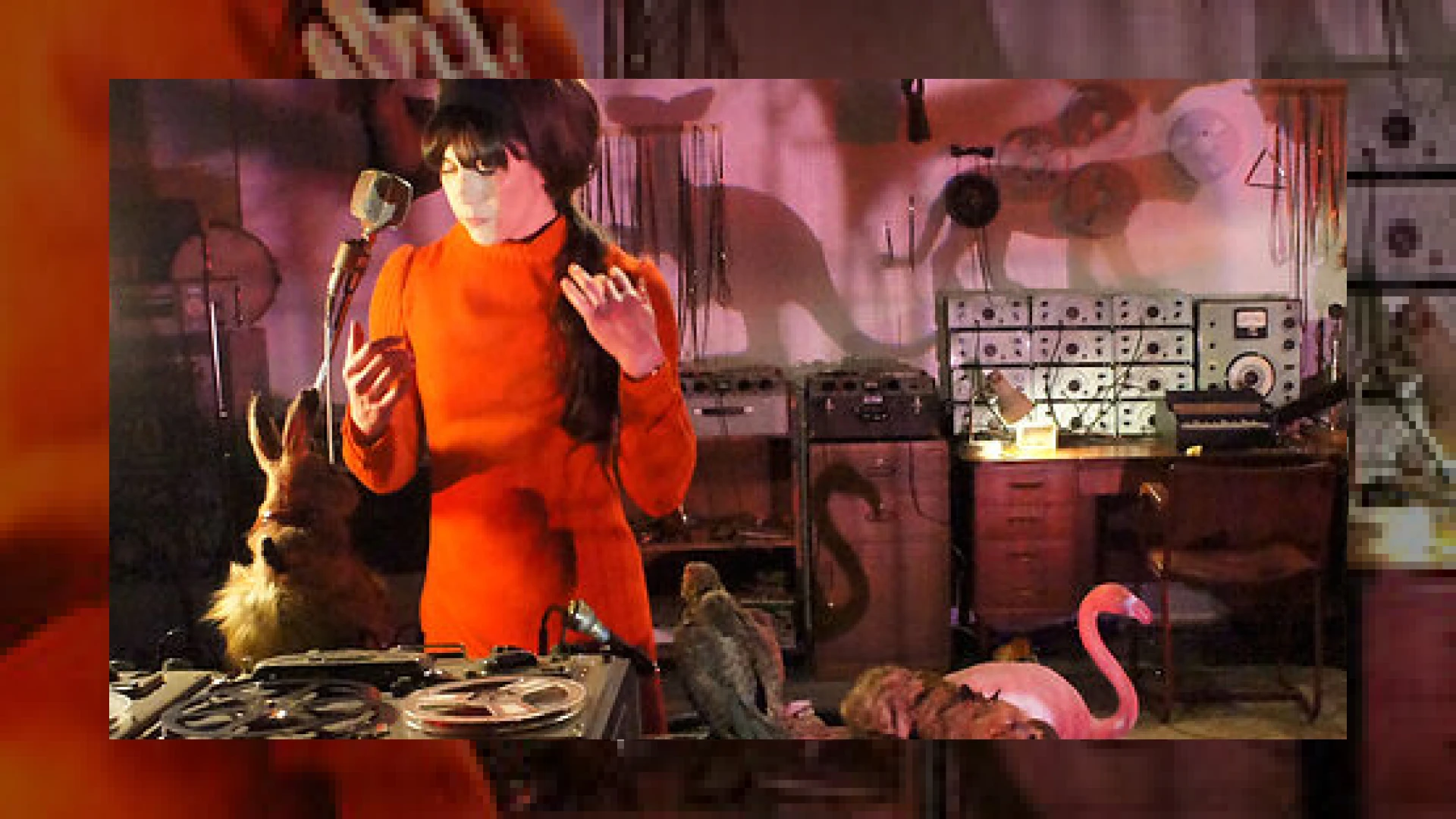
Visual context for Delia Derbyshire: The Myths & The Legendary Tapes.
In the realm of electronic music history, few figures command as much reverence as Delia Derbyshire, whose groundbreaking work at the BBC Radiophonic Workshop laid the foundations for modern synthesis, sound design, and electronic composition. As mastering engineers, we constantly look back at the pioneers who shaped our acoustic world using nothing but raw physical elements and magnetic tape. Caroline Catz’s cinematic portrait, **delia derbyshire: the myths & the legendary tapes**, offers a fascinating, non-linear deep dive into this eccentric genius. The film acts as a sonic time capsule, exploring her unorthodox methods and her legendary contributions—most notably, the realization of the iconic *Doctor Who* theme song in 1963.
For modern audio professionals, her archive is a masterclass in overcoming technological limitations through pure creative ingenuity. To understand her legacy is to understand the very essence of sound manipulation: speed variation, tape splicing, filtering, and manual frequency modulation.
Analogue Innovation in Delia Derbyshire: The Myths & The Legendary Tapes
At SM Mastering, we often analyze historical production methods to understand how early pioneers achieved such immense depth and texture without modern digital audio workstations (DAWs). Analyzing the sonic design of **delia derbyshire: the myths & the legendary tapes** reveals how composer Cosey Fanni Tutti used psycho-sonic channeling to bridge the gap between Derbyshire’s original tape-loop techniques and contemporary electronic music production. Fanni Tutti’s score utilizes archival materials and field recordings, paying homage to Delia’s hands-on approach.
To recreate these textures today, engineers rely heavily on premium emulation tools. Companies like Universal Audio have spent decades modeling the exact tape machines and tube equipment that Derbyshire used to manipulate sound waves manually. The physical act of cutting magnetic tape and splicing it together at precise angles created a natural, organic rhythmic swing that modern swing algorithms still struggle to replicate perfectly.
The discovery of the legendary “Attic Tapes”—found in cereal boxes at Delia’s home after her passing—contains thousands of hours of unreleased, ahead-of-its-time electronic music. The exploration of these archival reels in **delia derbyshire: the myths & the legendary tapes** highlights the struggles of early electronic musicians working with primitive reel-to-reel decks, physical tape splicing, and manual frequency oscillators. It reminds us that masterfully engineered music is born from an intimate relationship with the physical properties of sound itself, rather than the convenience of digital presets.
Recreating the Legendary Tape Sound in the Modern Studio
For modern mastering and mixing engineers, studying the acoustic principles showcased in **delia derbyshire: the myths & the legendary tapes** serves as a masterclass in organic texture. Her ability to transform a single plucked string, a metal lampshade, or a simple sine-wave generator into a haunting, futuristic soundscape teaches us that creative constraints often yield the most timeless results. Today, we can emulate these classic tape-loop techniques in our DAWs using a combination of specialized software and hardware.
To help you build a setup inspired by the BBC Radiophonic Workshop, we have compiled a list of modern tools that capture the spirit of Delia Derbyshire’s legendary workspace:
| Name | Use | Price | Rating |
|---|---|---|---|
| UAD Studer A800 | Multitrack Tape Machine Emulation | $349 | 4.9/5 |
| iZotope RX Audio Editor | Archival Tape Restoration & Spectral Editing | $399 | 4.8/5 |
| Soundtoys EchoBoy | Tape Delay & Analogue Saturation | $199 | 4.7/5 |
| Vintage Open-Reel Deck (e.g., Revox B77) | True Physical Analogue Tape Splicing & Playback | ~$800 (Used) | 4.5/5 |
Ultimately, studying the spirit of **delia derbyshire: the myths & the legendary tapes** is a reminder that electronic music does not need to sound clinical. By integrating tape-style saturation, analogue wow and flutter, and hands-on tactile manipulation into our digital environments, we can honor her legacy while pushing the boundaries of modern mastering. For more deep dives into classic production techniques, check out our collection of SM Mastering Audio Articles.
Practical Studio Workflow Tips: Channeling the Radiophonic Spirit
- Embrace Concrete Sound Sources: Before reaching for a digital synthesizer, record everyday metallic or glass objects. Pitch-shift, reverse, and filter them using tools like iZotope RX to build unique, organic soundbeds.
- Manual Varispeed Pitch Shifting: Instead of using standard digital pitch-stretching, use varispeed emulation. This changes both pitch and speed simultaneously, preserving the classic analogue relationship between time and frequency.
- Create Physical Tape Loops: If you have access to a cheap tape dictaphone, record a single sound, splice the tape into a physical loop, and feed it back into your system to experience the mesmerizing, ever-evolving degradation of analogue media.
Conclusion
Delia Derbyshire was far more than an arranger; she was a sonic architect who lived outside the boundaries of conventional music. The cinematic exploration of her work reminds us that the best audio engineering is born from curiosity, experimentation, and a deep understanding of acoustic physics. By applying her historic tape techniques to our modern digital workflows, we can inject a sense of magic, depth, and character into our contemporary mixes and masters.
Frequently Asked Questions
How did Delia Derbyshire create the Doctor Who theme song without synthesizers?
Delia Derbyshire created the theme by individually recording analogue sine and square wave oscillators, cutting each individual note onto magnetic tape, and manually splicing the tape together to form the melody and rhythm. She then used tape speed manipulation (varispeed) and manual filter sweeps to create the sweeping, futuristic textures.
What are the “Legendary Tapes” mentioned in the documentary?
The “Legendary Tapes” (often called the Attic Tapes) refer to a collection of 267 reel-to-reel tapes found in cereal boxes in Delia Derbyshire’s attic after her death in 2001. They contain invaluable historical recordings, experimental sound designs, and unreleased compositions from her time at the BBC Radiophonic Workshop and beyond.
How can I get the vintage BBC Radiophonic Workshop sound in a modern DAW?
To recreate this sound, avoid digital synths with clean waveforms. Instead, use organic audio recordings (musique concrète), process them through tape-saturation plugins, apply aggressive low-pass and high-pass filtering, and use analogue delay lines to mimic the physical tape-echo chambers of the 1960s.
Written by SM Mastering
Official content on sound engineering, mixing, mastering, and advanced electronic production by SM Mastering.