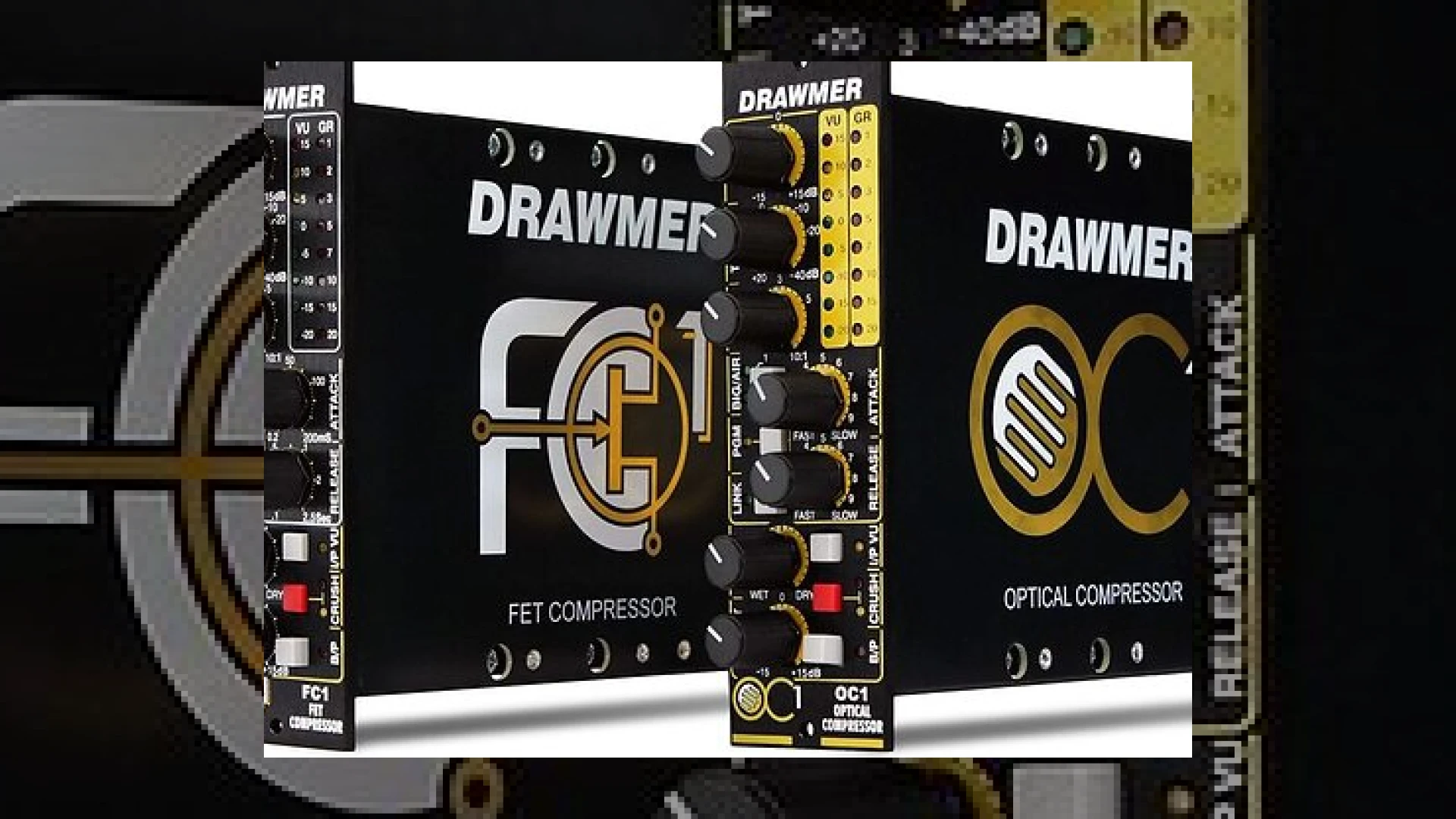
Visual context for Drawmer reveal the OC1 & FC1.
As mastering and mixing professionals, we constantly monitor the pulse of the industry for hardware innovations that can elevate our master chain. At the recent GearExpo UK event, the buzz was palpable, culminating in an official announcement that has the analog community talking. When news broke that drawmer reveal the oc1 & fc1, it signaled a major shift in the boutique 500-series dynamics processing arena. These two modules, though sharing an identical layout, represent two completely different sonic philosophies designed to give engineers maximum control over their transient response and dynamic range.
Why the drawmer reveal the oc1 & fc1 Announcement Matters
The 500-series format has democratized high-end analog processing, allowing hybrid studios to mix and match classic topologies. With the launch where drawmer reveal the oc1 & fc1, engineers get to choose between two legendary compression behaviors: optical and FET. The OC1 marks Drawmer’s very first foray into dedicated optical compression. It delivers the smooth, program-dependent leveling that optical circuits are legendary for, making it an exceptional choice for vocals, acoustic instruments, and stereo bus gluing where transparency is paramount.
On the flip side, the FC1 represents the fast, aggressive nature of Field Effect Transistor (FET) designs. Similar to classic peak limiters made by industry giants like Universal Audio, the FC1 is engineered for strict transient control, offering lightning-fast attack and release times that inject energy and punch into drums, bass, and parallel busses. When analyzing why drawmer reveal the oc1 & fc1, it becomes obvious that they wanted to provide a dual-flavor approach, allowing engineers to select the exact dynamic envelope required for their specific session needs.
Technical Specifications & Feature Set
Despite their tonal differences, both modules share a standardized control panel with 21-position detented potentiometers—a feature we highly prize here at SM Mastering for precise stereo matching and recall. In our technical evaluation of how drawmer reveal the oc1 & fc1, the addition of the “Crush” circuitry stood out as a brilliant inclusion. It introduces pleasing harmonic saturation as the input level increases, giving users a masterclass in modern analog saturation.

Additional product view and interface angle for Drawmer reveal the OC1 & FC1.
| Name | Use | Price (Est.) | Rating |
|---|---|---|---|
| Drawmer OC1 | Optical Compression (Vocals, Bus Gluing, Smooth Leveling) | $549.00 | 4.8 / 5.0 |
| Drawmer FC1 | FET Compression (Drums, Bass, Transient Shaping, Punchy Saturated Tones) | $549.00 | 4.7 / 5.0 |
Practical Studio Workflow Tips
To get the most out of these hardware processors, we recommend implementing the following techniques in your mixing and mastering workflows:
- Parallel Saturation: Use the onboard “Mix” control to blend dry, uncompressed signals with heavily smashed “Crush” signals. This keeps the transients intact while bringing up low-level details.
- Managing Bass with Big Mode: When processing full mixes, engage the “Big” mode switch. This filters out the sub-bass frequencies from triggering the detection circuit, preventing your low-end kick and bass from pumping the entire mix.
- Air Mode for High-End Presence: If your source sounds dull after compression, engage “Air” mode. It introduces a subtle, high-frequency lift that counteracts the dark compression artifacts often associated with heavy optical reduction.
We believe that when drawmer reveal the oc1 & fc1, they provided an elegant, compact solution for modern hybrid setups. For more processing advice, reviews, and detailed guides on analog gear, feel free to read SM Mastering Audio Articles.

Additional product view and interface angle for Drawmer reveal the OC1 & FC1.
Conclusion
Drawmer has once again demonstrated why they remain a staple in professional recording environments worldwide. By delivering both the OC1 and FC1, they have given engineers the flexibility to choose between optical warmth and FET authority without sacrificing valuable rack space or breaking the bank. Whether you are looking to smooth out a lead vocal or inject explosive energy into a drum bus, these modules are built to deliver top-tier analog results.
Frequently Asked Questions
What is the main difference between the Drawmer OC1 and FC1?
The primary difference lies in their compression topology. The OC1 is an optical compressor designed for smooth, natural, and program-dependent gain reduction. The FC1 is a FET-based compressor built for fast, punchy transient control and aggressive dynamic shaping.

Additional product view and interface angle for Drawmer reveal the OC1 & FC1.
Can I link two OC1 or FC1 units for stereo mastering applications?
Yes. Both modules feature a dedicated Link control on the front panel, allowing two adjacent modules to be linked for accurate, balanced stereo imaging during bus processing and mastering.
What does the “Crush” circuitry do on these modules?
The “Crush” circuit is Drawmer’s proprietary design that adds musical harmonic distortion and saturation to the input signal. The amount of saturation increases proportionally with the input level, making it perfect for adding grit and character to clean sources.

Additional product view and interface angle for Drawmer reveal the OC1 & FC1.
🛒 Official Product Info & Where to Buy
Check full technical specs, pricing, and purchase options directly from the official manufacturer or authorized dealer for Drawmer reveal the OC1 & FC1.

Written by SM Mastering
Official content on sound engineering, mixing, mastering, and advanced electronic production by SM Mastering.