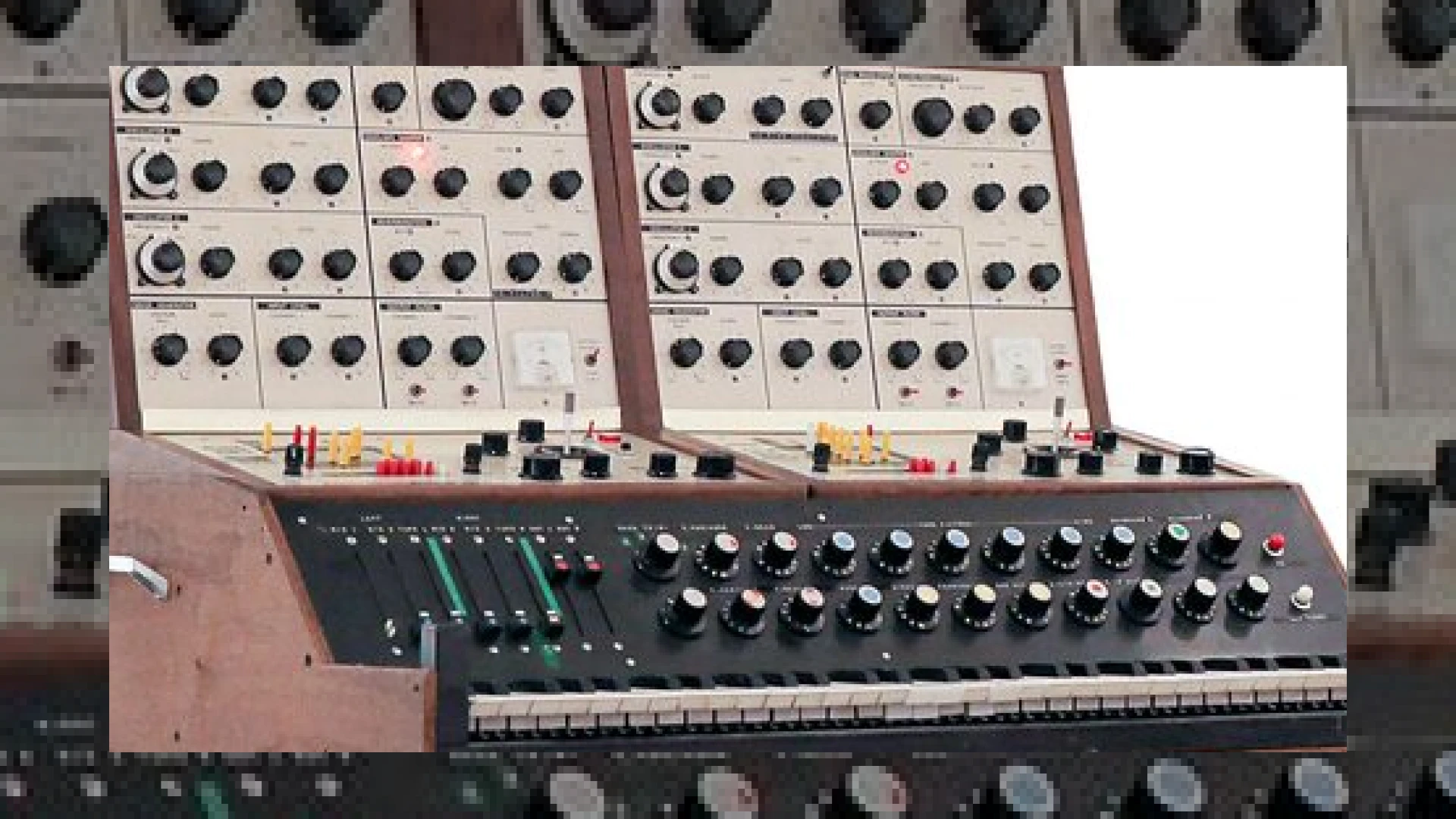
Visual context for EMS presents VCS4.
The legacy of analog synthesis continues to evolve as academic institutions and archival projects bring legendary instruments back into the public spotlight. When **ems presents vcs4** initiatives emerge, they offer sound engineers, producers, and synthesis historians a rare glimpse into the formative years of electronic music sound design. Developed over fifty years ago by Electronic Music Studios (EMS) Ltd in London, this rare performance module has transcended its historical artifact status to remain a profound source of inspiration for modern spatial audio mixing and analog modular workflows.
## Understanding the Heritage Behind ems presents vcs4
The lineage of the VCS series is legendary among sound designers who frequently study vintage hardware signal flow or use advanced tools like iZotope plugins to emulate classic warmth. To fully appreciate what **ems presents vcs4** showcases, one must look at its foundational architecture. Essentially dual VCS3 units housed within a custom wooden base station, the system features a dedicated keyboard, an integrated external audio input mixer, and complex internal signal processing routing. This dual-core topology allows for dense modulation capabilities that rival contemporary Eurorack setups.
For engineers striving to integrate historical analog concepts into modern hybrid mixing environments, consulting professional mixing resources like SM Mastering Audio Articles can provide critical insights into balancing aggressive analog saturation with digital clarity.
## Technical Specifications and Hardware Overview
| Specification | Detail |
| :— | :— |
| **Name** | EMS VCS4 Live Performance Module |
| **Use** | Experimental Analog Synthesis & Live Performance |
| **Price** | Museum/Academic Archive Piece (Priceless / Not for Sale) |
| **Rating** | 5/5 Stars (Historical & Sonic Significance) |
## Practical Studio Workflow Tips for Emulating Vintage EMS Sound
While acquiring an original unit featured when **ems presents vcs4** is nearly impossible for the average producer, you can replicate its unique character in your digital audio workstation (DAW):
* **Pin Matrix Routing Simulation:** Use modular matrix modulation plugins to cross-modulate oscillators and filters without standard cable clutter.
* **Control Voltage (CV) Instability:** Introduce subtle pitch drift and oscillator free-running behavior to emulate the distinct analog drifting of vintage British synthesizers.
* **Aggressive Feedback Loops:** Route auxiliary sends back into input channels with careful gain staging to capture the wild, self-oscillating nature of classic EMS filter designs.
## Conclusion
The ongoing exploration of vintage hardware demonstrated when **ems presents vcs4** serves as a vital reminder of how innovation in electronic music was forged. By bridging the gap between 1970s analog experimentation and modern production methodologies, we can better understand the roots of sound design and apply those timeless principles to contemporary mixes.
## Frequently Asked Questions
### What is the origin of the hardware highlighted when ems presents vcs4?
The unit was originally built over 50 years ago by Electronic Music Studios (EMS) Ltd in London. It combines two heavily modified VCS3 portable analogue synthesizers into a single performance base station with an integrated keyboard and mixer.
### Can regular music producers buy a VCS4 today?
No, the VCS4 is an extremely rare historical instrument housed within academic modular synthesizer suites, such as the collection at Goldsmiths, University of London, and is primarily used for research, education, and special live performances.
### How does the VCS4 differ from a standard VCS3?
While the VCS3 is a compact, portable synthesizer utilizing a distinct pin-matrix patching system, the VCS4 integrates two VCS3 systems alongside an expanded control surface, dedicated keyboard, and sophisticated internal signal processing within a custom wooden cabinet.
Written by SM Mastering
Official content on sound engineering, mixing, mastering, and advanced electronic production by SM Mastering.