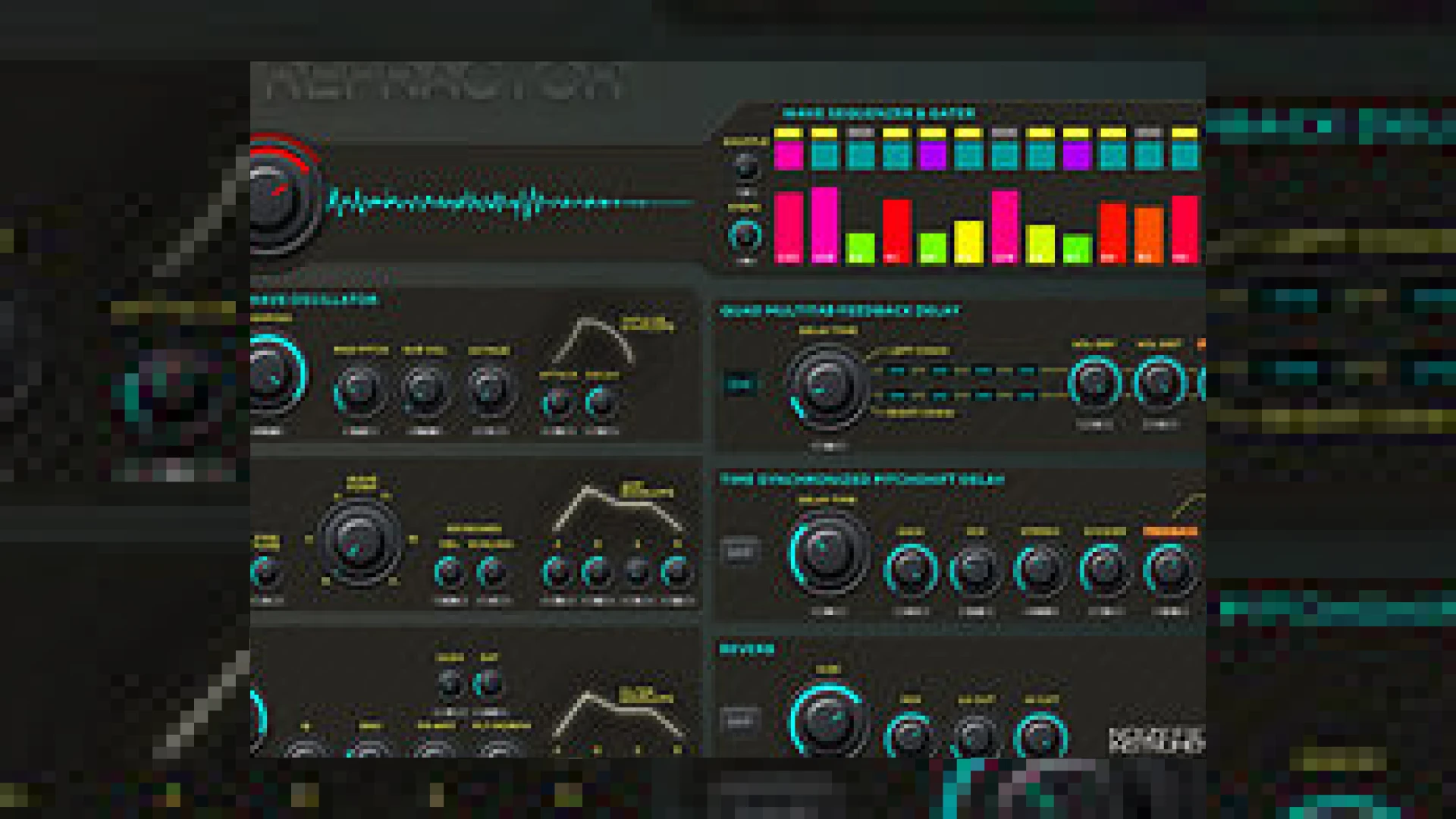
Visual context for KVR Audio announce Developer Challenge 2018.
The global audio production community thrives on rapid technical innovation, and nothing highlights this spirit of creative adaptation quite like when we see KVR Audio announce the seventh instalment of their famous audio plug-in, application, and soundware design event. The moment **kvr audio announce developer challenge 2018** is published, it signals a massive influx of creative utility tools and experimental synthesis engines directly into the hands of bedroom producers and high-end mastering engineers alike.
For those unfamiliar with the event, the challenge is open to anyone worldwide who develops audio software or designs sound libraries. To enter, developers must simply create and release an original, free audio plug-in, standalone application, or sound set that benefits the production community at large. The community then votes on the entries based on designated criteria, and the project with the highest rating secures the top spot. At SM Mastering, we often look closely at these community-driven tools to find hidden gems for unique sound design and stereophonic processing.
Why the KVR Audio Announce Developer Challenge 2018 Matters for Freeware Development
Under the hood, when **kvr audio announce developer challenge 2018** takes place, it mobilizes independent DSP engineers to push the boundaries of modern coding. While commercial industry giants like iZotope dominate high-end utility and restoration suites, community-developed freeware often fills highly specific, creative niches that large corporations might overlook. Independent developers can take risks on eccentric concepts, complex modulation matrices, or novel soundware synthesis.
Additionally, when **kvr audio announce developer challenge 2018** occurs, it drives immense value because of its community-funded donation pool. This fund sponsors five cash prizes alongside a wildcard pick, offering developers tangible rewards for their hard work. For independent creators, this event acts as a launching pad into the professional commercial market. You can explore how some of these unique tools can be implemented within custom analog-digital mastering chains in our SM Mastering Audio Articles.
Finally, as the timeline for the event shows, when **kvr audio announce developer challenge 2018** closes its submission phase on August 30, it transitions to a community-voted system where users judge plugins on creativity, utility, and stability. This transparent, peer-reviewed ecosystem ensures only the most robust tools bubble to the top, giving producers access to a highly vetted, completely free production suite.
Developer Challenge Specifications & Previous Winners
To understand the scale of what is generated during these challenges, it is helpful to look at the typical parameters of winning entries. The table below details key metrics and previous high-profile releases associated with the event:
| Name / Event | Primary Use | Price | Community Rating |
|---|---|---|---|
| Refractor (2016 Winner) | Soundware / Polyphonic Synth | Free | 4.8 / 5.0 |
| KVR Developer Challenge 2018 | Plugin & Soundware Creation | Free (To Download) | 4.9 / 5.0 |
| Proximity (Classic Entry) | Psychoacoustic Distance FX | Free | 4.7 / 5.0 |
| SDRR (Classic Entry) | Saturation & Tube Emulation | Free (Subset Version) | 4.8 / 5.0 |
Practical Studio Workflow Tips for Freeware Integration
While free plug-ins are highly exciting, implementing them into a professional hybrid mastering or mixing environment requires a strategic approach:
- Sandboxing and Stability Tests: Before inserting a newly developed freeware tool into an active, client-facing session, run it in a blank “sandbox” project. This allows you to check for unexpected CPU spikes, memory leaks, or DAW crashes under heavy loads.
- Verify Phase Coherency: Some indie-developed plugins lack internal latency compensation (PDC) reporting. Always check your phase alignment before and after the plugin using a correlation meter to ensure your low-end does not cancel out.
- Use Clean Gain Staging: Free plugins often model vintage hardware curves but can be highly sensitive to input gain. Feed them conservative signal levels (around -18 dBFS RMS) to maintain optimal dynamic range and avoid digital clipping.
Conclusion
The KVR Developer Challenge remains a vital lifeblood for the music production ecosystem, proving that some of the most innovative DSP ideas start as free, community-driven projects. Whether you are a bedroom producer looking for your next go-to synth or a mastering engineer hunting for a unique sound design tool, the entries from this challenge offer incredible utility. Keep an eye on these developments to continually expand your sonic palette without breaking the bank.
Frequently Asked Questions
What is the timeline for the KVR Developer Challenge 2018?
Entries for the challenge were accepted through August 30, 2018. Following this, all submissions were hosted on KVR servers for public download, appraisal, and voting. The final voting period concluded on September 30, 2018, with the winners announced in October.
Who can enter the KVR Developer Challenge?
The challenge is open to anyone globally who designs and develops audio plug-ins, standalone applications, or soundware (sound libraries, patch sets, or sample packs). The main rule is that the entry must be entirely original, new, and released for free.
Are the plugins safe to use in professional DAW setups?
Most submissions are highly optimized and completely safe. However, because they are designed by independent developers, some plugins may have minor bugs or compatibility issues with certain operating systems. We always recommend testing them in a non-critical session first.
Written by SM Mastering
Official content on sound engineering, mixing, mastering, and advanced electronic production by SM Mastering.