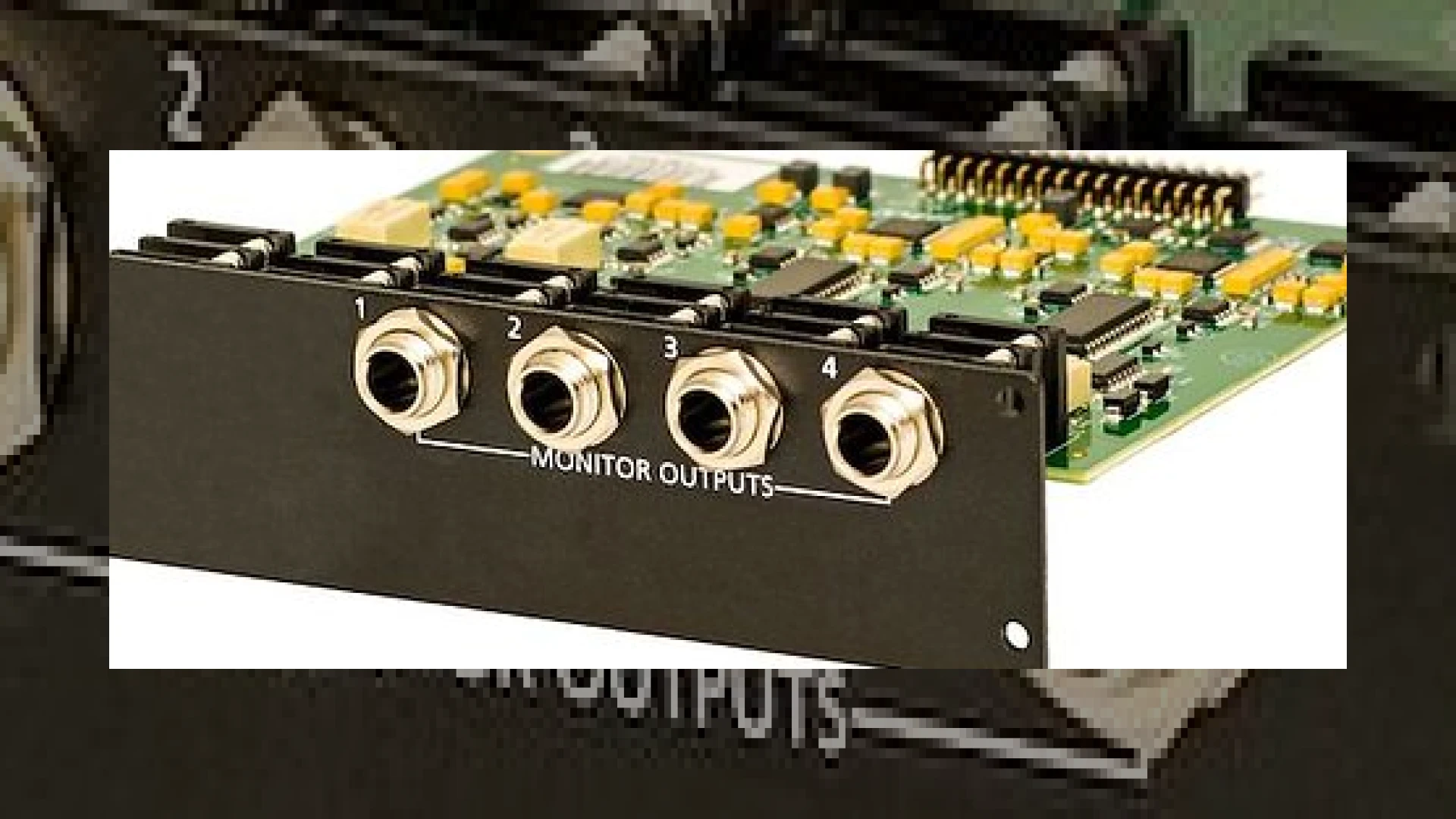
Visual context for Lynx Aurora(n) – New modules.
When it comes to high-end modular conversion in professional recording environments, the Lynx Aurora(n) platform has long been a gold standard for transparency, low jitter, and robust clocking. For top-tier facilities and project studios alike, the release of the lynx aurora(n) – new modules marks a significant expansion in custom I/O routing capabilities. At SM Mastering Audio Articles, we frequently evaluate hardware that bridges the gap between massive channel counts and pristine desktop-sized setups. These recent hardware additions deliver exactly that flexibility.
Expanding Studio Connectivity With lynx aurora(n) – New modules
The introduction of the LM-A4 and LM-A24 expansion cards addresses specific workflow demands for engineers working with smaller channel counts, surround monitoring, or hardware insert chains. The LM-A4 is an output-only module featuring four balanced analogue outputs on TRS connectors. When paired with the existing LM-PRE4 input module, project studios can now build a highly customized, compact 4-in/4-out conversion system without paying for unused multi-channel bulk. Meanwhile, the LM-24A offers a versatile combination of two analogue inputs and four balanced analogue outputs on TRS connectors, complete with switchable +20 and +24dBu operating levels to interface seamlessly with outboard gear. For further insights into calibrating hardware components, you can also consult external resources like Universal Audio for industry-standard gain staging practices.
Technical Specifications and Pricing
To help you determine how these additions fit into your hardware rack, here is a breakdown of the technical specifications, pricing, and overall studio utility for both offerings:
| Module Name | Primary Use Case | Retail Price | Studio Rating |
|---|---|---|---|
| LM-A4 | 4-Channel Balanced Analogue Output (TRS) | $575 | 4.8 / 5 |
| LM-24A | 2-Channel Analogue Input / 4-Channel Analogue Output (TRS) | $750 | 4.9 / 5 |
Practical Studio Workflow Tips
Integrating hardware expansions effectively requires careful planning of your routing matrix:
Hardware Inserts: Utilize the LM-24A’s combination of inputs and outputs to patch stereo compressor chains or saturation units directly into your DAW with minimal latency.
Monitor Control: Dedicate the LM-A4 outputs to feed secondary nearfield monitors, alternate headphone amps, or hardware summing mixers.
Operating Levels: Make sure to match your studio’s standard operating reference level (+20 or +24dBu) using the switchable inputs on the LM-24A to prevent unexpected clipping.
Conclusion
The continuous evolution of modular conversion proves that manufacturers are listening closely to engineer feedback. By offering targeted configurations like the LM-A4 and LM-A24, the ecosystem remains adaptable to shifting studio paradigms. Utilizing the lynx aurora(n) – new modules ensures that your conversion path stays completely transparent whether you are tracking a solo acoustic artist or mastering a dense mix.
Frequently Asked Questions
Are the new LM-A4 and LM-A24 modules compatible with all legacy Aurora(n) units?
Yes, these modules are designed to integrate seamlessly into existing Aurora(n) chassis slots, allowing current owners to upgrade their hardware configuration easily.
What type of physical connectors do these modules use?
Both the LM-A4 and LM-24A utilize balanced TRS connectors for all of their analogue input and output paths.
Can the LM-24A inputs handle professional line-level outboard gear?
Absolutely. The inputs on the LM-24A are switchable between +20 and +24dBu operating levels, ensuring high compatibility with professional studio hardware.
🛒 Official Product Info & Where to Buy
Check full technical specs, pricing, and purchase options directly from the official manufacturer or authorized dealer for Lynx Aurora(n) – New modules.

Written by SM Mastering
Official content on sound engineering, mixing, mastering, and advanced electronic production by SM Mastering.