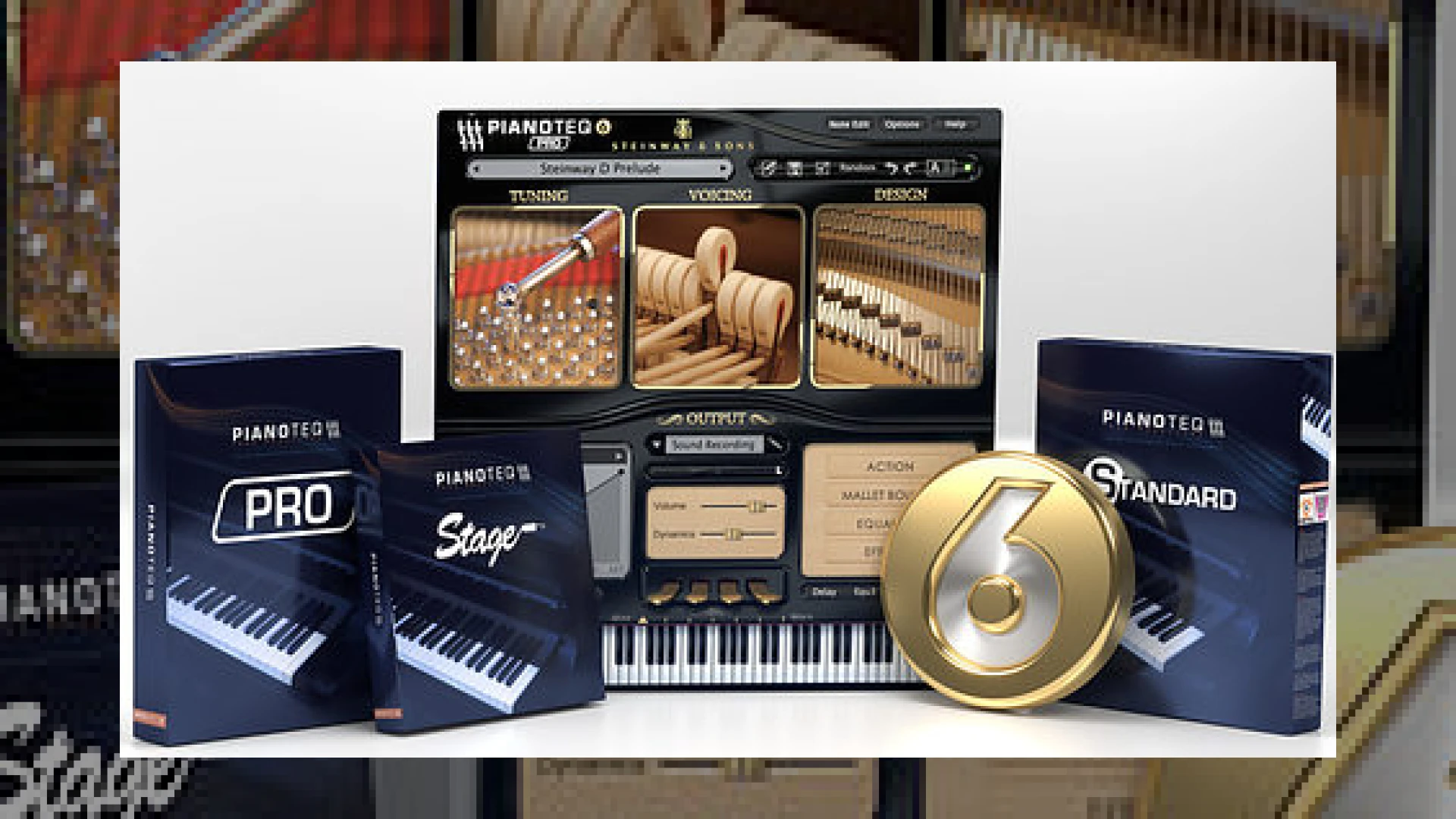
Visual context for Modartt release Pianoteq 6.
As professional mastering and mixing engineers, we are constantly on the lookout for virtual instruments that bridge the gap between digital convenience and organic acoustic reality. The announcement that modartt release pianoteq 6 represents a major milestone in the evolution of virtual pianos. Unlike traditional sample-based engines that rely on tens of gigabytes of streaming hard drive data, Modartt’s acclaimed software relies entirely on physical modeling. This method mathematically recreates the physical properties of strings, hammers, soundboards, and cabinets in real time, offering unprecedented playability, a tiny memory footprint, and exceptional expression.
In past iterations, physical modeling was sometimes critiqued for lacking the raw, unpolished realism of massive multi-sampled libraries. However, after three years of intensive research and development, the French software company has fundamentally refined its underlying algorithms. With the modartt release pianoteq 6, the physical modeling paradigm reaches a new peak, bringing subtle engine adjustments, increased mechanical realism, and a vastly improved acoustic presence to all of its 49 physically modeled instruments.
Technical Refinements: Modartt Release Pianoteq 6 Under the Microscope
The core achievement of the modartt release pianoteq 6 is its official approval by Steinway & Sons. The world-renowned piano manufacturer has thoroughly evaluated and authorized the sound and playability of the virtual Steinway Model D and Steinway Model B instruments. This is a monumental endorsement for physical modeling technology. Steinway’s validation guarantees that the complex interactions of resonances, harmonics, and transient responses in these virtual models closely match their acoustic counterparts. Just as advanced processing platforms like iZotope revolutionized spectral audio repair, Modartt has redefined how we synthesize acoustic spaces and mechanical components.
From a technical workflow perspective, the engine optimizations in the modartt release pianoteq 6 ensure that CPU load remains incredibly low while expanding compatibility. Key updates include:
- Full compatibility with the VST3 format, ensuring better automation handling and resource allocation in modern DAWs.
- ARM architecture support (Linux version only), allowing the software to run on compact systems such as Raspberry Pi 3 boards—opening up new possibilities for portable live rigs.
- Advanced tuning options, featuring a redesigned tuning section with innovative microtuning tools.
- An integrated chord identification tool, which is highly beneficial for composers and session musicians during tracking.
- An improved standalone application featuring a MIDI playlist, a enhanced MIDI archive, and direct audio export to FLAC and MP3 formats, alongside lossless WAV.
For more deep dives into cutting-edge software and studio hardware, feel free to explore our curated guides on the SM Mastering Audio Articles page.
Specifications & Comparison
To help you understand how this physical modeling tool fits into your production suite, we have compiled its core specifications below:
| Specification / Metric | Details |
|---|---|
| Product Name | Modartt Pianoteq 6 |
| Engine Type | Real-time Physical Modeling (No Samples) |
| File Size | Approximately 50 MB |
| Supported Formats | VST2, VST3, AU, AAX, Standalone, ARM (Linux) |
| Key Endorsements | Steinway & Sons (Model D and Model B) |
| Target Price Range | Starting at €129 (Stage), €249 (Standard), €399 (Pro) |
| SM Mastering Rating | 9.6 / 10 |
Practical Studio Workflow Tips for Mastering Engineers
Integrating physically modeled pianos into a complex mix requires a slightly different approach than working with static samples. When we work with tracks featuring the modartt release pianoteq 6, we recommend the following professional workflow adjustments:
First, take advantage of the dynamic range controls inside the instrument before applying external compression. Because Pianoteq does not suffer from “velocity layers” or stepped transition artifacts, its dynamic range can be incredibly wide. Adjusting the velocity curve directly inside the plugin ensures that the performance remains highly expressive without overloading your master bus.
Second, pay close attention to the microphone placement parameters. Pianoteq 6 allows you to position virtual microphones around the soundboard in 3D space. Moving the virtual mics slightly further away can naturally blend the piano into a orchestral or acoustic mix, reducing the need for aggressive additive EQ or excessive external algorithmic reverb later in the chain.
Conclusion
Modartt has once again demonstrated that physical modeling is the future of expressive keyboard instruments. By securing the endorsement of Steinway & Sons, refining their microtuning options, and adding modern format compatibility like VST3 and ARM, Pianoteq 6 establishes itself as an essential tool for composers, producers, and mastering engineers alike. Its negligible storage footprint and flawless CPU efficiency make it a masterclass in modern software design.
Frequently Asked Questions
Is Pianoteq 6 better than sample-based pianos?
While sample-based pianos capture a static snapshot of a specific instrument, Pianoteq 6 uses physical modeling to simulate the organic, continuous interactions of strings and wood. This offers superior playability, zero velocity switching, and customizable acoustics, all within a fraction of the hard drive space.
Can I run Pianoteq 6 on a mobile or low-spec computer?
Yes. Because it does not stream heavy samples from a hard drive, Pianoteq 6 has an extremely light memory footprint (around 50 MB). It runs efficiently on standard studio computers and even supports ARM architectures (like Raspberry Pi 3 on Linux) for compact live performance setups.
What does the Steinway & Sons authorization mean?
The authorization means that Steinway & Sons tested and officially approved the sound quality, acoustic accuracy, and overall playability of the virtual Steinway Model D and Model B instruments included in Pianoteq 6, validating it as a highly accurate digital recreation.
🛒 Official Product Info & Where to Buy
Check full technical specs, pricing, and purchase options directly from the official manufacturer or authorized dealer for Modartt release Pianoteq 6.
Written by SM Mastering
Official content on sound engineering, mixing, mastering, and advanced electronic production by SM Mastering.