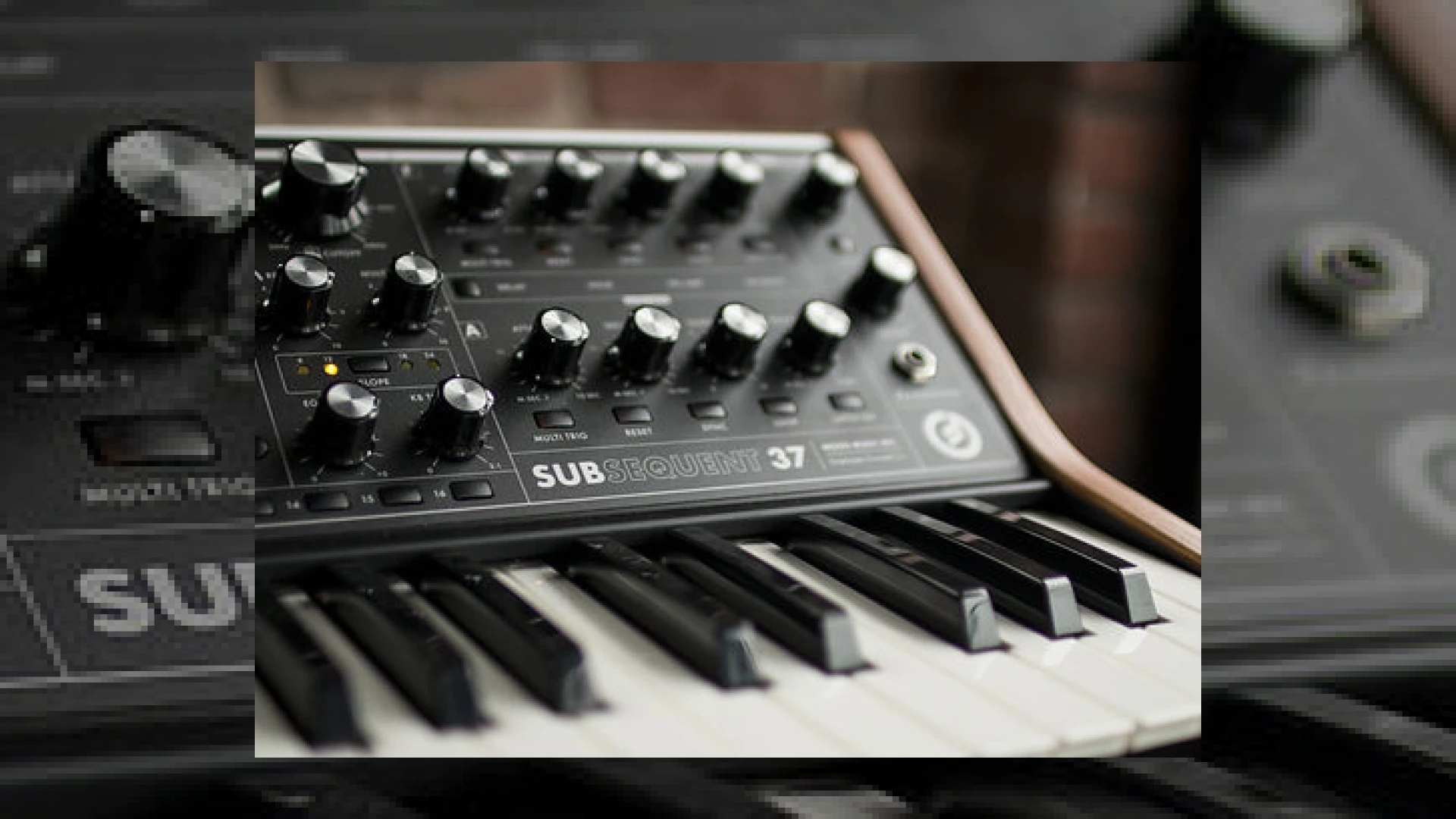
Visual context for Moog Subsequent 37 to replace Sub 37.
The transition from a beloved hardware classic to its successor is always met with equal parts excitement and scrutiny in the professional audio community. When Moog Music announced the discontinuance of the award-winning Sub 37 Paraphonic Analog Synthesizer, it was to make room for a new standard in studio synthesis. The decision to introduce the moog subsequent 37 to replace sub 37 marked a major evolution, inheriting the upgraded sonic modifications and functional improvements originally developed for the limited-edition Subsequent 37 CV, but optimized for a standard production hardware model.
For mastering and mixing engineers at SM Mastering, hardware improvements under the hood translate directly to how a track sits in a stereo field. When evaluating the moog subsequent 37 to replace sub 37, the modifications go far beyond cosmetics. While the aesthetics remain familiar, the internal gain-staging, mixer headroom, and multidrive circuits have undergone a ground-up redesign to accommodate modern mixing and production demands.
Why Moog Subsequent 37 to Replace Sub 37 Makes Perfect Sense
When looking at the technical advantages of choosing the moog subsequent 37 to replace sub 37, the primary difference lies in the internal gain-staging. The Subsequent 37 features double the mixer headroom of the original Sub 37. In paraphonic (duo) mode, this allows the two independent oscillators to perform without immediately saturating the mixer, providing access to a pristine range of classic clean tones. For electronic music production, clean analog tones are highly valuable because they offer a pure fundamental frequency that translates incredibly well during the mastering stage.
Leveraging this newfound headroom, Moog’s engineering team redesigned the gain-staging of the famous 4-pole Ladder filter. This reshaped architecture boosts harmonic saturation and analog compression. If you require more grit, the re-tuned Multidrive circuit extends far beyond the growl of the original unit, giving producers a broader range of distortion textures to play with.
For mastering engineers analyzing raw analog tracks, recommending the moog subsequent 37 to replace sub 37 is easy due to its superior harmonic integrity. The transients remain punchier because the headroom prevents unwanted, muddy clipping. You can learn more about managing analog dynamics and mixing techniques by reading our dedicated guides at the SM Mastering Audio Articles hub.
Hardware Specifications Comparison
To help you understand how this physical synthesizer stacks up in a modern professional studio setup, we have compiled the essential specifications below:
| Synthesizer Name | Primary Studio Use | Estimated Retail Price | SM Mastering Rating |
|---|---|---|---|
| Moog Subsequent 37 | Lead, Bass, Paraphonic Sound Design | $1,599 USD | 4.9 / 5.0 |
Practical Studio Workflow Tips
Integrating a modern analog mono/paraphonic synth into your hybrid studio setup requires careful attention to gain-staging and synchronization. Here are our top workflow tips for getting the most out of this instrument:
- Utilize the Headroom: Keep the mixer volumes below 50% on the instrument panel to capture ultra-clean, classic Moog brasses and leads that require precise EQing later in your DAW.
- Drive for Distortion: If you are tracking a heavy bassline, push the mixer volume past 70% and engage the re-tuned Multidrive. The subsequent analog compression will sit perfectly in a dense mix without requiring heavy plugins.
- DAW Integration: For precise clocking and modulation, integrate the instrument with modern production hosts like Ableton Live via MIDI over USB to keep your arpeggiator and LFOs perfectly synced to your session tempo.
Conclusion
In conclusion, the transition of the moog subsequent 37 to replace sub 37 represents a masterful hardware refinement. By doubling the mixer headroom, retuning the multidrive, and optimizing the Ladder filter, Moog has provided modern producers with a synth that handles both delicate, clean paraphony and aggressive, saturated basslines with equal poise. It remains a staple in our mastering client submissions and a recommended cornerstone for any hardware-based electronic music studio.
Frequently Asked Questions
Is the Subsequent 37 fully analog?
Yes, the audio path of the Subsequent 37 is 100% analog. It features analog oscillators, an analog Ladder filter, and an analog VCA, controlled digitally via high-resolution encoders for instant preset recall and MIDI automation.
Can I load my old Sub 37 patches onto the Subsequent 37?
Yes. The Subsequent 37 is fully backward-compatible with original Sub 37 presets. Because of the upgraded analog hardware, however, your original presets may exhibit slightly more headroom and a cleaner overall sound on the new unit.
What does paraphonic mean on the Subsequent 37?
Paraphony on this synth means that while it features two independent analog oscillators that can play different notes (duo mode), they share a single filter and amplifier envelope. This allows for unique performance expressive capabilities compared to traditional monophonic synths.
🛒 Official Product Info & Where to Buy
Check full technical specs, pricing, and purchase options directly from the official manufacturer or authorized dealer for Moog Subsequent 37 to replace Sub 37.

Written by SM Mastering
Official content on sound engineering, mixing, mastering, and advanced electronic production by SM Mastering.