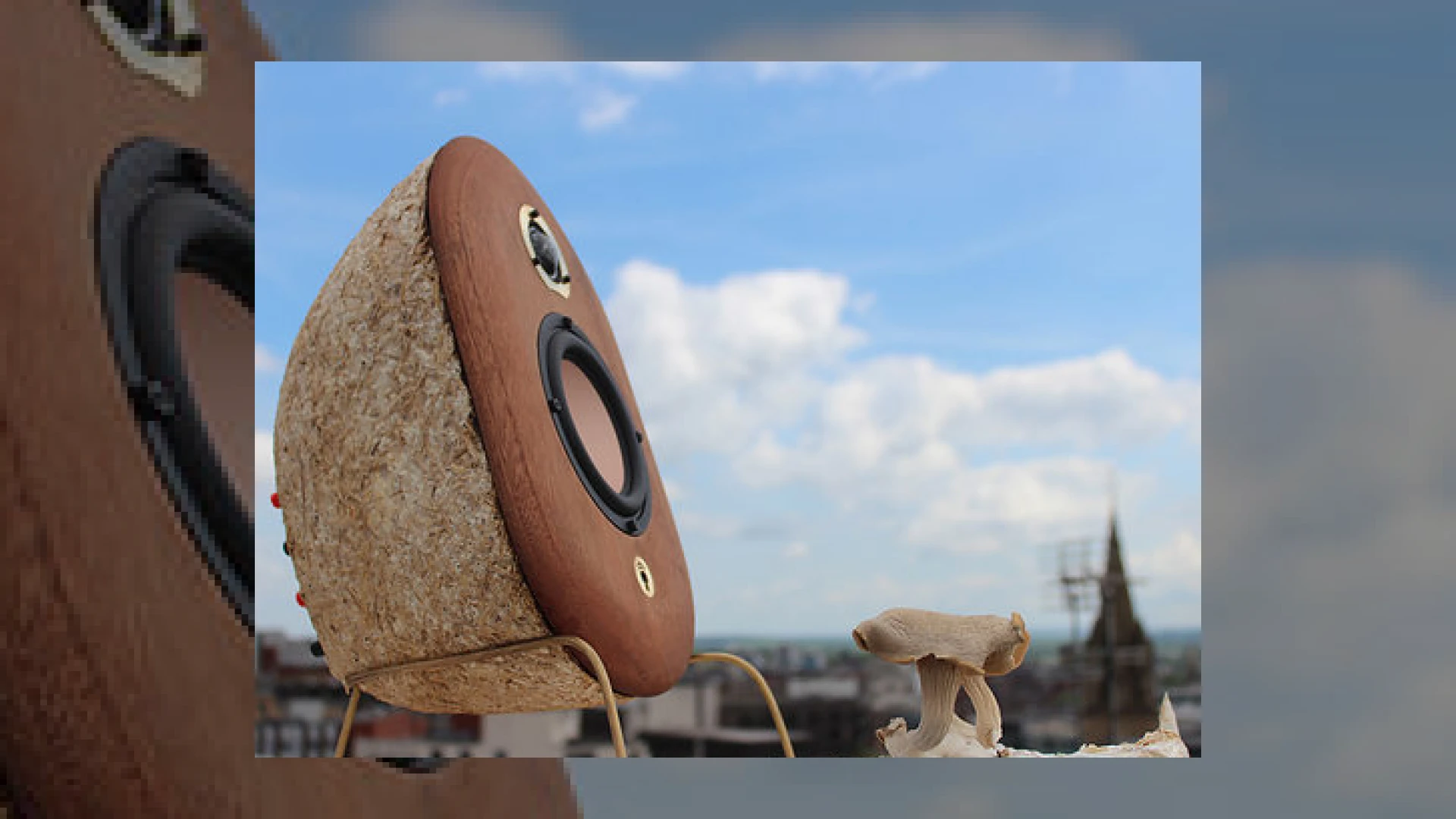
Visual context for Mushroom speakers designed by student.
At SM Mastering, we are constantly tracking innovations that challenge traditional audio engineering standards. When we first heard about the mushroom speakers designed by student Bertie Ford at Nottingham Trent University, our engineering team was immediately intrigued. The transition toward eco-friendly studio design is no longer just a trend; it is becoming a technical necessity. This prototype, named FungiSound, utilizes the natural root structure of fungi to create a speaker cabinet that addresses both ecological concerns and acoustic resonance control.
In the high-stakes world of professional mastering and mixing, cabinet resonance is the ultimate enemy of transparency. Traditional manufacturers spend millions of dollars damping cabinet vibrations using dense MDF (medium-density fibreboard), plastics, and composite metals. By looking at organic alternatives, this student project introduces a fascinating material science perspective into the acoustic workspace. For more deep dives into cutting-edge acoustic technology and studio monitoring reviews, check out our collection of SM Mastering Audio Articles.
The Science Behind Mushroom Speakers Designed by Student Bertie Ford
The concept of mushroom speakers designed by student innovators highlights a massive shift towards organic acoustics. The core material of the FungiSound cabinet is mycelium, specifically grown from oyster mushrooms. Mycelium is the subterranean thread-like network of fungi that can be grown into custom molds. Once the mycelium has fully colonised the agricultural waste substrate in the mold, it is baked. This baking process kills the organic culture, stopping growth, and cures the material into a highly rigid, lightweight, and structural outer skin.
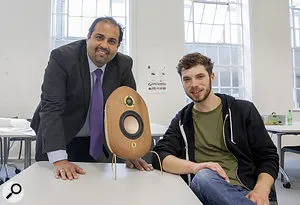
Additional product view and interface angle for Mushroom speakers designed by student.
From an acoustic standpoint, mycelium boasts natural properties that behave similarly to high-end acoustic foam and dense fiberboards. The porous internal microstructures of cured mycelium excel at absorbing high-frequency internal reflections within the cabinet. In traditional loudspeaker design, back-wave energy from the driver can bounce off inner walls and pass back through the cone, causing phase cancellation and mud. These mushroom speakers designed by student minds tackle this problem natively through their internal organic structure, potentially minimizing the need for extensive internal synthetic damping materials.
Specifications & Conceptual Performance
While the FungiSound remains a prototype developed during a BSc Product Design degree, its theoretical specifications paint an interesting picture for the future of sustainable nearfield monitors. Below is an overview of how this concept shapes up:
| Name | Use | Price | Rating |
|---|---|---|---|
| FungiSound (Mycelium Prototype) | Sustainable Nearfield Studio Monitoring / Conceptual Audio Design | Prototype Only (N/A) | 4.2 / 5.0 (Acoustic Innovation) |
Acoustic Advantages of Mycelium in Speaker Design
When evaluating the mushroom speakers designed by student Bertie Ford, we must look at the damping factor. In structural acoustics, materials like MDF are favored because they have high internal damping—meaning they do not “ring” when excited by sound pressure waves. Mycelium has proven to have comparable structural properties to MDF, but with the added benefit of being incredibly lightweight and entirely biodegradable.
In comparison to commercial monitors produced by industry legends such as Neumann, which rely on precision-engineered aluminum or composite enclosures to control resonance, organic mycelium offers a different approach. The random, non-uniform cellular structure of grown mycelium helps to scatter internal standing waves. Instead of reflecting sound back in a predictable, resonant frequency, the organic matrix disperses the energy evenly, leading to a flatter and less colored frequency response.
Practical Studio Workflow Tips for Sustainable Monitoring
If you are looking to integrate organic materials or optimize your current monitor setup based on these structural acoustic principles, consider the following workflow adjustments:
- Decouple Your Cabinets: No matter how well-damped your speaker cabinet is, mechanical energy will still transfer to your desk or console. Always use high-density decoupling pads or isolation stands to keep your low-end response tight and phase-coherent.
- Compensate via Room Correction: Organic cabinet materials can sometimes exhibit unique low-mid resonance patterns. Utilize room calibration software to measure your room’s response and smooth out any frequency anomalies caused by cabinet-room interactions.
- Control Studio Humidity: Organic composite gear, including mycelium-based structures, can be sensitive to extreme environmental shifts. Maintain a stable relative humidity of 40% to 50% in your mastering suite to ensure the structural integrity of your gear remains consistent over time.
Conclusion
Ultimately, the mushroom speakers designed by student Bertie Ford represent more than just a novelty; they signal a green revolution in acoustic manufacturing. As the pro-audio industry seeks sustainable alternatives to plastics and heavy-carbon-footprint manufacturing, grown materials like mycelium offer a viable, high-performance path forward. At SM Mastering, we look forward to seeing how commercial developers adapt these organic innovations for the next generation of studio monitors.
Frequently Asked Questions
Are mycelium-based speakers durable enough for daily studio use?
Yes. Once the mycelium is baked and dried, it forms a highly durable, rigid structural skin that behaves similarly to hard foam or MDF. It is resistant to impact and, when properly sealed, is protected against moisture and decay, making it completely stable for standard studio environments.
Do mushroom speakers sound different than traditional MDF speakers?
Because mycelium has natural sound-dampening properties, it excels at absorbing internal cabinet reflections. This results in less cabinet coloration and a cleaner midrange. While official acoustic testing on the FungiSound prototype is pending, the physics of the material suggests a highly controlled resonance profile.
Can I buy the FungiSound mushroom speakers?
Currently, the FungiSound is a conceptual prototype developed by Nottingham Trent University student Bertie Ford as part of his Product Design degree. It is not yet commercially available, though it has successfully proven the viability of organic, grown materials in high-fidelity loudspeaker manufacturing.

Written by SM Mastering
Official content on sound engineering, mixing, mastering, and advanced electronic production by SM Mastering.