Visual context for Music Expo Miami: Recap.
The convergence of professional audio engineers, independent artists, and industry-leading manufacturers always sparks a unique creative energy. At SM Mastering, we closely monitor these events to bring the latest technological advancements and production workflows straight to your studio. When the industry gathered at the SAE Institute, it offered a masterclass in modern production methodologies. In this post, we dive deep into our exclusive music expo miami: recap to uncover the most valuable technical insights for today’s hybrid and in-the-box (ITB) engineers.
The event proved that the line between high-end commercial studios and professional home environments continues to blur. By analyzing the setups and philosophy shared by top-tier professionals, we can optimize our own mixing and mastering pipelines for better translation and sonic depth.
Our Technical Music Expo Miami: Recap and Highlights
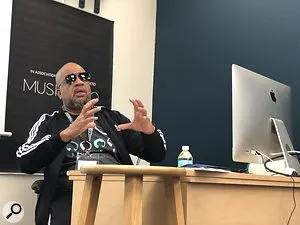
One of the most anticipated segments of the event was the keynote presentation by Grammy-winning engineer and producer Gary Noble (known for his outstanding work with Amy Winehouse and Faith Evans). Noble’s transition from massive analog consoles and extensive outboard racks to a streamlined, in-the-box (ITB) DAW workflow represents a major shift in the industry. During our music expo miami: recap, we noted how Noble manages to retain that sought-after “analog warmth” and harmonic complexity without relying on physical patch bays.
Additional product view and interface angle for Music Expo Miami: Recap.
Noble emphasized that the secret lies in saturation staging and precise transient control. Instead of overloading a single summing bus, he applies subtle, cumulative harmonic coloration across individual channels and sub-groups. Engineers looking to replicate this behavior can utilize high-fidelity analog emulation plugins, such as those developed by Universal Audio, to introduce tape saturation and console channel-strip characteristics early in the mixing chain. For more detailed guides on implementing these analog modeling techniques in your masters, explore our curated resource at SM Mastering Audio Articles.
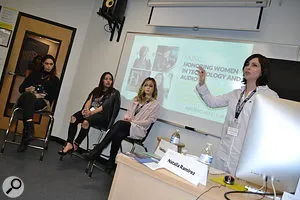
Another monumental highlight from the event was the “Honoring Women in Technology and Audio” panel. Industry trailblazers including Natalia Ramirez, Maria Elisa Ayerbe, and Valentina Alvarez discussed the technical hurdles of modern mixing and vocal production. They highlighted critical strategies for handling modern vocal chains, emphasizing the importance of dynamic EQ over static surgical cuts to preserve the natural resonance and emotion of a performance.
Additional product view and interface angle for Music Expo Miami: Recap.
Hardware and Software Comparison
To help you choose the right tools highlighted during our music expo miami: recap, we compiled a quick hardware and software specifications table featuring gear and platforms that took center stage during the presentations and interactive beat battles.
| Name | Use | Price (approx.) | Rating |
|---|---|---|---|
| Eventide Mixing Link | Vocal Tech / FX Loop & Preamp | $299 | 4.8/5 |
| Universal Audio Apollo Twin X | DSP Tracking & Monitoring | $999 | 4.9/5 |
| iZotope Ozone 11 Advanced | AI-Assisted Mastering & Spectral Shaping | $399 | 4.7/5 |
| Soundtoys 5 Bundle | Creative Saturation & Modulation Effects | $499 | 4.9/5 |
Practical Studio Workflow Tips
Implementing the high-level concepts discussed at the expo doesn’t require a million-dollar studio. Here are actionable steps you can integrate into your workflow today:
Additional product view and interface angle for Music Expo Miami: Recap.
- Emulate Console Summing: Place a subtle console crosstalk or channel emulation plugin on the first insert of every track, and a bus emulation plugin on your master fader. This mimics the natural crosstalk and non-linearities of analog desks.
- Dynamic Range Management: Prioritize serial compression (using two compressors sharing the load with 1-2 dB of gain reduction each) rather than forcing a single compressor to do heavy lifting. This keeps your transients intact while stabilizing the performance.
- Active Frequency Slotting: Instead of boosting high frequencies on every channel to find “air,” carve out specific frequency bands for each instrument. Give your vocals the 3-5 kHz presence, and keep acoustic guitars or synths slightly dipped in that exact range to prevent accumulation and harshness.
Conclusion
Wrapping up this music expo miami: recap, the integration of hybrid methodologies remains the definitive path forward for modern audio professionals. Whether you are mixing an independent release or mastering a major-label project, balancing the clinical precision of digital audio with the harmonic richness of analog emulations will elevate your sonic signature. Stay tuned to our technical blog for more industry breakdowns, gear analysis, and mastering masterclasses designed to keep your music competitive in the global market.
Frequently Asked Questions
What were the main takeaways from the Gary Noble keynote?
Gary Noble focused heavily on the transition from analog consoles to ITB (in-the-box) workflows. His primary advice was to focus on cumulative saturation and transient design within your DAW to match the depth and headroom of traditional console tracking.
How does the Eventide Mixing Link benefit studio workflows?
The Eventide Mixing Link is a highly versatile tool that acts as a high-quality mic preamp, an effects loop for integrating guitar pedals into studio vocal chains, and a practice amp, making it an essential Swiss Army knife for creative signal routing.
Why is dynamic EQ preferred over static EQ in modern vocal production?
Dynamic EQ only cuts or boosts target frequencies when they cross a specific threshold. This ensures that harsh frequencies are tamed only when they become problematic (such as during loud sibilant passages), preserving the warmth and character of the vocal during quieter moments.
Written by SM Mastering
Official content on sound engineering, mixing, mastering, and advanced electronic production by SM Mastering.