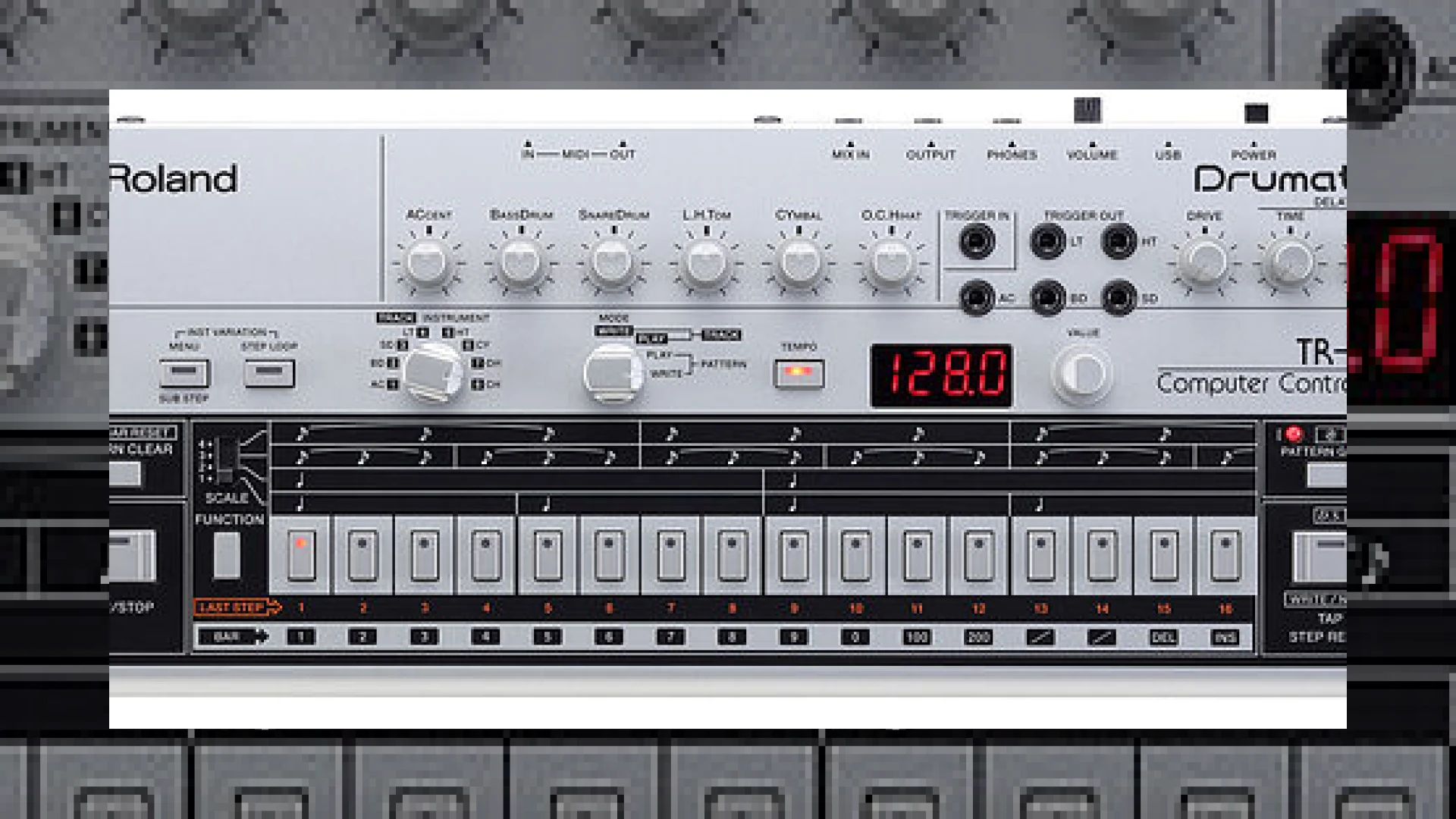
Visual context for New Roland drum machines.
The launch of the **new roland drum machines** represents a highly anticipated leap forward in modern rhythm production, bridging the gap between historical analog warmth and contemporary digital flexibility. For years, electronic music producers and mix engineers have chased the distinct, punchy transients of vintage hardware. Roland’s latest additions to their boutique and compact lineup aim to solve this quest by packing advanced digital signal processing (DSP) into highly portable, performance-oriented formats. By utilizing state-of-the-art physical modeling, these units recreate original circuit behaviors down to the component level, giving studio professionals the classic grit without the maintenance headaches of vintage gear.
Analyzing the Architecture of the New Roland Drum Machines
To understand why these units sound so convincing, we must look at the underlying technology. Roland has deployed its proprietary Analog Circuit Behaviour (ACB) engine in the TR-06 Drumatix, which faithfully models the iconic TR-606. Unlike static sample playback, ACB dynamically calculates the behavior of every resistor, capacitor, and transistor in real-time. This means that when you adjust the decay or accent parameters, the synthesis engine behaves exactly like its analog predecessor, producing a organic, evolving soundscape.
Integrating these **new roland drum machines** into modern hybrid setups is incredibly streamlined. The TR-06 features a powerful multi-channel USB audio interface, allowing producers to route individual instruments directly into their Digital Audio Workstation (DAW) for isolated processing. This is a game-changer for mix engineers who want to apply dedicated processing using premium tools like Universal Audio plugins or hardware outboard gear. Additionally, the inclusion of five physical trigger outputs allows the TR-06 to act as a master sequencer for modular synthesizer rigs, blending vintage workflow with modern Eurorack setups.
For artists seeking a more versatile, multi-engine approach, the TR-6S acts as a “greatest hits” compilation. It houses ACB models of the TR-606, 707, 808, and 909, alongside a powerful FM synthesis engine and user-sample playback. For more insights on optimizing your studio sound and processing analog transients, check out our comprehensive guides on the SM Mastering Audio Articles page.
Hardware Specifications Comparison
The following table outlines the key technical specifications and target use cases for these modern drum synthesizers to help you choose the right fit for your studio environment.
| Name | Primary Use Case | Estimated Price (USD) | Expert Rating |
|---|---|---|---|
| Roland TR-06 Drumatix | Analog-modeled 606 replication, Modular clocking, Live performance sequencing | $399.00 | 4.6 / 5 |
| Roland TR-6S | Multi-model hybrid production (ACB, FM, Samples), Compact travel setups | $399.00 | 4.8 / 5 |
Practical Studio Workflow Tips
For electronic music producers, tracking these **new roland drum machines** presents unique opportunities to capture raw energy. Here are three professional tips to maximize their sonic potential:
- Utilize Probabilistic Triggering: Avoid static loops by applying probability to your snare rolls and hi-hat patterns. The TR-06 allows you to set a percentage chance for steps to fire, adding a human-like variability that keeps the groove organic over long arrangements.
- Parallel Compression in the Box: Both units feature onboard master effects, including master bus compressors. Drive the internal compressor hard to glue the drum kit together, then blend the wet signal back with your dry DAW tracks for a punchy parallel compression effect.
- Saturate the ACB Engine: Do not be afraid to push the internal instrument volumes into the red. The ACB modeling simulates analog headroom, meaning you can achieve warm, harmonic saturation directly within the digital engine before the signal ever hits your converters.
At SM Mastering, we often advise clients that the transient response of these **new roland drum machines** yields highly dynamic mixes. Because the ACB modeling generates transients with natural variation, they sit beautifully in a stereo field without the phase correlation issues often caused by repetitive, static samples.
Conclusion
In conclusion, selecting between these **new roland drum machines** ultimately depends on your studio workflow. If you value dedicated physical knobs, hands-on modular integration, and the specific aesthetic of the vintage 606, the TR-06 Drumatix is an outstanding analog emulator. If you require a sonic Swiss Army knife capable of blending classic drum kits with FM synthesis and custom wavetable samples, the TR-6S offers unparalleled versatility in a compact footprint. Both machines successfully bring the legendary heritage of Roland rhythm units into the modern, high-definition studio era.
—
Frequently Asked Questions
Can I use the TR-06 and TR-6S as audio interfaces?
Yes. Both units support multi-channel audio over USB. This means you can send individual drum tracks (such as kick, snare, and hats) to separate channels in your DAW simultaneously without needing a multi-input external audio interface.
Do these drum machines support MIDI control?
Absolutely. Both hardware units feature standard 5-pin MIDI In/Out ports as well as MIDI over USB. You can clock them to your DAW, trigger their internal sound engines using external MIDI controllers, or use their internal step sequencers to drive software instruments.
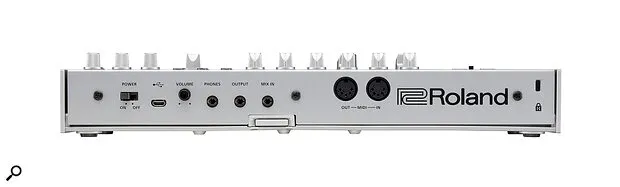
Additional product view and interface angle for New Roland drum machines.
Can the TR-6S play user samples?
Yes. Unlike the TR-06, which focuses strictly on ACB modeling, the TR-6S allows you to load custom WAV or AIFF samples via an SD card. You can layer these samples alongside the built-in virtual-analog and FM synth engines to design completely custom drum kits.
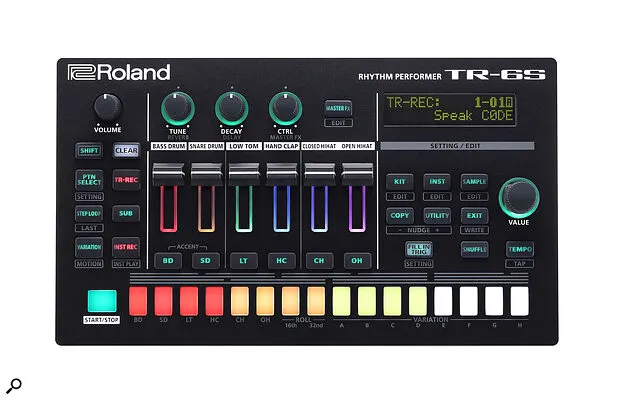
Additional product view and interface angle for New Roland drum machines.
Written by SM Mastering
Official content on sound engineering, mixing, mastering, and advanced electronic production by SM Mastering.