Visual context for New SSL 500-series modules.
At SM Mastering, we constantly analyze hardware developments that promise to elevate the sonic benchmark of modern hybrid studios. The transition of elite console architecture into highly portable, modular formats has completely changed how independent engineers work. This is precisely why the introduction of the new ssl 500-series modules has sparked so much excitement among mastering and mixing engineers alike. By packing legendary Solid State Logic circuitry into the compact API 500-series format, SSL has made their coveted analog warmth and precision more accessible than ever.
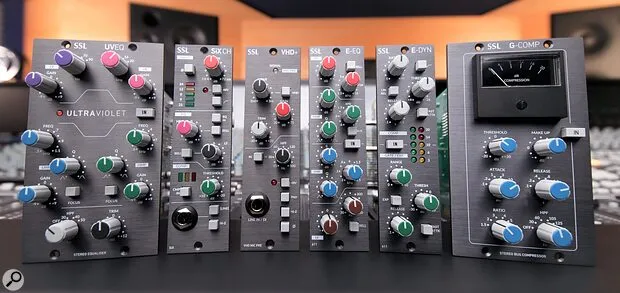
The two standout additions to this line are the double-width Ultraviolet EQ (UV EQ) and the single-width SiX Channel input strip. Both modules are designed to solve distinct audio problems, bringing different aspects of the classic Oxford-designed consoles to your desktop lunchbox. Whether you are tracking vocals, shaping mid-range transients during a mix, or putting the final stereo polish on a master, these units offer an impressive level of surgical control and analog vibe.
Analyzing the Engineering Behind the New SSL 500-Series Modules
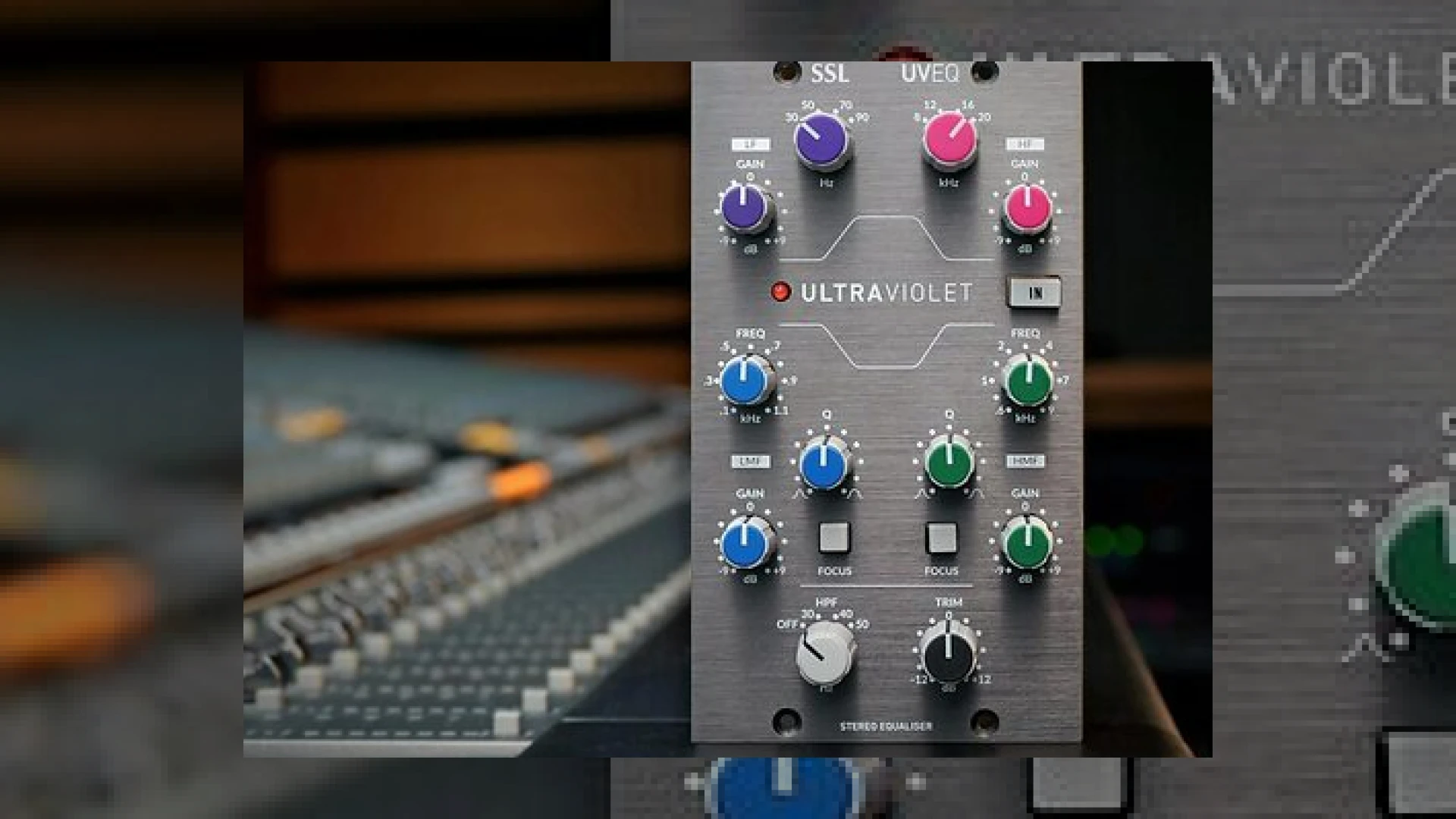
To truly appreciate what Solid State Logic has achieved, we must examine the internal architecture of these units. The Ultraviolet EQ draws directly from the stereo processing engine of the highly celebrated SSL Fusion hardware. However, while the Fusion’s EQ is a simplified two-band shelving circuit, the UV EQ module expands this topology into a fully featured four-band parametric system. This makes it an incredibly powerful tool for stereo-bus treatment and mastering duties.
Additional product view and interface angle for New SSL 500-series modules.
The high-frequency (HF) and low-frequency (LF) bands of the UV EQ utilize musical shelving curves. They offer up to ±9dB of gain at carefully chosen crossover points: 30, 50, 70, or 90 Hz for the low end, and 8, 12, 16, or 20 kHz for the highs. The real magic, however, lies in the dual parametric mid-bands. Covering a broad range of 100Hz to 1.1kHz (LMF) and 600Hz to 9kHz (HMF), these bands feature a unique “Focus” mode. Engaging the Focus button narrows the filter’s Q-factor and doubles the available gain range from ±9dB to a drastic ±18dB, allowing you to perform surgical notched cuts or creative resonant boosts with extreme precision.
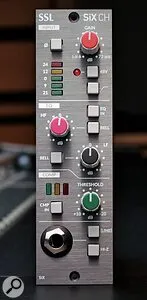
On the other hand, the single-width SiX Channel module is an all-in-one input conditioner derived from the layout of the compact SiX Console. It features a pristine SuperAnalogue mic preamp, a classic two-band EQ, and a simplified one-knob compressor. When configuring a lunchbox chassis, integrating these new ssl 500-series modules allows engineers to craft an authentic SSL signal chain without needing a massive frame console or relying solely on digital emulation plug-ins like those from Universal Audio.
Additional product view and interface angle for New SSL 500-series modules.
Technical Specifications and Performance Overview
Before dive-bombing into studio workflow practices, let’s break down the core details of the new ssl 500-series modules in a quick-reference guide. The table below outlines how these two units compare in terms of application, pricing, and overall performance rating based on our rigorous in-house testing at SM Mastering.
| Module Name | Primary Use | Typical Price (inc. VAT) | SM Mastering Rating |
|---|---|---|---|
| SSL Ultraviolet EQ (UV EQ) | Stereo Bus Sculpting & Mastering | £999 | 4.8 / 5.0 |
| SSL SiX Channel Strip | Vocal Tracking & Instrument Conditioning | £349 | 4.5 / 5.0 |
Practical Studio Workflow Tips for Your Hybrid Rack
To get the absolute most out of these hardware processors, we recommend implementing them at specific stages of your production pipeline:

Additional product view and interface angle for New SSL 500-series modules.
- The Sub-Group Sweetener (UV EQ): Insert the Ultraviolet EQ across your drum buss or master fader. Use the 30Hz or 40Hz high-pass filter (which features a steep 18dB/octave slope) to clean up sub-bass rumble before applying a subtle 0.5dB boost at 50Hz to add weight. Simultaneously, use the Focus mode on the HMF band to notch out harshness around 2.5kHz to 3kHz.
- Vocal Frontend Tracking (SiX Channel): Run your favorite condenser microphone through the SuperAnalogue preamp. The extremely low noise floor ensures pristine transients. Gently engage the one-knob compressor to smooth out dynamic peaks during tracking, keeping your analog-to-digital converter from clipping.
- Stereo Widening Tricks: Because the UV EQ is a true stereo processor built into a double-width 500-series module, it maintains perfect phase coherence between left and right channels. Use a gentle HF shelf boost at 16kHz to add air and expand the perceived stereo field.
For more detailed analysis of hardware workflows, hybrid setup guides, and mixing methodologies, browse through our growing library of technical tutorials over at SM Mastering Audio Articles.
Conclusion
Solid State Logic continues to lead the industry by bridging the gap between high-end legacy console performance and modern modular flexibility. Ultimately, investing in the new ssl 500-series modules is a surefire way to bring classic console authority, precise equalization, and flawless preamp design straight to your desktop setup. While the Ultraviolet EQ is destined to live on the master bus of serious mix engineers, the SiX Channel represents a highly cost-effective frontend solution for boutique tracking studios.
Frequently Asked Questions
What is the benefit of the Ultraviolet EQ over the original SSL Fusion’s EQ?
While the SSL Fusion features a basic two-band shelving equalizer, the Ultraviolet EQ module expands this concept into a fully parametric four-band stereo processor. This includes high and low shelving bands, alongside two fully sweepable mid-bands with adjustable Q and the specialized Focus mode, offering vastly superior surgical precision.
Do I need a special power supply to run these modules?
No, both units are designed to run on standard API 500-series VPR-compliant racks. The Ultraviolet EQ requires a double-width slot, whereas the SiX Channel requires a single-width slot. Ensure your chassis has adequate power capacity to support the high headroom requirements of SSL’s SuperAnalogue circuitry.
Can I use the Focus button for mastering applications?
Yes, but with caution. The Focus button narrows the filter’s bandwidth (Q) and doubles the gain scale to ±18dB. While this is incredibly helpful for targeting and cutting problematic resonant frequencies, massive boosts in Focus mode are usually too aggressive for delicate mastering stages and are better suited for creative mixing.
🛒 Official Product Info & Where to Buy
Check full technical specs, pricing, and purchase options directly from the official manufacturer or authorized dealer for New SSL 500-series modules.

Written by SM Mastering
Official content on sound engineering, mixing, mastering, and advanced electronic production by SM Mastering.