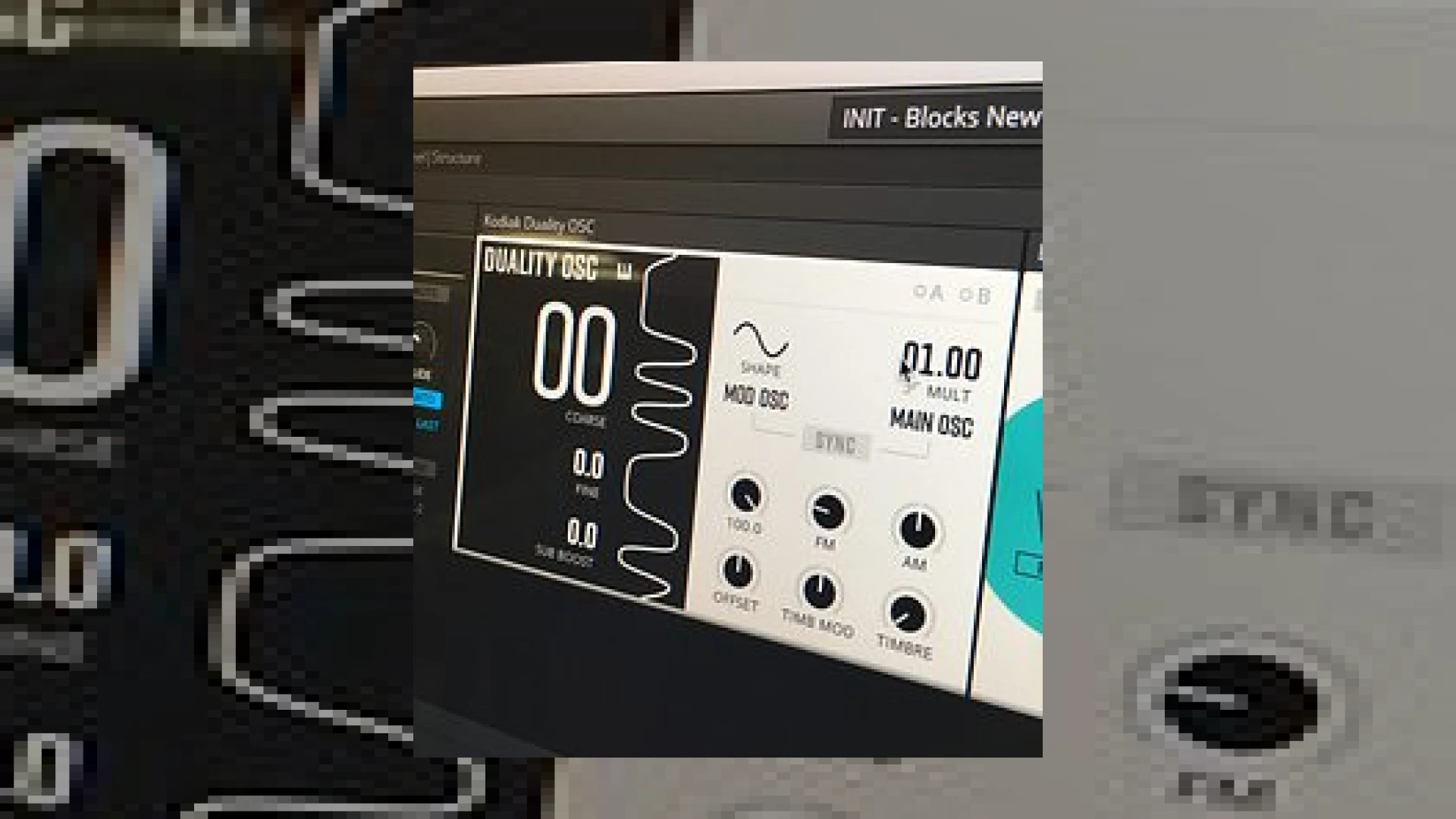
Visual context for NI launch new Reaktor Blocks at Superbooth.
The Berlin-based Superbooth exhibition has always been a hotbed for modular synthesizer innovation, and this year is no exception. As Native Instruments continues to bridge the gap between hardware flexibility and digital precision, the announcement that the **ni launch new reaktor blocks at superbooth** has sent waves of excitement through the electronic music production community. Building upon their modular Eurorack-style ecosystem inside Reaktor 6, these five new blocks emphasize visual interactivity, rich sound shaping, and optimized CPU performance, giving hybrid studio setups unprecedented creative power.
For mastering engineers and music producers alike, staying updated on digital synthesis developments is crucial for maintaining an edge in modern sound design. At SM Mastering Audio Articles, we frequently analyze how these complex synthesis tools affect dynamic range, harmonic content, and final master preparation.
A Technical Breakdown: ni launch new reaktor blocks at superbooth
With the recent **ni launch new reaktor blocks at superbooth**, Native Instruments has targeted visual intuition and performance optimization. Leading the pack is **Duality OSC**, a dual oscillator featuring unique waveshaping options such as x-sync and reverse sync. This oscillator displays its output using a mesmerizing visualizer that offloads rendering to the GPU, saving precious CPU cycles for other plugins.
For those looking to control their modulations, the **Curve Sequencer** brings the famous modulation curve system from Native Instruments’ iconic Native Instruments Massive synthesizer directly into the Reaktor Blocks framework. Together with the **Shift Sequencer** (which introduces polyrhythmic randomization) and the vowel-shaping **Morph Filter**, this update dramatically expands what is possible inside a virtual rack.
Specifications of the New Reaktor Blocks
| Name | Use | Price | Rating |
|---|---|---|---|
| Duality OSC | Dual oscillator with GPU-accelerated visualization & advanced waveshaping | Included in Reaktor 6 Update | 4.8 / 5 |
| Shift Sequencer | Polyrhythmic sequencing & randomization generator | Included in Reaktor 6 Update | 4.6 / 5 |
| Curve Sequencer | Customizable modulation curve drawing (Massive-style) | Included in Reaktor 6 Update | 4.7 / 5 |
| Morph Filter | Resonant vowel morphing filter bank | Included in Reaktor 6 Update | 4.5 / 5 |
Integrating modular synthesis into a polished production requires a deep understanding of gain staging. Many electronic music producers struggle with the wild transient spikes generated by complex FM patches. We must observe how this **ni launch new reaktor blocks at superbooth** affects hybrid workflows, specifically how mastering houses handle the dense harmonic spectrums these new generators produce. Utilizing high-quality limiters or saturators, such as those by Universal Audio, can help tame these digital peaks before sending the mix to the final mastering stage.
Practical Studio Workflow Tips
- Optimize GPU Rendering: Take advantage of Duality OSC’s GPU offloading to keep your buffer size low during tracking. This prevents DAW latency when recording MIDI live.
- Polyrhythmic Modulation: Pair the Shift Sequencer with the Morph Filter to create constantly evolving vowel-like movement across non-standard time signatures, avoiding static loops.
- Control Your Transients: Because modular patches can have unpredictable dynamics, place a fast peak limiter after the Morph Filter to protect your monitors and preserve headroom in your mix bus.
Conclusion
In conclusion, the buzz surrounding the **ni launch new reaktor blocks at superbooth** is entirely justified. By focusing on GPU efficiency, visual feedback, and intuitive modulation routing, Native Instruments has successfully modernized virtual modular synthesis. For contemporary producers, these tools offer an endless playground of sonic exploration.
Frequently Asked Questions
What is the focus of the new Reaktor Blocks release?
The latest release focuses on visual intuition, advanced modulation routing, and saving CPU power by offloading visual rendering directly to your computer’s graphics card (GPU).
Can I use Duality OSC in any DAW?
Yes, as long as you run Reaktor 6 or the Reaktor 6 Player as a plugin inside your host DAW, you can access and patch the Duality OSC block.
Is the new Reaktor Blocks update CPU-intensive?
No, one of the main innovations in this update is coding the visual representations to offload rendering tasks to the graphics card, freeing up system CPU for audio processing.
Written by SM Mastering
Official content on sound engineering, mixing, mastering, and advanced electronic production by SM Mastering.