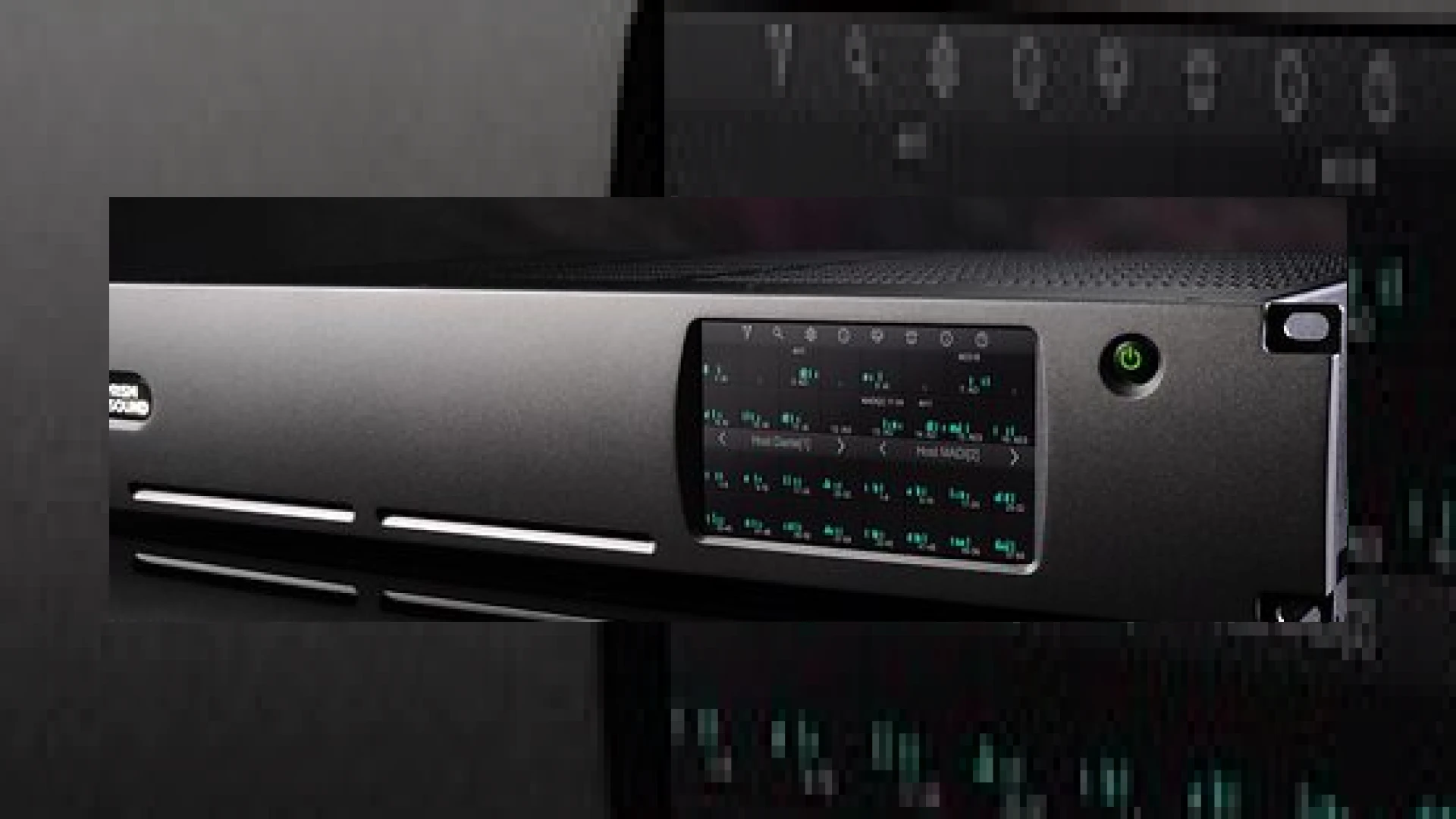
Visual context for Prism Sound launch Dream ADA-128.
As mastering and mixing engineers, our pursuit of sonic transparency is an ongoing journey. For nearly two decades, the legendary ADA-8XR stood as the undisputed gold standard for high-end conversion, relied upon in the world’s most prestigious mastering houses. However, a new era of digital audio conversion is finally here as the landmark prism sound launch dream ada-128 sets a new standard for channel density, clocking precision, and network modularity.
This long-awaited release is not merely an incremental upgrade. It represents a ground-up redesign of conversion architecture. By offering unmatched analog-to-digital and digital-to-analog performance alongside a revolutionary modular configuration, this system is poised to redefine high-end studio workflows. For those seeking deep technical insights into advanced studio integration, explore our resource-rich hub of SM Mastering Audio Articles.
The Technology Behind the Prism Sound Launch Dream ADA-128
When analyzing why the prism sound launch dream ada-128 is such a massive leap forward, we must look at its backplane architecture. Unlike traditional converters that rely on fixed internal routing, this unit uses a highly flexible, proprietary routing system. It accommodates up to 128 channels of high-resolution AD/DA conversion in a single 2U chassis. It achieves this without sacrificing the uncompromising sonic footprint that Prism Sound is famous for.
Furthermore, digital-to-analog converters from industry giants like Universal Audio and others have long pushed the boundaries of workflow integration, but Prism Sound has elevated clocking technology to an entirely new level. The unit features Q-Clock technology, which isolates clocking circuitry from processing noise, virtually eliminating jitter. This ensures that every subtle micro-detail, transient edge, and stereo image depth is preserved exactly as intended during critical mastering sessions.
Advanced Modular Integration and Connectivity
Modern hybrid mastering and post-production facilities demand simultaneous connectivity across multiple formats. Studios looking to future-proof their setups will find the prism sound launch dream ada-128 to be the ultimate centerpiece. It supports simultaneous routing across Dante, MADI, AES3, and Pro Tools HDX. This allows engineers to route complex, multi-format signals with near-zero latency.
The unit features four configurable host slots and sixteen modular I/O slots. This means a single chassis can handle a Dolby Atmos 9.1.6 configuration alongside traditional stereo mastering loops, with plenty of headroom remaining for complex analog summing matrices.
Technical Specifications
| Name | Use | Price | Rating |
|---|---|---|---|
| Prism Sound Dream ADA-128 | Mastering, High-End Recording, Dolby Atmos Routing | Starting at approx. $19,000 (Config Dependent) | 5 / 5 Stars |
Practical Studio Workflow Tips
Integrating the prism sound launch dream ada-128 into a hybrid mixing setup or mastering chain offers incredible flexibility. Here are three professional integration tips:
- Optimize Hybrid Summing: Utilize the modular I/O cards to send discrete DAW tracks to an analog summing mixer, then capture the stereo print using the unit’s ultra-low noise AD converters to preserve dynamic range.
- Streamline Dolby Atmos Calibration: Map your monitoring control software directly to the MADI or Dante cards. This allows you to calibrate complex immersive speaker layouts without introducing external digital latency.
- Use Split-Clocking Configurations: Utilize the dual-domain clocking feature to run different parts of your studio at different sample rates (e.g., 96kHz for analog loops and 44.1kHz for digital monitoring) simultaneously.
Conclusion
The digital audio landscape has shifted significantly over the last decade, demanding higher channel counts without compromising on phase accuracy or harmonic distortion profiles. Ultimately, the industry-defining prism sound launch dream ada-128 bridges the gap between classic analog fidelity and modern digital infrastructure. It represents an investment in absolute precision that will define the sound of major releases for the next twenty years.
Frequently Asked Questions
What makes the clocking system unique?
The system utilizes Prism Sound’s proprietary Q-Clock technology, which effectively isolates clock generators from digital processing noise. This results in sub-picosecond jitter performance, translating to incredible stereo imaging and low-end definition.
Can I run multiple digital formats simultaneously?
Yes. The modular architecture supports up to four host communication cards simultaneously, allowing seamless, concurrent routing between Pro Tools HDX, Dante, MADI, and AES3 networks.
Is this unit suitable for smaller mastering studios?
Absolutely. While it can scale up to 128 channels, its modular nature allows smaller studios to purchase the base chassis configured with a lower channel count (such as 8×8 or 16×16) and expand as their hardware demands grow.
🛒 Official Product Info & Where to Buy
Check full technical specs, pricing, and purchase options directly from the official manufacturer or authorized dealer for Prism Sound launch Dream ADA-128.
Written by SM Mastering
Official content on sound engineering, mixing, mastering, and advanced electronic production by SM Mastering.