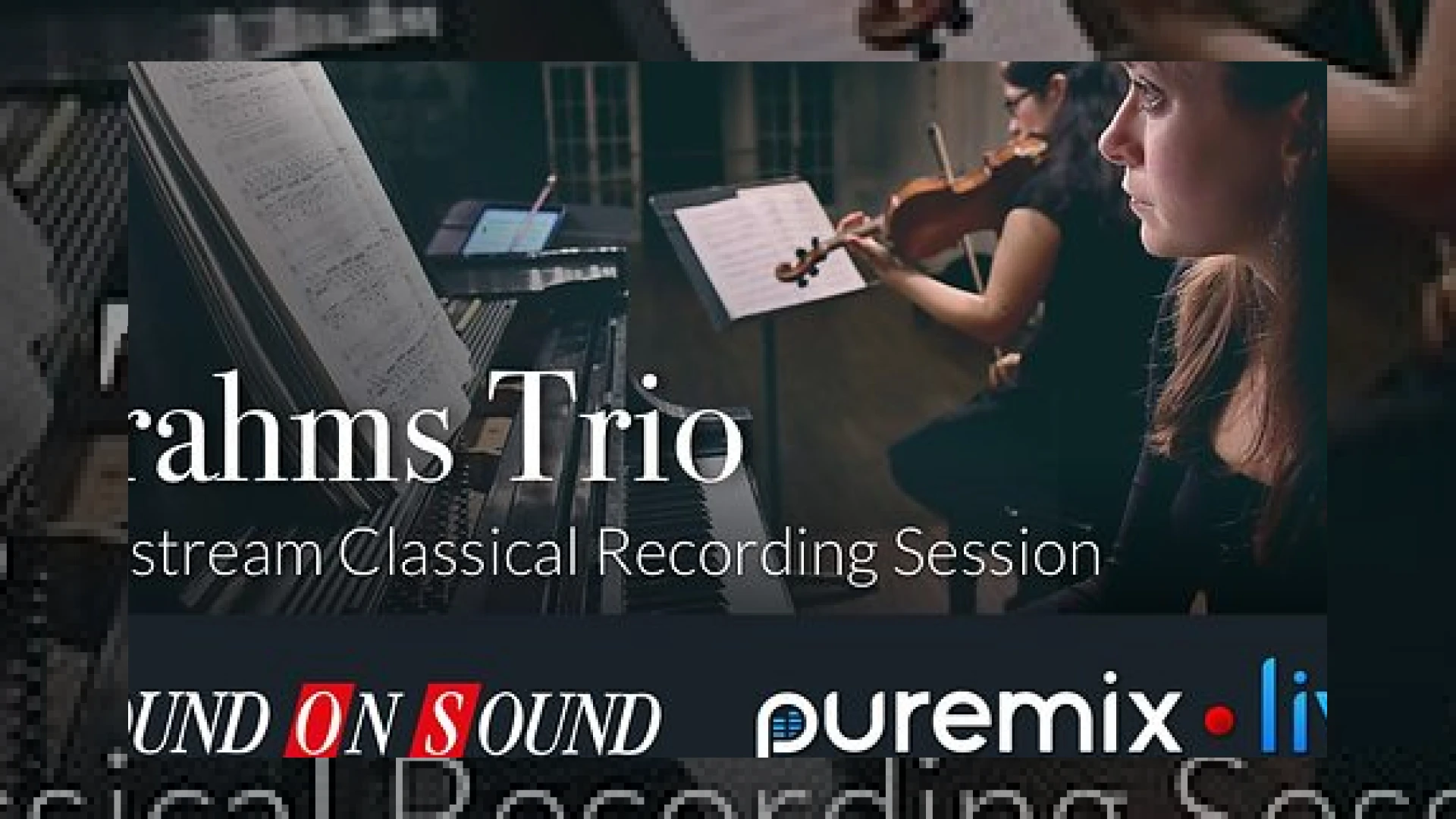
Visual context for pureMix Live & SOS present Brahms Trio Live Concert.
Recording classical music is one of the most challenging tasks an audio engineer can face. Unlike modern pop or electronic music, which relies heavily on synthesized instruments and multi-tracked separation, classical chamber music demands absolute acoustic purity, impeccable phase coherence, and an intimate understanding of the natural frequency spectrum. At SM Mastering, we closely analyze high-fidelity audio workflows, and we are thrilled to discuss the upcoming technical showcase where puremix live & sos present brahms trio live concert in a live-streamed acoustic environment.
This exclusive event, hosted live at the legendary Flux Studios in New York City, brings together three of NYC’s finest classical musicians. Capturing the organic interplay between a violin, cello, and grand piano requires more than just high-end gear—it demands a masterclass in microphone placement, room acoustics, and real-time mixing philosophy. Understanding how these elements translate to stereo masters is vital for any serious audio engineer.
The Challenges of Recording a Classical Trio Live
The primary hurdle in tracking a live piano trio (violin, cello, and piano) is managing bleed while maintaining a natural, cohesive stereo image. Unlike studio sessions where instruments can be overdubbed or isolated, a live-streamed concert requires all performers to play in the same room to maintain their artistic synergy. This means that every microphone will inevitably capture a portion of the other instruments.
To capture the warmth of the strings without introducing harsh off-axis coloration, engineers frequently turn to legendary hardware manufacturers. Utilizing world-class condenser microphones from Neumann allows engineers to capture the subtle transients of the bow strokes and the rich resonances of the cello body. Minimizing muddy buildup in the low-mids (200Hz – 500Hz) while keeping the top-end airy and open is the key to a professional classical record.
Technical Breakdown of the puremix live & sos present brahms trio live concert
For audio professionals, the signal chain used during this live event serves as an incredible educational blueprint. Because capturing the dynamics of classical chamber music during the puremix live & sos present brahms trio live concert requires pristine acoustics, the choice of preamps at Flux Studios is critical. High-headroom, clean solid-state preamplifiers are favored over highly saturated tube preamps to ensure the natural timbre of the instruments remains uncompromised.
Furthermore, for engineers wanting to study this live-streamed event, watching the puremix live & sos present brahms trio live concert provides invaluable insights into live-to-stereo mixing without the safety net of post-production. The balance must be perfect from the moment the bow hits the string, requiring the mixing engineer to ride the faders dynamically to compensate for the performers’ natural expressive swells.
For more deep dives into professional audio engineering, acoustic treatment, and mastering techniques, check out our collection of SM Mastering Audio Articles.
Recommended Gear for Live Classical Recording
To successfully capture a classical ensemble with the level of detail showcased in this live event, a carefully curated selection of gear is necessary. Below is a specification table highlighting the industry-standard equipment typically utilized in high-end acoustic sessions:
| Name | Use | Price | Rating |
|---|---|---|---|
| Neumann KM 184 (Stereo Pair) | Overhead/Spot mic for Violin and Cello | $1,795 | 4.9/5 |
| Rupert Neve Designs 5012 | Ultra-clean Microphone Preamplifier | $1,999 | 4.8/5 |
| SSL AWS 948 Delta | Large-format console for routing and summing | $95,000 | 4.9/5 |
| pureMix Pro Membership | Educational Access to Masterclasses & Streams | $24.99/mo | 4.7/5 |
Practical Studio Workflow Tips
- Embrace the Room: Do not try to fight spill with heavy gating or tight directional patterns. Instead, use the bleed to your advantage by setting up a main stereo pair (such as an ORTF or XY configuration) to capture the overall glue of the room, and then subtly blend in spot mics for definition.
- Phase Alignment is Key: Because multiple microphones are open simultaneously in a single room, zoom in on your waveforms (or use a phase correlation meter) to ensure that the spot mics are in phase with the main room pair. Even a slight phase mismatch can hollow out the low-end of the cello and piano.
- Keep Compression Minimal: Classical music relies heavily on its dynamic range to convey emotion. Avoid using aggressive dynamic compressors on the master bus. If dynamic control is needed, opt for transparent, slow-attack parallel compression or manual fader automation.
Implementing these strategies is key when attempting to recreate high-end sessions, and audiophiles and mixing engineers alike can sign up to stream the puremix live & sos present brahms trio live concert for free on the official platform to watch these concepts put into action in real-time.
Conclusion
Concluding our thoughts on why the puremix live & sos present brahms trio live concert stands out as a landmark educational session, it’s clear that live acoustic tracking remains the ultimate test of an audio engineer’s skill. By watching world-class engineers navigate the delicate balance of room acoustics, microphone choice, and real-time mixing at Flux Studios, aspiring producers can elevate their own approach to acoustic music production. Be sure to tune in on April 9th to witness this masterclass in action.
Frequently Asked Questions
What is the best stereo microphone technique for recording a piano trio?
For a live classical trio, an ORTF or Blumlein stereo setup is highly recommended as the main room pair. This captures a natural, wide stereo image of the room while maintaining strong center-image stability for the piano and string instruments.
How do I prevent cello low-end from muddying up the piano recording?
To avoid low-end buildup, use physical placement to keep the cello and piano physically separated while maintaining sightlines. Additionally, applying a gentle high-pass filter (around 40Hz) on the piano spot microphones can clean up sub-bass rumble without sacrificing the warmth of the performance.
Is a pureMix membership required to watch this live concert?
No, while the event is fully available to active pureMix members, non-members can register for a free account on the pureMix website to watch the live-streamed broadcast of the Brahms Trio concert in real-time.
Written by SM Mastering
Official content on sound engineering, mixing, mastering, and advanced electronic production by SM Mastering.