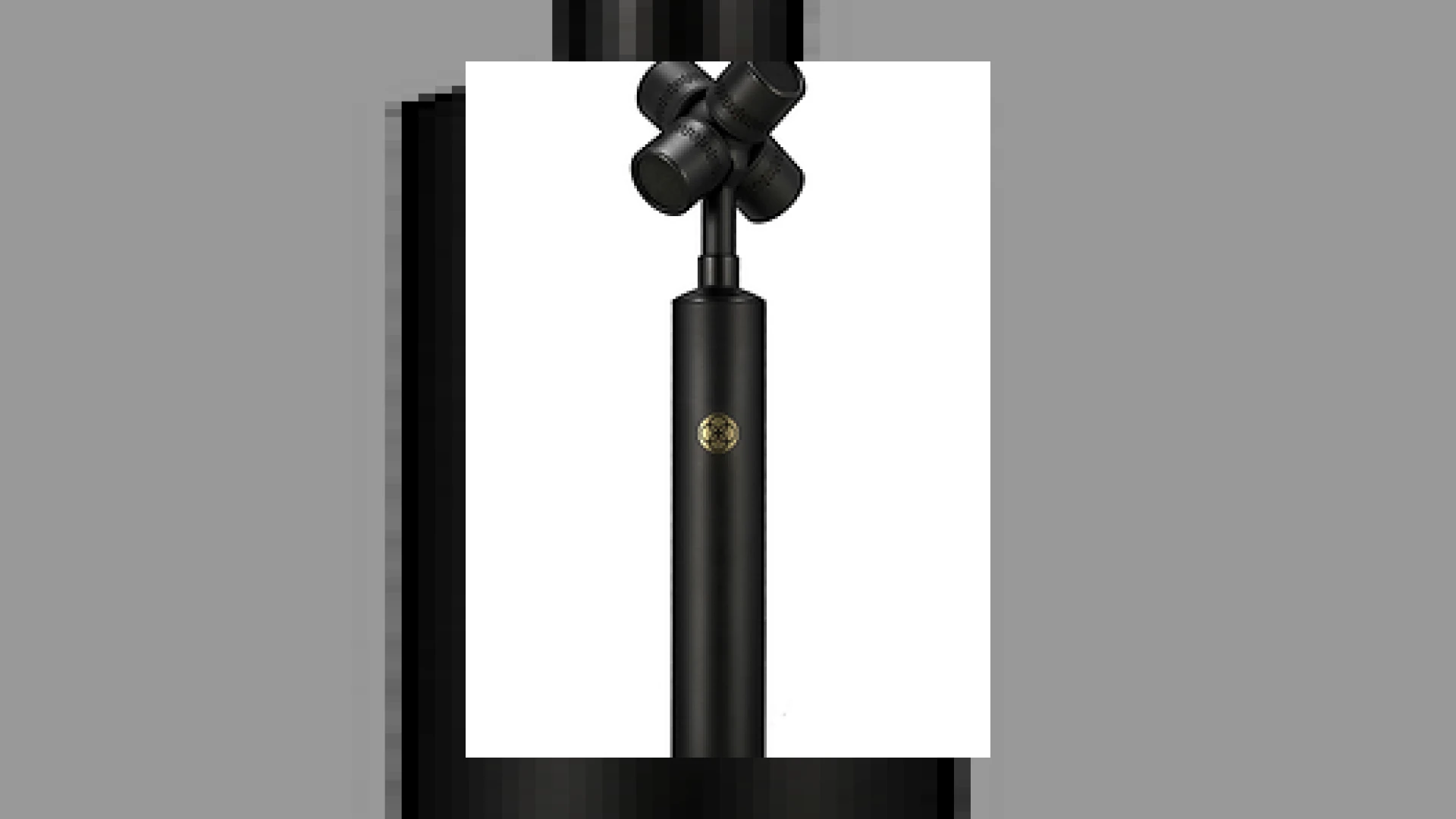
Visual context for Rode launch their first SoundField mic.
As immersive audio formats like Dolby Atmos, virtual reality, and 360-degree video continue to redefine our industry, Australian microphone pioneer Røde has made a massive statement. Audio engineers worldwide are buzzing as rode launch their first soundfield mic, the NT-SF1. This milestone represents a monumental shift, making high-end, broadcast-grade ambisonic recording accessible to project studios, VR creators, and game developers alike.
Why the Industry is Buzzing: rode launch their first soundfield mic
The announcement that rode launch their first soundfield mic marks the culmination of Røde’s 2016 acquisition of the legendary SoundField brand—the original pioneers of commercial ambisonic audio technology. The NT-SF1 features four of Røde’s newly developed, ultra-low-noise TF45C half-inch condenser capsules arranged in a highly precise tetrahedral array. This configuration captures the complete three-dimensional sound field (A-Format), allowing for unprecedented flexibility during post-production.
In ambisonics, capsule self-noise is incredibly critical, as any noise is multiplied during the format conversion process. By leveraging their advanced, high-tech automated manufacturing facility in Sydney, Røde has produced a microphone with incredibly low self-noise and outstanding phase coherence. This level of quality control ensures that the spatial image remains clear, pinpoint accurate, and completely free of phase artifacts.
Technical Specifications of the NT-SF1
To understand the hardware capabilities that became available when rode launch their first soundfield mic, we can examine its primary specifications:
| Name | Use | Price | Rating |
|---|---|---|---|
| SoundField by Røde NT-SF1 | 360-degree Ambisonic Recording, VR, Game Audio, Surround Sound | $999 | 4.8 / 5.0 |
Practical Studio Workflow Tips for Ambisonic Recording
For studio engineers looking to integrate spatial audio into their production pipelines, the news that rode launch their first soundfield mic means adapting to some unique workflow practices. Here are a few expert recommendations from our team:
- Precise Gain Matching: When recording in A-Format, all four preamps must be set to the exact same gain level. At SM Mastering, we frequently analyze multi-channel spatial projects for our SM Mastering Audio Articles, and we always stress that even a 0.5dB deviation between capsules can ruin the accuracy of the spatial image. Pair the NT-SF1 with high-headroom, clean preamps like those from Neumann or premium multi-channel audio interfaces.
- Software Decoding: Unlike legacy ambisonic systems, the NT-SF1 does not require expensive outboard hardware decoders. Instead, Røde provides a dedicated, free plug-in that handles the complex math of converting A-Format to B-Format inside your DAW. This plug-in allows you to manipulate the virtual polar patterns, tilt, and rotation of your microphone array in post-production.
- Wind Protection: When recording spatial ambiences outdoors, always use the included custom blimp and furry wind shield. Ambisonic capsules are highly sensitive to wind turbulence, which can easily clip individual channels and destroy the spatial illusion.
Conclusion
In conclusion, seeing rode launch their first soundfield mic represents a massive democratization of immersive audio. For under $1,000, creators now have access to legendary SoundField-grade technology backed by Røde’s robust manufacturing quality. It is a game-changer for VR developers, filmmakers, and sound designers who want to bring realistic, three-dimensional height and depth to their audio projects.
Frequently Asked Questions
What is the difference between A-Format and B-Format audio?
A-Format is the raw four-channel audio captured directly from the individual microphone capsules in a tetrahedral array. B-Format is the converted multi-channel format (typically using W, X, Y, and Z coordinates) that represents the complete spatial sound field, allowing engineers to steer and decode the audio into various speaker configurations like 5.1, 7.1, or spatial binaural.
Can I use standard XLR cables to connect the Røde NT-SF1?
The NT-SF1 features a custom multi-pin connector on the microphone body. However, it ships with a specialized breakout cable that splits into four standard 3-pin XLR connectors, which you must connect to four phantom-powered inputs on your audio interface or field recorder.
Do I need expensive hardware decoders to process the audio?
No. When rode launch their first soundfield mic, they accompanied it with a dedicated companion software utility and DAW plug-in. This digital software completely eliminates the need for expensive hardware decoders, letting you convert, rotate, and manipulate your spatial audio natively inside your favorite workstation.
🛒 Official Product Info & Where to Buy
Check full technical specs, pricing, and purchase options directly from the official manufacturer or authorized dealer for Rode launch their first SoundField mic.
Written by SM Mastering
Official content on sound engineering, mixing, mastering, and advanced electronic production by SM Mastering.