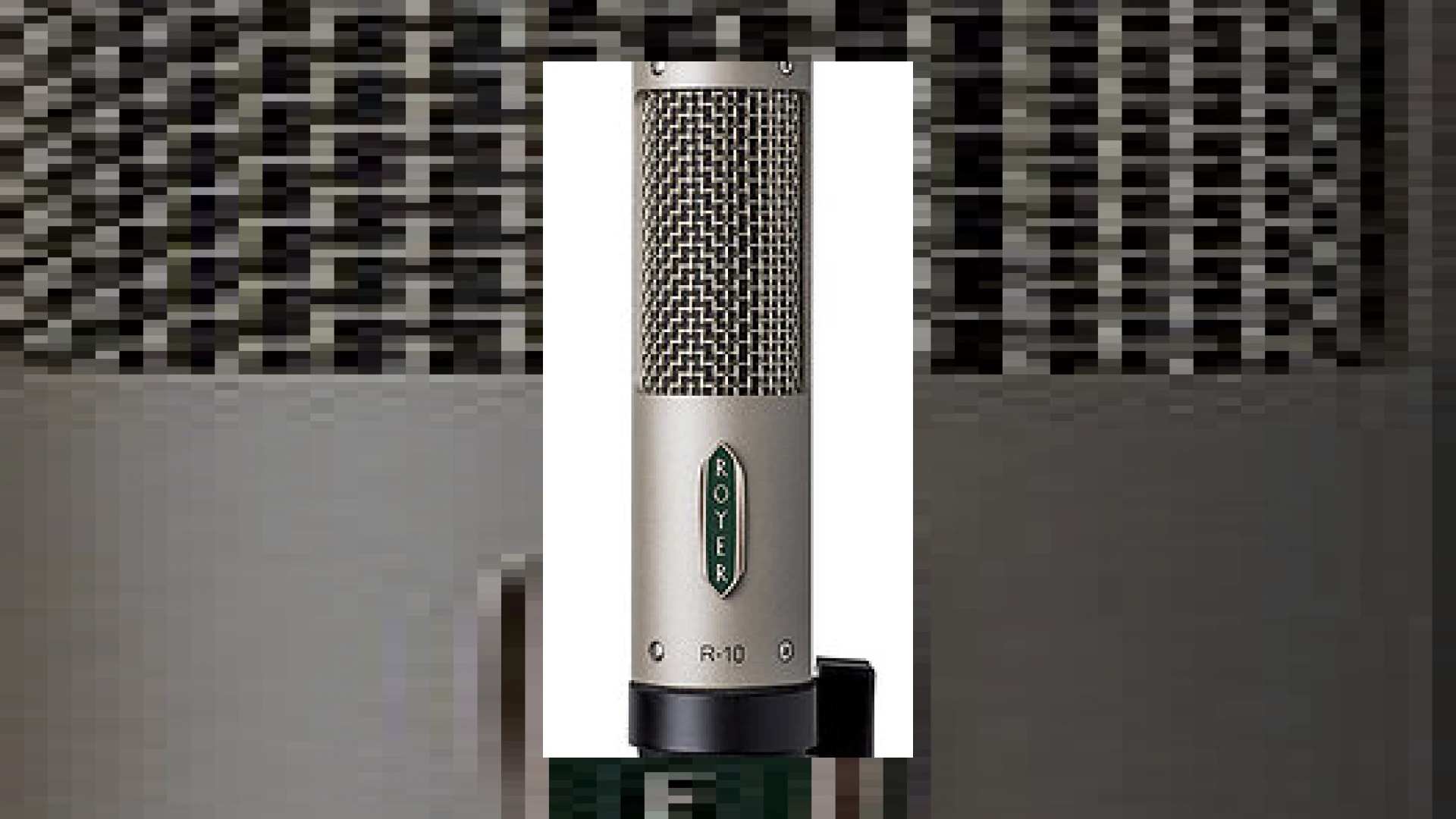
Visual context for Royer Labs announce $499 ribbon mic.
The professional audio community has been buzzing with excitement since news broke that Royer Labs announce $499 ribbon mic. For decades, Royer Labs has been the gold standard in ribbon microphone technology, with their legendary R-121 becoming a permanent fixture in world-class studios. However, the premium price tag of high-end ribbon microphones has often kept them out of reach for project studios and independent creators. This brand-new passive ribbon microphone, hand-built in Burbank, California, aims to democratize professional ribbon capture without compromising the sonic integrity that the brand is famous for.
Why the Industry Reacted When Royer Labs Announce $499 Ribbon Mic
Since the moment Royer Labs announce $499 ribbon mic, budget-conscious engineers have been eager to see how the company managed to hit this aggressive price point. The answer lies in efficient, modern manufacturing techniques, while still preserving the hand-built heritage of the California-based factory. The R-10 utilizes the exact same 2.5-micron aluminum ribbon element found in the iconic R-121. This means the fundamental physics of the transducer remain top-tier, delivering the classic, smooth frequency response and realistic transient reproduction that engineers expect from a masterclass ribbon microphone.
Indeed, the fact that Royer Labs announce $499 ribbon mic represents a massive shift in how we approach high-SPL sources in home studios. Traditional ribbon microphones are notoriously fragile, but the R-10 is built like a tank. It features a custom-designed David Royer transformer that minimizes saturation even when pushed to the absolute limit. With an astonishing maximum SPL rating of 160dB at 1kHz, you can place this microphone directly in front of screaming guitar amplifiers, thunderous drum kits, or blasting brass sections without the fear of damaging the delicate ribbon element or introducing unwanted harmonic distortion.
Many professionals wondered how this fits in a modern workflow; when Royer Labs announce $499 ribbon mic, they made it clear that this model was built for both the stage and the studio. It incorporates an advanced three-layer windscreen system that offers robust protection against air blasts, wind, and plosives. Additionally, the transducer itself is internally shockmounted to isolate the ribbon element from mechanical vibration and stand rumble. This makes the R-10 incredibly reliable in live performance scenarios where isolation and durability are paramount.
Royer Labs R-10 Technical Specifications
| Name | Use | Price | Rating |
|---|---|---|---|
| Royer Labs R-10 | Electric Guitars, Brass, Drum Overheads/Room, Acoustic Instruments, Vocals | $499 USD | 4.9 / 5.0 |
Practical Studio Workflow Tips for the R-10
To get the absolute most out of your ribbon microphone, consider implementing these expert production workflows in your next session:
- The Classical Ribbon Preamp Pairing: Because the R-10 is a passive ribbon microphone, it requires a clean, high-gain preamp to perform at its best. Pairing the microphone with high-quality preamps like those from Universal Audio ensures you capture the subtle nuances of the performance without introducing unwanted noise floor.
- The Dual-Mic Guitar Cab Technique: Position the R-10 about 4 to 6 inches away from the speaker grille, aimed slightly off-center of the cone to capture warm, thick mids. Blend this with a classic dynamic microphone (like a Shure SM57) positioned on-axis to add bite and bite-through clarity to your heavy guitar tracks.
- Blumlein Room Configuration: If you purchase a matched pair of R-10s, set them up in a Blumlein configuration (two figure-8 microphones stacked at 90 degrees) to capture an incredibly realistic, wide, and natural-sounding stereo image of drum rooms or acoustic ensembles.
- Managing the Proximity Effect: Like all figure-8 microphones, the R-10 exhibits a pronounced bass boost when placed very close to a sound source. Use this to your advantage to fatten up thin vocals or brass, or back the microphone up slightly to maintain a natural tonal balance.
Conclusion
The release of the Royer R-10 marks an exciting chapter for recording engineers of all levels. By offering their legendary ribbon element and custom David Royer transformer in a rugged, affordable chassis, professional-grade analog warmth is more accessible than ever. For more deep-dives into modern recording technology, analog mixing, and mastering techniques, feel free to explore our SM Mastering Audio Articles.
Frequently Asked Questions
Does the Royer R-10 require phantom power?
No. The Royer Labs R-10 is a passive ribbon microphone. You should never apply +48V phantom power to it, as doing so could potentially damage the ribbon element if there is a faulty cable or patch bay mishap in your signal path.
Can the R-10 handle vocal recordings?
Yes, absolutely. Thanks to its smooth high-end response, the R-10 is excellent at taming sibilant vocalists. Its built-in three-layer windscreen system protects the ribbon from plosives, though using an external pop filter is still highly recommended for close-up vocal tracking.
What is the benefit of a passive ribbon over an active ribbon mic?
Passive ribbon microphones like the R-10 offer a purely organic, uncolored signal path with incredible transient response. They also allow you to utilize the unique impedance characteristics of your external microphone preamps to subtly shape the microphone’s tone.
🛒 Official Product Info & Where to Buy
Check full technical specs, pricing, and purchase options directly from the official manufacturer or authorized dealer for Royer Labs announce $499 ribbon mic.
Written by SM Mastering
Official content on sound engineering, mixing, mastering, and advanced electronic production by SM Mastering.