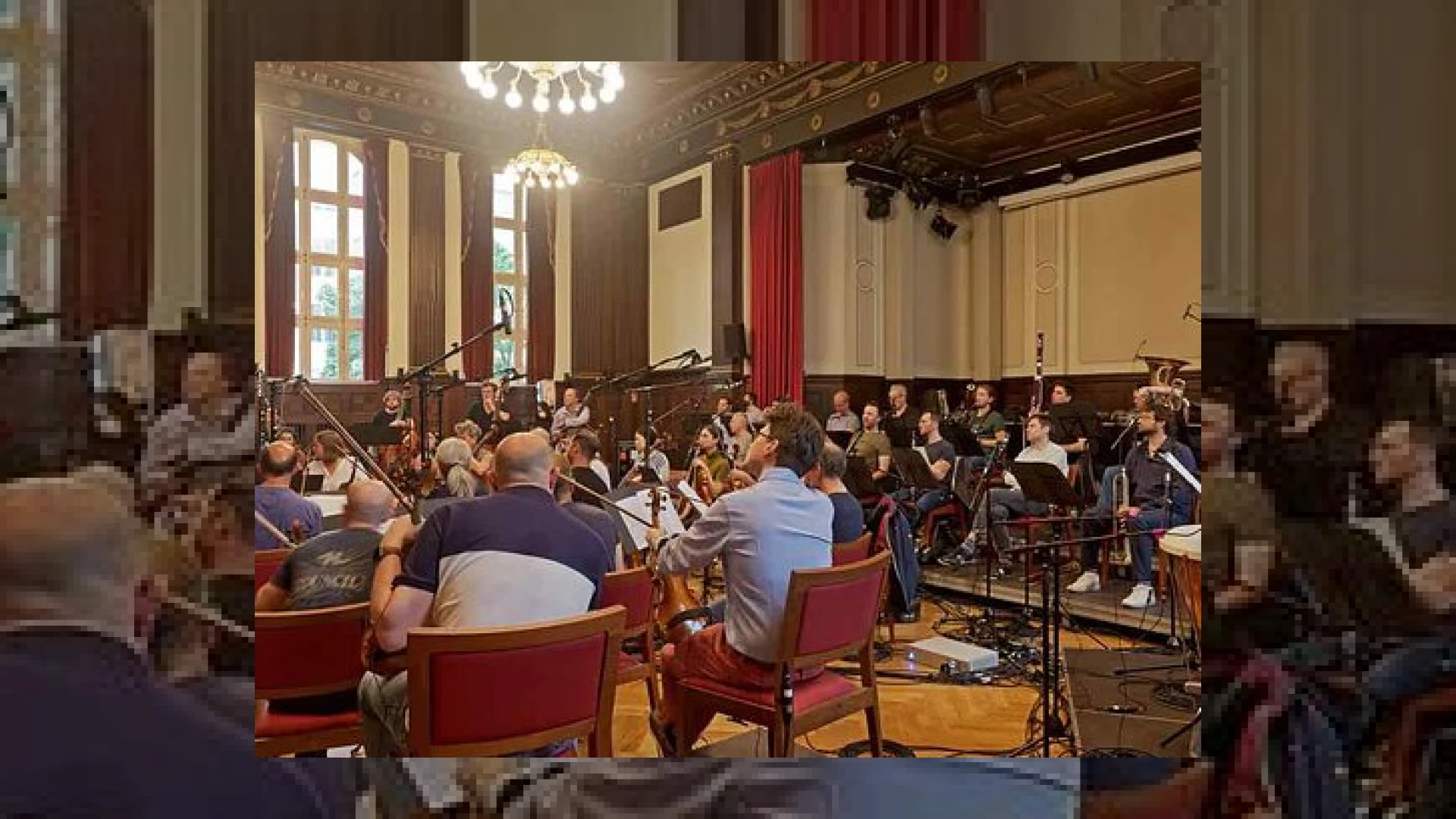
Visual context for Sennheiser and Neumann immersive recording project.
Immersive audio is rapidly changing how we perceive recorded music, moving far beyond traditional stereo or standard surround sound. At SM Mastering Audio Articles, we constantly monitor groundbreaking engineering milestones that push the boundaries of spatial acoustics. A prime example of this evolution is the recent sennheiser and neumann immersive recording project, which tested the absolute limits of spatial microphone arrays and interactive acoustic design.
Spearheaded by Henrik Oppermann, founder of Schallgeber and Head of Sound at the Sennheiser AMBEO Immersive Audio Team, this experimental session captured the Mahler Chamber Orchestra performing live at the historic Meistersaal in Berlin. The primary objective was to facilitate six degrees of freedom (6DoF), allowing a listener to physically navigate a virtual acoustic space where the mix updates dynamically based on their exact coordinates.
Technical Architecture of the Sennheiser and Neumann Immersive Recording Project
To achieve seamless spatial tracking and ultra-high-definition capture, the engineering team deployed an unprecedented array of high-end transducers. The hardware lineup included 24 Sennheiser MKH 800 Twin microphones, seven Sennheiser MKH 8040 cardioid mics, three Neumann KM 184s, and a massive deployment of 48 Neumann MCM (Miniature Clip Microphone) systems.
Within the framework of the sennheiser and neumann immersive recording project, these multi-channel microphone feeds were routed directly into a game engine. This setup allowed engineers to manipulate the polar patterns and directivity indices in real time depending on the listener’s proximity to individual instruments.
When a listener virtualizes themselves close to a violin section within the sennheiser and neumann immersive recording project environment, the engine isolates the cardioid components. This surfaces intimate details like bow friction and musician breathing. Conversely, stepping away smoothly crossfades into the omnidirectional layers, delivering a natural, room-reverberant soundscape. For traditional mixing and post-production workflows that complement these spatial endeavors, referencing standards from industry pioneers like Universal Audio can help bridge the gap between immersive capture and polished studio playback.
Microphone Array Specifications
| Microphone Name | Primary Use in Session | Estimated Price | Technical Rating |
|---|---|---|---|
| Sennheiser MKH 800 Twin | Dual-capsule spatial capture, variable polar patterns | $2,500+ | 10/10 |
| Sennheiser MKH 8040 | Cardioid spot capture and ambient support | $1,100 | 9.5/10 |
| Neumann KM 184 | Precision instrument spotting and detail capture | $850 (Pair) | 9.8/10 |
| Neumann MCM System | Close-mic orchestral Written by SM MasteringOfficial content on sound engineering, mixing, mastering, and advanced electronic production by SM Mastering. |