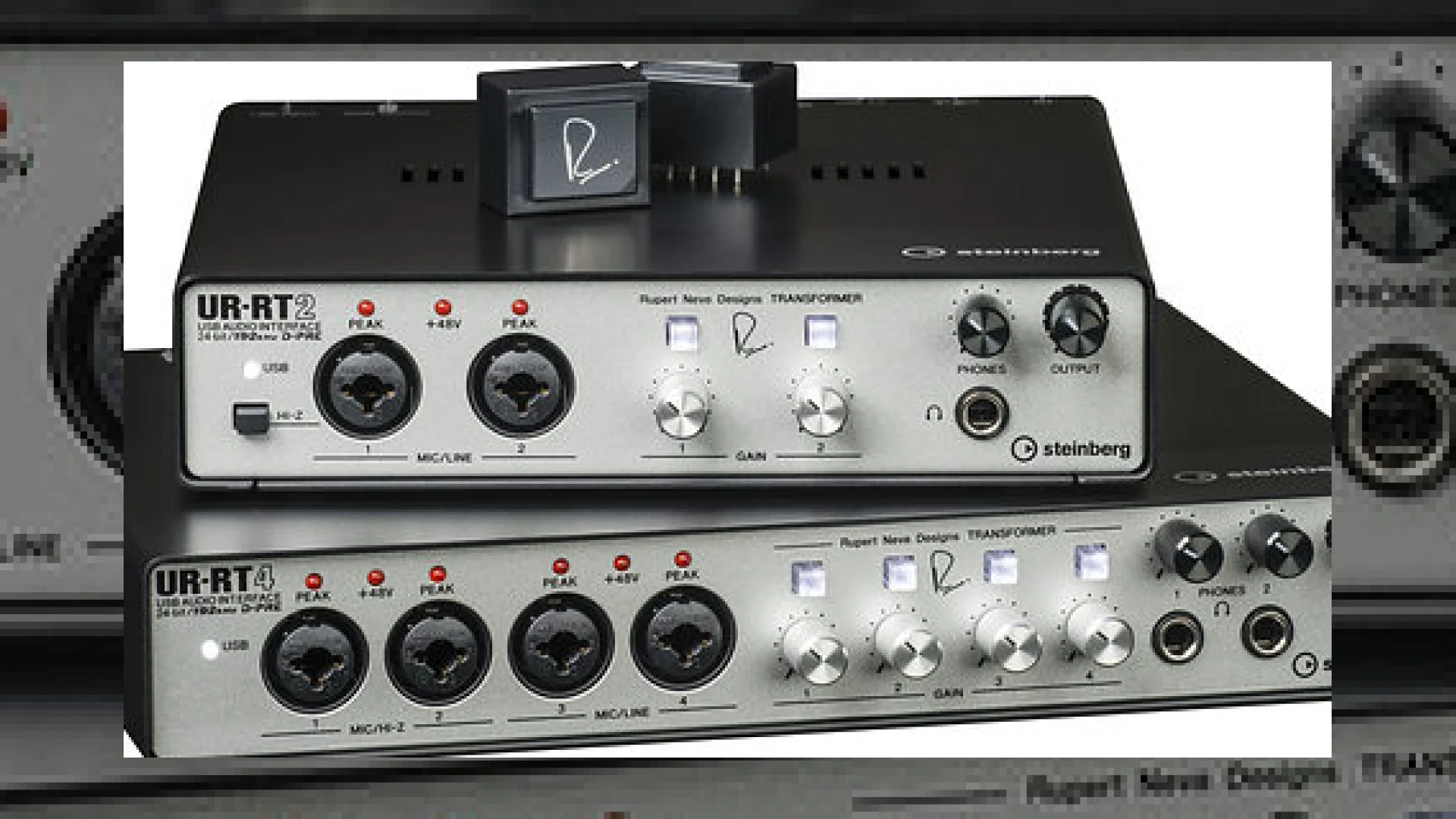
Visual context for Steinberg team up with Rupert Neve Designs for two new audio interfaces.
At SM Mastering, we always keep our fingers on the pulse of professional hardware innovations. Recently, the pro audio community was buzzing when the Steinberg team up with Rupert Neve Designs for two new audio interfaces was officially announced. This collaboration brings together Steinberg’s digital engineering expertise, Yamaha’s high-performance D-PRE preamps, and the legendary analog transformer designs of Rupert Neve. By integrating custom-designed transformers directly into the input stages of portable USB interfaces, these new units promise to deliver a level of warmth, presence, and musical saturation that was previously reserved for high-end console channels. For producers looking to elevate their tracking chain, this represents an exciting shift in compact interface design.
The two models introduced are the UR-RT2 and UR-RT4. Both interfaces maintain the rugged metal housing and stellar digital-to-analog converters that Steinberg is known for, but with a massive sonic upgrade. Indeed, the Steinberg team up with Rupert Neve Designs for two new audio interfaces bridges the gap between clean digital conversion and legendary analog warmth. The standout feature is the switchable Rupert Neve Designs transformer on the front-panel inputs. With a simple press of a button, users can engage the transformer circuitry to introduce natural harmonic compression and subtle saturation. This is incredibly beneficial when tracking dynamic sources like vocals, acoustic guitars, and bass, providing a polished, “mix-ready” character right at the input stage. To complement this analog front-end, you can pair these interfaces with industry-standard processing software from Soundtoys to craft highly professional mixes.
Deep Dive: How the Steinberg team up with Rupert Neve Designs for two new audio interfaces Benefits Your Studio
When we analyze how the Steinberg team up with Rupert Neve Designs for two new audio interfaces affects everyday studio work, the hardware flexibility becomes clear. The UR-RT2 is a compact 4-input, 2-output interface featuring two combo XLR/TRS inputs with Yamaha D-PRE preamps and switchable Neve transformers. For larger setups, the UR-RT4 expands this to a 6-input, 4-output configuration with four transformer-equipped preamps and dual independent headphone outputs. Both units run on USB 2.0, feature MIDI I/O, and offer zero-latency DSP-powered monitoring with onboard effects. This means you get the best of both worlds: pristine, low-noise digital conversion combined with the organic harmonic distortion that made Rupert Neve’s consoles famous. If you want to dive deeper into audio gear reviews and production tutorials, check out our collection at the SM Mastering Audio Articles hub.
Specifications Comparison
| Name | Primary Use | Estimated Price | Rating |
|---|---|---|---|
| Steinberg UR-RT2 | Mobile/Desktop Tracking, Vocals, Guitars | $349 | 4.6 / 5.0 |
| Steinberg UR-RT4 | Multi-mic setups, Small bands, Synths | $599 | 4.7 / 5.0 |
Practical Studio Workflow Tips
To get the most out of these premium interfaces, consider implementing these production techniques in your next tracking session:
- Gain Staging for Saturation: To get the most musical benefit from the Neve transformers, push the input gain of the D-PRE preamp slightly harder while monitoring your digital peak levels in your DAW. The physical transformer will gently compress the transients and add rich low-mid harmonics.
- Dry vs. Wet Tracking: Utilize the switchable nature of the transformers. Keep them disengaged for ultra-transparent sources like ambient sound effects or pristine acoustic pianos, and switch them on for lead vocals, acoustic guitars, and snare drums to give them weight in the mix.
- DSP Zero-Latency Monitoring: Take advantage of the dspMixFx software. You can monitor with high-quality reverb, channel strip compression, and guitar amp simulation without taxying your DAW’s CPU, ensuring a comfortable performance for artists.
Conclusion
In conclusion, the Steinberg team up with Rupert Neve Designs for two new audio interfaces has set a new benchmark for desktop recording quality. By combining Yamaha’s ultra-linear preamps with real, physical Rupert Neve transformers, Steinberg has created a versatile ecosystem that suits both modern bedroom producers and mobile recording professionals. Whether you choose the portable UR-RT2 or the expanded UR-RT4, the analog warmth injected into your digital recordings will be a noticeable upgrade.
Frequently Asked Questions
What are the main benefits of the Rupert Neve transformers in the UR-RT interfaces?
The transformers introduce a subtle, musical harmonic saturation and natural compression. This smooths out harsh transients, adds analog warmth to the low-mids, and helps vocals and acoustic instruments sit naturally in a digital mix without aggressive EQ.
Can I use the UR-RT2 and UR-RT4 with an iPad?
Yes, both interfaces feature a Class-Compliant mode, allowing them to connect seamlessly to iOS devices. They also come bundled with Cubasis LE for iPad, making them excellent solutions for high-quality mobile recording.
Are the preamps and transformers always active?
While the Yamaha D-PRE preamps are always active on the combo inputs, the Rupert Neve Designs transformers are switchable. You can turn them on or off individually per input channel depending on whether you want analog coloration or maximum transparency.
🛒 Official Product Info & Where to Buy
Check full technical specs, pricing, and purchase options directly from the official manufacturer or authorized dealer for Steinberg team up with Rupert Neve Designs for two new audio interfaces.

Written by SM Mastering
Official content on sound engineering, mixing, mastering, and advanced electronic production by SM Mastering.