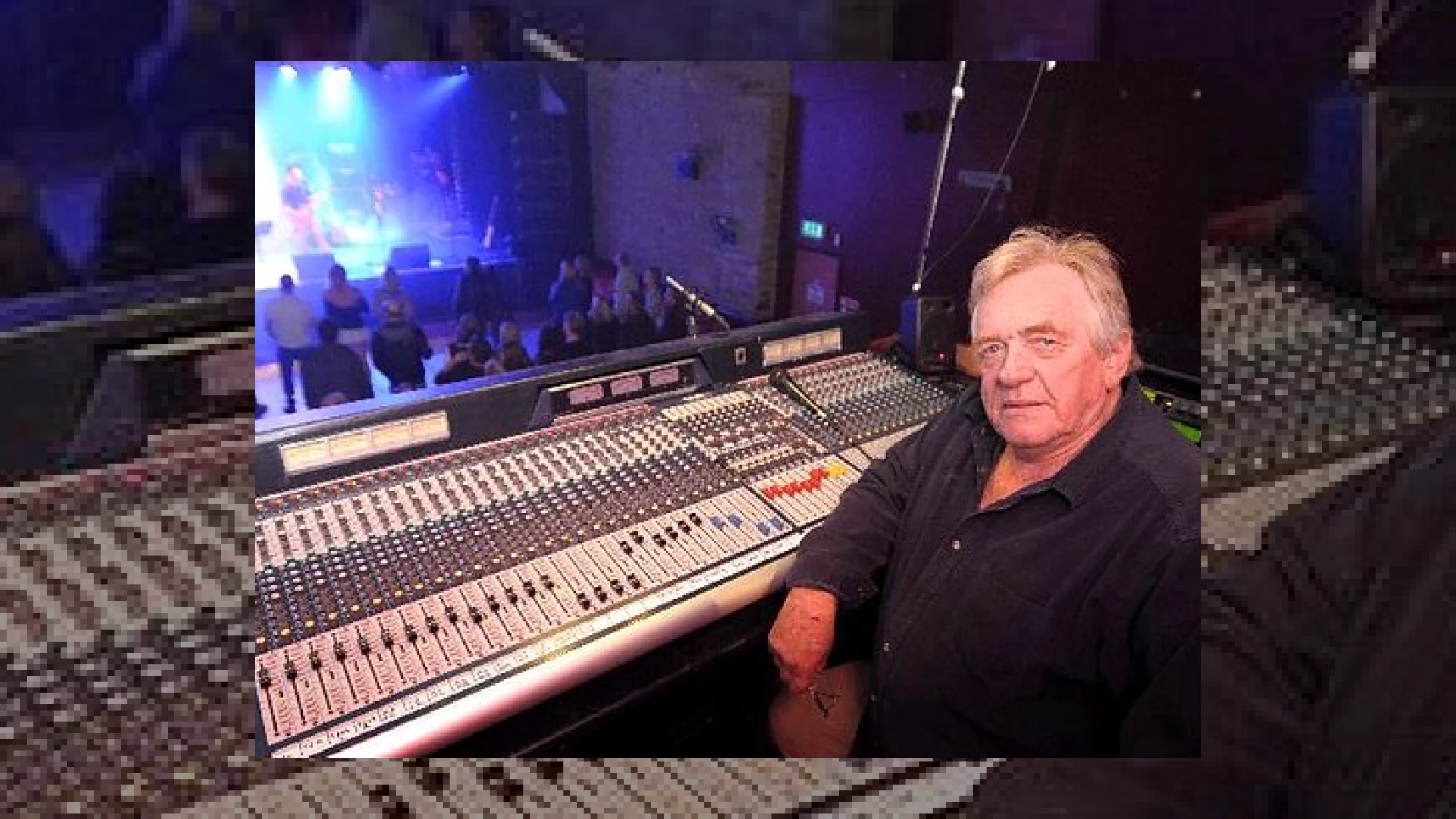
Visual context for Stephen Court Obituary.
The professional audio community recently paused to reflect on the profound loss of one of its most innovative pioneers. The passing of Stephen Court marked the end of an era of tactile, adventurous, and highly musical acoustic design. As mastering and acoustic engineers, we often look at historical milestones to understand how modern monitoring environments evolved, and analyzing the **stephen court obituary** provides a rich history of studio design, speaker engineering, and pure sonic passion that still influences how we reference sound today at SM Mastering.
The Legacy and Impact of the stephen court obituary
When studying the details of the **stephen court obituary**, one is struck by the incredible breadth of his career. Starting in broadcasting before transitioning to the legendary Advision Studios and Feldon Audio in the 1960s, Court developed a deep-seated passion for how sound propagates in a physical space. This passion culminated in the founding of Court Acoustics in the mid-1970s. During this golden age of analogue recording, his massive main monitors became the benchmark of excellence, gracing legendary spaces such as Abbey Road, Brit Row, The Mill, and Trident. For anyone looking to understand how the “classic British sound” of the 1970s was monitored, studying his work is essential reading, much like the educational guides found in our SM Mastering Audio Articles.
Indeed, this is why the **stephen court obituary** resonates so deeply with modern studio designers. His collaborations with Pink Floyd and Brit Row pushed acoustic boundaries in live spaces, culminating in the design of the iconic multi-speaker system used for “The Wall” at Earls Court. Court proved that high-fidelity sound did not have to be confined to small control rooms; it could be scaled up to fill massive arenas without losing transient detail or phase coherence. To achieve this level of performance today, modern speaker manufacturers like Neumann continue to build upon these early concepts of controlled dispersion and cabinet resonance control.
Innovative Designs and Historic Acoustic Tools
Stephen Court was never one to follow convention. His creativity was legendary, perhaps best exemplified by the “Chairman” speaker system introduced in the 1980s. Arriving at an Association of Professional Recording Services (APRS) show with a standard floor lamp and a winged armchair, Court revealed that the chair wings housed precise stereo speakers while a massive subwoofer was integrated directly under the seat. It was a whimsical yet highly functional precursor to modern nearfield immersive listening setups. Reading the **stephen court obituary**, we uncover a lifetime of such brilliant, outside-the-box solutions that challenged the industry to think differently about acoustic geometry.
In his later years, Court remained dedicated to capturing what he called the “Sound of the Seventies.” Before his untimely passing in 2017, he had been perfecting the SN70 nearfield monitor. This speaker was designed to bring the punchy, organic mid-range of classic British studios into modern digital mixing suites. The SN70 was demonstrated at British Grove and Real World Studios, earning glowing reviews from top-tier engineers who appreciated its ability to deliver translation precision without ear fatigue.
Stephen Court Historic Equipment & Specifications
To contextualize the tools and innovations associated with Stephen Court’s career, the table below outlines some of his most notable designs, their primary use cases, historical value, and their standing in the professional audio community.
| Name | Use | Estimated Price / Value | Rating (Out of 5) |
|---|---|---|---|
| Court Acoustics SN70 Monitors | Nearfield Studio Monitoring | £3,500 (Prototype/Custom) | 4.8 / 5.0 |
| “Sound Check” Test CD (with Alan Parsons) | Studio Calibration & Diagnostics | £25 (Original Release) | 4.9 / 5.0 |
| The “Chairman” System | Immersive Stereo Listening Furniture | Custom / Bespoke Commission | 4.7 / 5.0 |
| Court Acoustics Main Monitors (Classic) | Large-Format Control Room Monitoring | Bespoke Venue Budgets | 5.0 / 5.0 |
Practical Studio Workflow Tips Inspired by Stephen Court
Whether you are running a high-end mastering suite or a project studio, Court’s design philosophies offer timeless workflow lessons that can improve your mixes today:
- Utilize Phase-Coherent Test Signals: Court’s “Sound Check” CD, created alongside Alan Parsons, remains a masterclass in acoustic calibration. Always use high-quality pink noise, sine sweeps, and phase checks to calibrate your monitors before starting a critical mix or master.
- Design for Transient Accuracy: Court’s live designs focused on fast transient response to maintain clarity at high volumes. Ensure your studio monitors are decoupled from your desk or stands using high-quality isolation pucks to prevent low-end energy from smearing your transients.
- Embrace Non-Conventional Placements: Do not be afraid to experiment with extreme nearfield monitoring positions. Just as Court proved with the “Chairman” system, bringing the drivers closer to the listener’s ears can drastically reduce unwanted room reflections.
Conclusion
Reflecting on the **stephen court obituary** reminds us that the best audio equipment is built with equal parts scientific rigour and artistic curiosity. From massive stadium systems to precise studio monitors and test CDs, Stephen Court’s legacy remains deeply woven into the fabric of modern sound engineering. Here at SM Mastering, we carry forward this dedication to sonic accuracy and creative engineering in every project we master.
Frequently Asked Questions
What is the “Sound Check” CD by Stephen Court and Alan Parsons?
The “Sound Check” CD is an industry-standard acoustic calibration tool designed by Stephen Court and producer Alan Parsons. It contains a series of reference tones, pink noise, and instrumental tracks specifically engineered to help studio owners calibrate their playback systems, identify phase issues, and troubleshoot room acoustics.
How did Court Acoustics influence live concert sound?
Through close collaboration with Britannia Row and Pink Floyd, Court Acoustics designed massive, highly efficient multi-speaker arrays capable of handling immense power without sacrificing fidelity. These designs pioneered the use of quadraphonic and multi-directional sound reinforcement in large stadium venues, most notably for “The Wall” live shows.
What made the Court SN70 monitors unique?
The SN70 monitors were designed to recreate the warm, punchy, and highly musical “Sound of the Seventies” within a modern, compact nearfield footprint. Emphasizing mid-range clarity and transient definition, they were engineered to bridge the gap between classic analogue warmth and modern digital precision.

Written by SM Mastering
Official content on sound engineering, mixing, mastering, and advanced electronic production by SM Mastering.