The electronic music production landscape shifted significantly when the **superbooth 2018: polyend/dreadbox medusa** collaboration was first introduced to the public. Combining the raw, uncompromising analog warmth of Greek synthesizer pioneers Dreadbox with the innovative, forward-thinking digital sequencing expertise of Poland’s Polyend, this hybrid machine stands out as a landmark instrument. At SM Mastering, we frequently analyze how hardware character translates into the final stereo master, and the Medusa provides an exceptional study in rich harmonic content and unique transient responses.
By bridging the gap between classic subtractive synthesis and modern grid-based sequencing, this instrument offers sound designers an incredibly tactile interface. Whether you are aiming to produce deep, saturated basslines or evolving, polyphonic ambient pads, understanding how to harness its unique hybrid engine is key to achieving a professional mix. To explore more about how analog gear integrates with modern digital post-production, check out our comprehensive guides on the SM Mastering Audio Articles hub.
Analyzing the Architecture of Superbooth 2018: Polyend/Dreadbox Medusa
During the initial showcase of the **superbooth 2018: polyend/dreadbox medusa** hybrid synth, the industry realized this was not just another standard desktop synthesizer. The core voice architecture features three analog oscillators (designed by Dreadbox) and three digital wavetable oscillators (crafted by Polyend). This configuration allows producers to layer the unpredictable, organic warmth of analog circuitry with the glassy, precise, and complex timbres of digital synthesis.
Our mastering engineers often discuss how the analog voice architecture of the **superbooth 2018: polyend/dreadbox medusa** requires specific headroom management. Because the Dreadbox filter can become highly saturated when pushed, the low-mid frequencies (around 150 Hz to 400 Hz) can easily accumulate mud if not managed properly during the tracking phase. Utilizing high-quality converters and subtle high-pass filtering prior to tracking helps retain the punch of the digital oscillators while preserving the thick, analog character of the unit.
Technical Specifications
To understand how this hybrid synthesizer fits into your studio workspace, let us look at its primary technical specifications and market positioning:
| Specification / Metric | Details & Implementation |
|---|---|
| Product Name | Polyend/Dreadbox Medusa |
| Primary Use | Hybrid Analog/Digital Synthesizer & Expressive Grid Sequencer |
| Synthesis Engine | 3 Analog Oscillators (Dreadbox), 3 Digital Wavetable Oscillators (Polyend) |
| Sequencer Grid | 64 expressively playable pads with three-dimensional MPE-like control |
| Original Launch Price | Approx. $999 USD |
| SM Mastering Rating | 4.7 / 5.0 (Excellent harmonic depth and sequencing versatility) |
Practical Studio Workflow Tips
Incorporating the sequencer engine from the **superbooth 2018: polyend/dreadbox medusa** project into your DAW workflow can be revolutionary. Because each of the 64 pads on the grid can store separate synthesizer presets (including oscillator values, filter cutoffs, and envelope modulation), you can create highly complex, per-step variations.
To get the most out of this machine in a professional production environment, consider the following workflow tips:
- Multitracking for Stereo Width: The Medusa outputs a monophonic audio signal. To create a wide, modern stereo image, record your sequence twice with slight variations in the wavetable modulation or filter cutoff, then pan the tracks hard left and right in your DAW, such as Ableton.
- Managing Filter Resonance Peak: The classic Dreadbox 24dB/12dB voltage-controlled filter has a highly aggressive resonance. When sequencing extreme filter sweeps, use a dynamic EQ or a multiband compressor during the mixing stage to tame harsh resonance spikes in the 2 kHz to 4 kHz range.
- Grid-Based Modulation: Use the X, Y, and Z axes of the grid controller to inject human-like velocity and timbre variations. This dynamic movement reduces the static nature of electronic sequences, making the final track much easier to master.
Conclusion
In conclusion, the legacy of the **superbooth 2018: polyend/dreadbox medusa** remains a masterclass in hybrid instrument design. By combining the legendary analog warmth of Dreadbox with the advanced sequencing capabilities of Polyend, it provides a playground of sonic possibilities. When tracked with dynamic headroom in mind and mixed with careful attention to its dense low-mid frequencies, this synthesizer delivers a premium, release-ready sound that stands out in any master.
Frequently Asked Questions
Is the Polyend/Dreadbox Medusa fully analog?
No, it is a hybrid synthesizer. It features three analog oscillators designed by Dreadbox and three digital wavetable oscillators developed by Polyend, routed through a fully analog filter.
Can I use the Medusa’s grid to control other MIDI hardware?
Yes. The 64-pad grid acts as an incredibly powerful MIDI controller capable of sending note, velocity, and three-dimensional modulation (X/Y/Z) data to external hardware synthesizers and virtual instruments in your DAW.
How does the Medusa behave during the mastering process?
Due to its rich analog filters, the Medusa generates strong odd and even harmonics. During mastering, these harmonics react beautifully to subtle analog tape emulation and bus compression, giving the overall mix a cohesive, expensive sheen.
🛒 Official Product Info & Where to Buy
Check full technical specs, pricing, and purchase options directly from the official manufacturer or authorized dealer for Superbooth 2018: Polyend/Dreadbox Medusa.
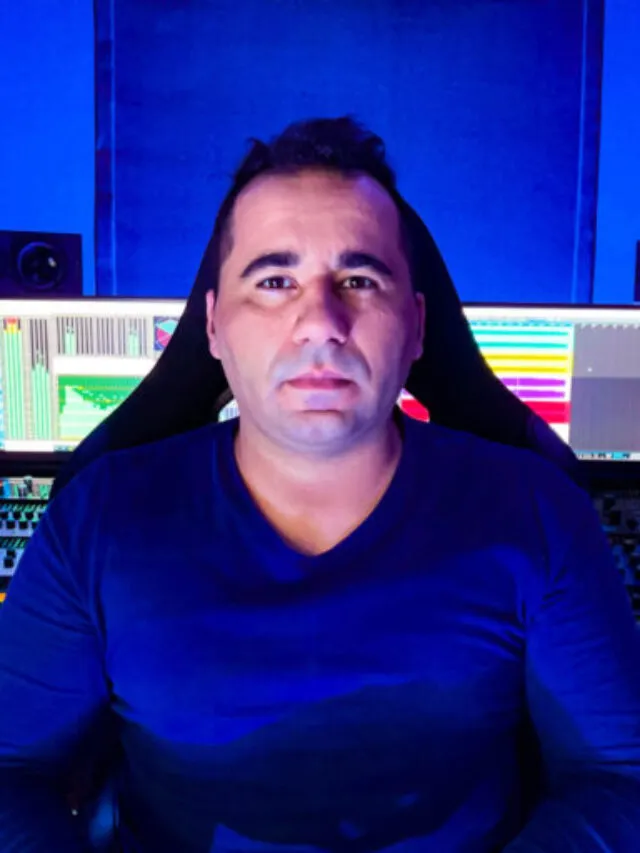
Written by SM Mastering
Official content on sound engineering, mixing, mastering, and advanced electronic production by SM Mastering.