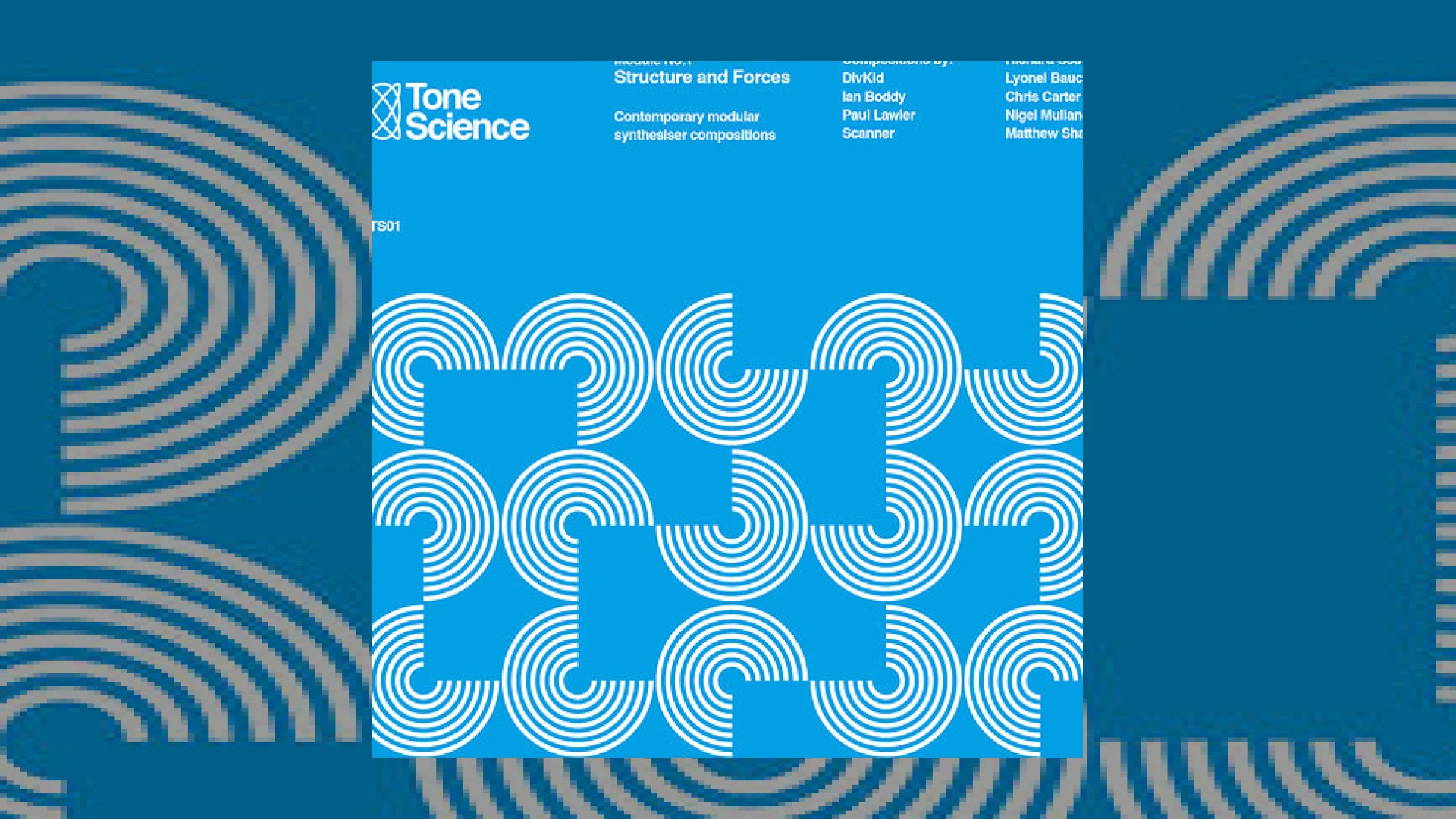
Visual context for Tone Science, a new sub-label from DiN.
With the recent emergence of modular synthesis as a dominant creative force, the electronic music landscape has been forever altered by the launch of tone science, a new sub-label from din. Initiated by renowned musician and DiN label founder Ian Boddy, this new venture seeks to explore the highly complex, unpredictable, and endlessly fascinating realm of modular synthesizers. Inspired by his own 2016 album of the same name, Boddy’s new sub-label serves as a dedicated platform for artists pushing the sonic boundaries of control voltages, patch cables, and generative analog systems.
The debut release from this imprint, titled Module No.1 Structure and Forces, features nine distinct artists from various musical backgrounds. The unifying thread is that every composition on the album was generated entirely on a modular synth system. From the lush, organic soundscapes of DivKid and Matthew Shaw to the grimy, industrial textures of Chris Carter (Throbbing Gristle), the collection showcases the incredible versatility of modular instruments when treated as self-contained compositional environments.
The Philosophy of Tone Science, a new sub-label from din
At its core, the curation of this compilation is designed to flow as a continuous, cohesive musical journey rather than a sterile collection of equipment demonstrations. This artistic flow is the signature of tone science, a new sub-label from din. Ian Boddy’s own track, “Tone 6,” utilizes an aleatoric, self-playing patch configuration that acts as an extension of his original album’s structural theories. This composition relies on complex logic modules to dictate pitch and timbre, illustrating the delicate balance between human guidance and machine autonomy.
Moving deeper into the tracklist, the sonic palettes expand significantly. Composers Paul Lawler and Nigel Mullaney utilize multi-layered systems to craft expansive, cinematic soundtracks. In contrast, Scanner (Robin Rimbaud) delivers beautiful, evolving ambient washes on “If Wishes Came True,” which leads effortlessly into the hypnotic, acoustic-like ostinato patterns of Richard Scott’s “Ghatam.” The versatility of the format is further pushed by French Buchla specialist Lyonel Bauchet, who injects rhythmic tension before Chris Carter concludes the auditory journey with a bass-heavy, dub-influenced piece.
Technical Mastering Considerations for Modular Audio
From a professional mastering perspective, tracks curated under tone science, a new sub-label from din present highly unique engineering challenges. Unlike traditional electronic music constructed in a DAW with precise digital control, modular synthesis often introduces extreme dynamic ranges, sub-bass transients, and unexpected phase relationships. To manage these elements while preserving the organic warmth of the analog circuitry, mastering engineers must employ specialized tools. Using high-end dynamic processors from industry leaders like iZotope allows engineers to surgically control harsh resonances without destroying the expressive transient response of analog filters.
When mastering projects influenced by the aesthetic of tone science, a new sub-label from din, preserving the dynamic contrast of the generative sequences is paramount. Over-limiting these tracks risks flattening the delicate, aleatoric modulation of the filters and VCAs, turning an organic performance into a fatiguing block of sound. At SM Mastering, we emphasize the preservation of these organic details through precise parallel compression and analog-domain equalization.
Specifications & Reference Matrix
To understand the structural composition of the physical and digital footprint of this release, refer to the technical specifications below:
| Project Name | Primary Use | Pricing Model | Audio Quality Rating |
|---|---|---|---|
| Module No.1 Structure and Forces | Reference Audio / Sound Design Inspiration | £7.00 GBP (Digital Bandcamp) | 4.9 / 5.0 |
| Modular Synthesizer Systems | Generative Composition & Live Performance | Varies (Modular hardware dependent) | 5.0 / 5.0 (Analog path) |
| SM Mastering Services | Professional Audio Post-Production & Optimization | Custom Quote-Based | 5.0 / 5.0 (Industry Standard) |
Practical Studio Workflow Tips for Modular Mixing
- Control Sub-Frequencies: Modular oscillators can produce sub-bass frequencies that extend far below the human hearing threshold. Use a high-pass filter (HPF) with a steep curve around 20–30Hz to prevent low-end mud from eating up headroom.
- Embrace Dynamic Range: Avoid heavy-handed brickwall limiting on your master bus during mixdown. Instead, use slow, transparent optical compressors to gently glue the elements together while keeping the transient dynamics intact.
- Manage High-Frequency Resonance: Self-oscillating filters can create sharp, piercing peaks. Utilize dynamic EQs to target and attenuate these specific frequencies only when they exceed a set threshold.
Conclusion
The establishment of tone science, a new sub-label from din marks a significant milestone for experimental electronic music. By assembling a diverse roster of modular synthesists, Ian Boddy has successfully bridged the gap between raw hardware experimentation and cohesive, emotional composition. For audiophiles and producers alike, this sub-label stands as an essential reference point for modern analog sound design and dynamic mixing. To learn more about optimizing your own synthesizers for release, explore our detailed guides over at the SM Mastering Audio Articles database.
Frequently Asked Questions
What is the concept behind Tone Science?
Tone Science is a sub-label of DiN, curated by Ian Boddy. It focuses exclusively on artists who compose and perform utilizing modular synthesizer systems, emphasizing both generative processes and structured, organic electronic music.
How does mastering modular synth music differ from standard digital productions?
Modular synthesizer music often features unpredictable dynamics, rich analog harmonics, and deep sub-frequencies. Mastering requires a highly dynamic touch, utilizing tools that preserve transient detail and control resonance without over-compressing the master channel.
What artists are featured on the debut Tone Science release?
The debut compilation, Module No.1 Structure and Forces, features nine acclaimed artists including DivKid, Matthew Shaw, Ian Boddy, Paul Lawler, Nigel Mullaney, Scanner, Richard Scott, Lyonel Bauchet, and Chris Carter.
Written by SM Mastering
Official content on sound engineering, mixing, mastering, and advanced electronic production by SM Mastering.