As professional mastering engineers, our quest for ultimate transient response, unparalleled spatial imaging, and absolute spectral neutrality is never-ending. Recently, the professional audio community gathered to witness some of the most exciting advancements in critical monitoring technology, where the demonstration of the warwick acoustics sonoma electrostatic headphones at aes became a primary talking point. Originally conceived for high-end audiophile listening, these electrostatic headphones have rapidly transitioned into professional control rooms, serving as a reference-grade monitor system that rivals elite far-field monitors.
The Engineering Behind the warwick acoustics sonoma electrostatic headphones at aes
When evaluating the warwick acoustics sonoma electrostatic headphones at aes, the first thing that strikes an audio engineer is the departure from traditional moving-coil architectures. Standard dynamic headphones use a voice coil attached to a diaphragm, which introduces mechanical impedance and modal breakup. In contrast, the Sonoma system uses an ultra-low-mass High-Precision Electrostatic Laminate (HPEL) transducer. This membrane is incredibly thin, allowing it to react almost instantaneously to micro-transients. This level of precision is why leading manufacturers like Neumann and others in the reference monitoring space closely track electrostatic developments.
Technical Specifications and Performance Metrics
The Sonoma package is not just a pair of headphones; it is a complete, meticulously tuned system. It includes an “energiser” which provides the necessary high-voltage bias required to power the electrostatic elements, alongside an integrated Class-A amplifier and a high-resolution D-A converter (DAC) housed in a sleek desktop unit. Incorporating the warwick acoustics sonoma electrostatic headphones at aes into a daily production workflow requires an understanding of their flat, uncolored presentation. To read more about how we integrate reference monitors in our mastering facility, explore our library of SM Mastering Audio Articles.
| Name | Use | Price | Rating |
|---|---|---|---|
| Warwick Acoustics Sonoma M1 System | Mastering, Mixing & Reference Monitoring | £5000 / $5000 | 4.9 / 5 Stars |
Practical Studio Workflow Tips for Electrostatic Monitoring
Because electrostatic systems behave differently from typical studio headphones, adjusting your workflow can yield much better results. Here are three practical tips for integrating this technology into your studio routine:
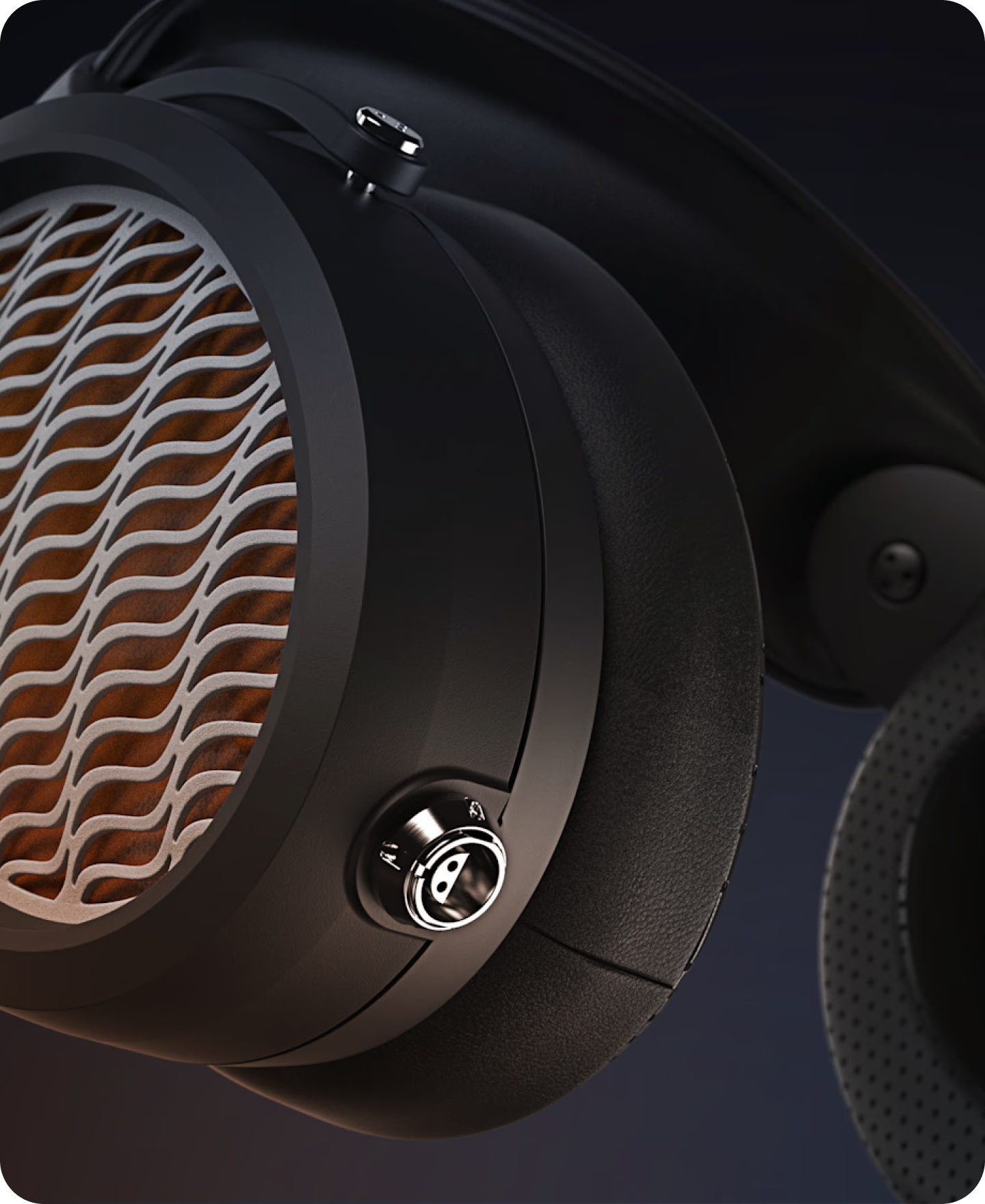
Additional product view and interface angle for Warwick Acoustics Sonoma electrostatic headphones at AES.
- Calibrate Your Monitor Levels: Because the Sonoma system has an exceptionally low distortion profile, it is easy to monitor at higher volumes without noticing ear fatigue. Always use an SPL meter to calibrate your listening levels to a safe 79-85 dB SPL.
- A/B with Traditional Monitoring: Use the electrostatic headphones to spot surgical clicks, pops, and low-frequency phase anomalies, then switch to your dynamic monitors to check overall energy and translation.
- Leverage the Class-A DAC: Keep your digital signal path pristine by feeding the Sonoma energiser directly via USB or coaxial S/PDIF to bypass unnecessary analog-to-digital conversion stages.
Conclusion
Ultimately, experiencing the warwick acoustics sonoma electrostatic headphones at aes confirms that electrostatic technology is no longer confined to the consumer hi-fi world. For mastering engineers who require the absolute truth from their source material, the Sonoma system offers an unmatched level of clarity, transient speed, and spatial resolution. While the entry price is substantial, the investment is easily justified by the sheer precision it brings to critical decision-making processes.
Frequently Asked Questions
What makes electrostatic headphones different from traditional dynamic headphones?
Traditional headphones use magnetic forces to move a voice coil attached to a heavy diaphragm, which can cause minor delays and distortion. Electrostatic headphones use a virtually weightless thin film suspended between two conductive plates. This film is moved uniformly by electrostatic forces, resulting in unparalleled transient response and extremely low distortion.

Additional product view and interface angle for Warwick Acoustics Sonoma electrostatic headphones at AES.
Why do the Warwick Acoustics Sonoma headphones require an external energiser?
Electrostatic diaphragms require high-voltage DC bias to charge the electrostatic membrane and drive the audio signals. A standard headphone jack on an audio interface cannot output this specific voltage. The Sonoma system includes a dedicated “energiser” box that contains the necessary high-voltage power supply, a Class-A amplifier, and a premium DAC built-in.
How do these headphones assist in the mastering process?
Because they do not suffer from the acoustic anomalies of studio rooms, the Sonoma electrostatic headphones provide an exceptionally flat frequency response. This allows mastering engineers to accurately detect fine harmonic details, precise stereo imaging, micro-dynamics, and surgical clicks or noises that might be missed on standard monitors.
🛒 Official Product Info & Where to Buy
Check full technical specs, pricing, and purchase options directly from the official manufacturer or authorized dealer for Warwick Acoustics Sonoma electrostatic headphones at AES.

Written by SM Mastering
Official content on sound engineering, mixing, mastering, and advanced electronic production by SM Mastering.