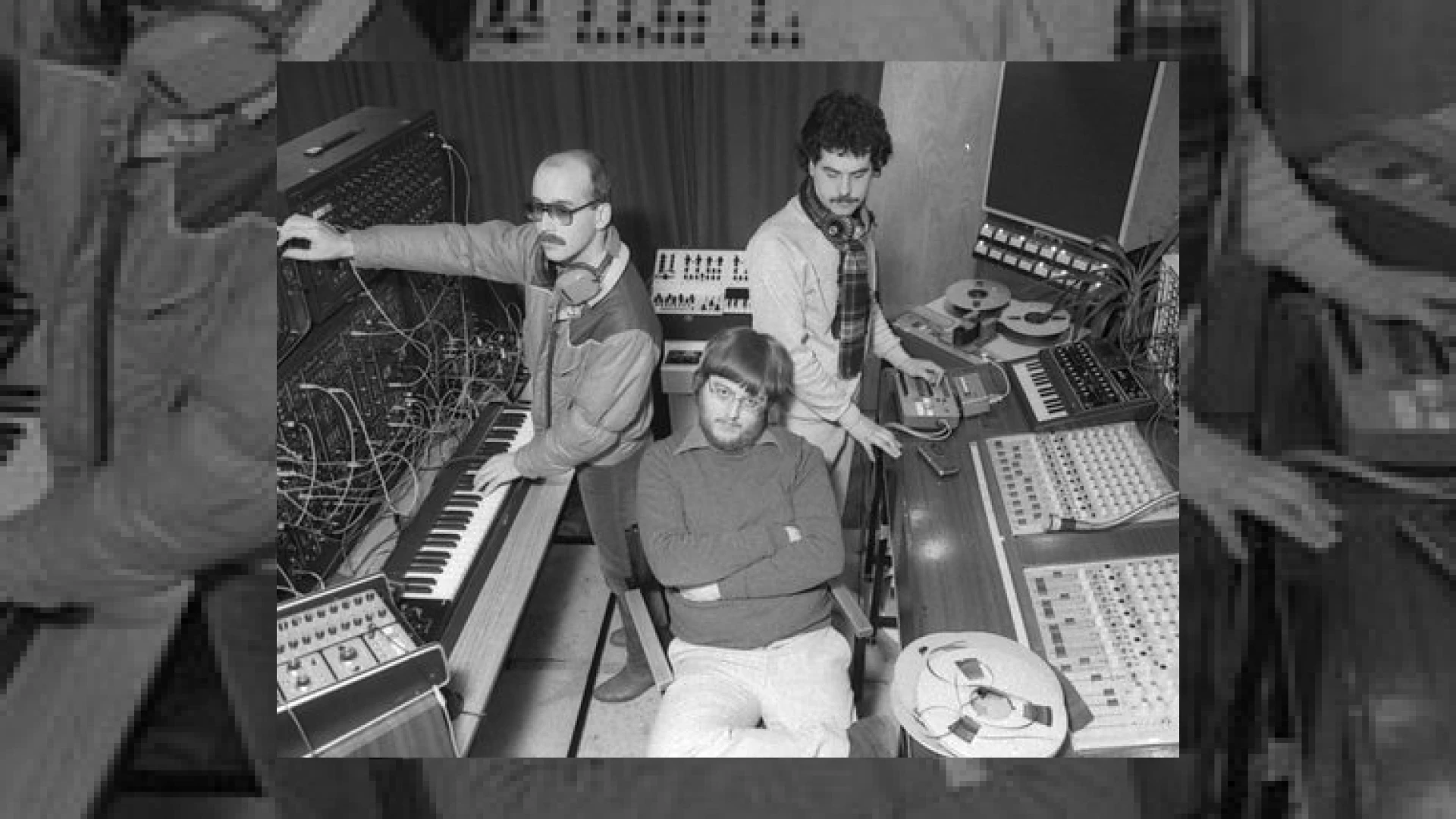
Visual context for Adrian Wagner 1952-2018.
In the history of electronic music and synthesis, few figures have bridged classical lineage with cutting-edge analog accessibility as brilliantly as the late British electronic composer and entrepreneur, adrian wagner 1952-2018. As the great-great-grandson of the legendary German composer Richard Wagner, Adrian inherited a monumental musical legacy, yet he chose to forge his own path in the rapidly evolving landscape of 20th-century electronic audio. Best known to synthesizer historians as the co-creator of the iconic EDP (Electronic Dream Plant) Wasp synthesizer, his work redefined what was possible for budget-conscious musicians in the late 1970s and beyond.
The impact of adrian wagner 1952-2018 on music production cannot be understated, particularly regarding his efforts to democratize synthesizers. Collaborating alongside legendary synth designer Chris Huggett, Wagner set out to challenge the dominant paradigm of expensive, elitist analog instruments manufactured by industry giants. The result was the Wasp synthesizer, a legendary black-and-yellow device that became a secret weapon for post-punk, synth-pop, and early electronic dance music pioneers.
The Lasting Tech Legacy of Adrian Wagner 1952-2018
At the core of the EDP design philosophy was a dedication to technical ingenuity over expensive component sourcing. In an era when voltage-controlled oscillators (VCOs) were notoriously unstable and prone to drifting out of tune due to temperature changes, the Wasp utilized innovative digitally controlled oscillators (DCOs). This design choice ensured rock-solid pitch stability at a fraction of the cost, making the work of adrian wagner 1952-2018 an enduring source of inspiration for analog hardware enthusiasts.
Another fascinating technical choice was the capacitive copper keyboard strip. Rather than utilizing expensive mechanical key contacts, the Wasp used a flat, touch-sensitive keyboard. While polarising to traditional keyboardists, it allowed for incredibly fast triggering and unique slide techniques. Here at SM Mastering, analyzing the classic recordings made with these instruments helps us understand how the sonic philosophy of adrian wagner 1952-2018 translates to modern mastering workflows. To read more about how vintage design elements influence modern master delivery, check out our collection of SM Mastering Audio Articles.
EDP Classic Product Specifications
To fully appreciate the scope of Wagner’s contributions to music technology, we must look at the ecosystem of gear produced by Electronic Dream Plant in the late 1970s and early 1980s. Below is a breakdown of these classic devices:
| Name | Use | Original Price | Legacy Rating |
|---|---|---|---|
| EDP Wasp | Hybrid Monophonic Synthesizer (DCOs/Analog Filters) | £200 | 5.0 / 5.0 |
| EDP Gnat | Single-Oscillator Miniature Synthesizer | £125 | 4.3 / 5.0 |
| EDP Spider | 256-Step Digital/Analog Sequencer | £80 | 4.2 / 5.0 |
| EDP Caterpillar | Multi-Voice Master Keyboard Controller | £150 | 4.0 / 5.0 |
Practical Studio Workflow Tips for Vintage Synth Integration
Whether you are lucky enough to own an original EDP Wasp or are utilizing modern software emulations, integrating these distinct, aggressive sounds into a contemporary digital audio workstation (DAW) requires a careful approach to mixing and mastering.
- Control the Sub-Bass Transients: The unique EDP multi-mode filter can produce highly resonant, unpredictable spikes. Use a fast-acting compressor or a dynamic EQ to tame resonant frequencies around 100Hz–300Hz before sending your track to mastering.
- Add Harmonic Saturation: Vintage hardware possesses natural analog saturation that digital emulations sometimes miss. To capture the grit of vintage analog synthesizers in modern digital masters, high-end tools from manufacturers like Soundtoys can recreate that classic harmonic warmth and edge.
- Stereo Widening with Caution: Vintage monophonic synths like the Wasp print in mono. To make them fit in a wide modern mix, utilize Haas-effect delays or micro-pitch shifting, but always verify mono compatibility to ensure the low-end energy does not collapse.
Conclusion
Reflecting on the life of adrian wagner 1952-2018, it is clear that his contribution to electronic music production shaped an entire generation of synth enthusiasts. By lowering the financial barrier to entry, he empowered independent musicians to experiment with synthesis, a movement that laid the foundation for modern electronic music production. Even in the digital age, the pioneering spirit of adrian wagner 1952-2018 remains a vital case study in creative engineering, reminding us that limitation is often the greatest catalyst for technical and artistic innovation.
Frequently Asked Questions
What was Adrian Wagner’s most famous invention?
Adrian Wagner co-created the EDP Wasp synthesizer in 1977 alongside designer Chris Huggett. It was a groundbreaking, low-cost synthesizer known for its yellow-and-black design, digitally controlled oscillators (DCOs), and unique touch-sensitive capacitive keyboard.
How did the Wasp synthesizer differ from its competitors?
Unlike the expensive synthesizers from Moog, Roland, or Oberheim at the time, the Wasp cost only £200. It achieved this low price point by using plastic casing, a touch-sensitive printed circuit board keyboard instead of mechanical keys, and highly stable digital control for its analog oscillators.
What was the connection between Adrian Wagner and classical music?
Adrian Wagner was the great-great-grandson of the famous 19th-century German composer Richard Wagner. While he respected his classical heritage, Adrian focused his career on electronic composition, media production, and synthesizer development.
Written by SM Mastering
Official content on sound engineering, mixing, mastering, and advanced electronic production by SM Mastering.