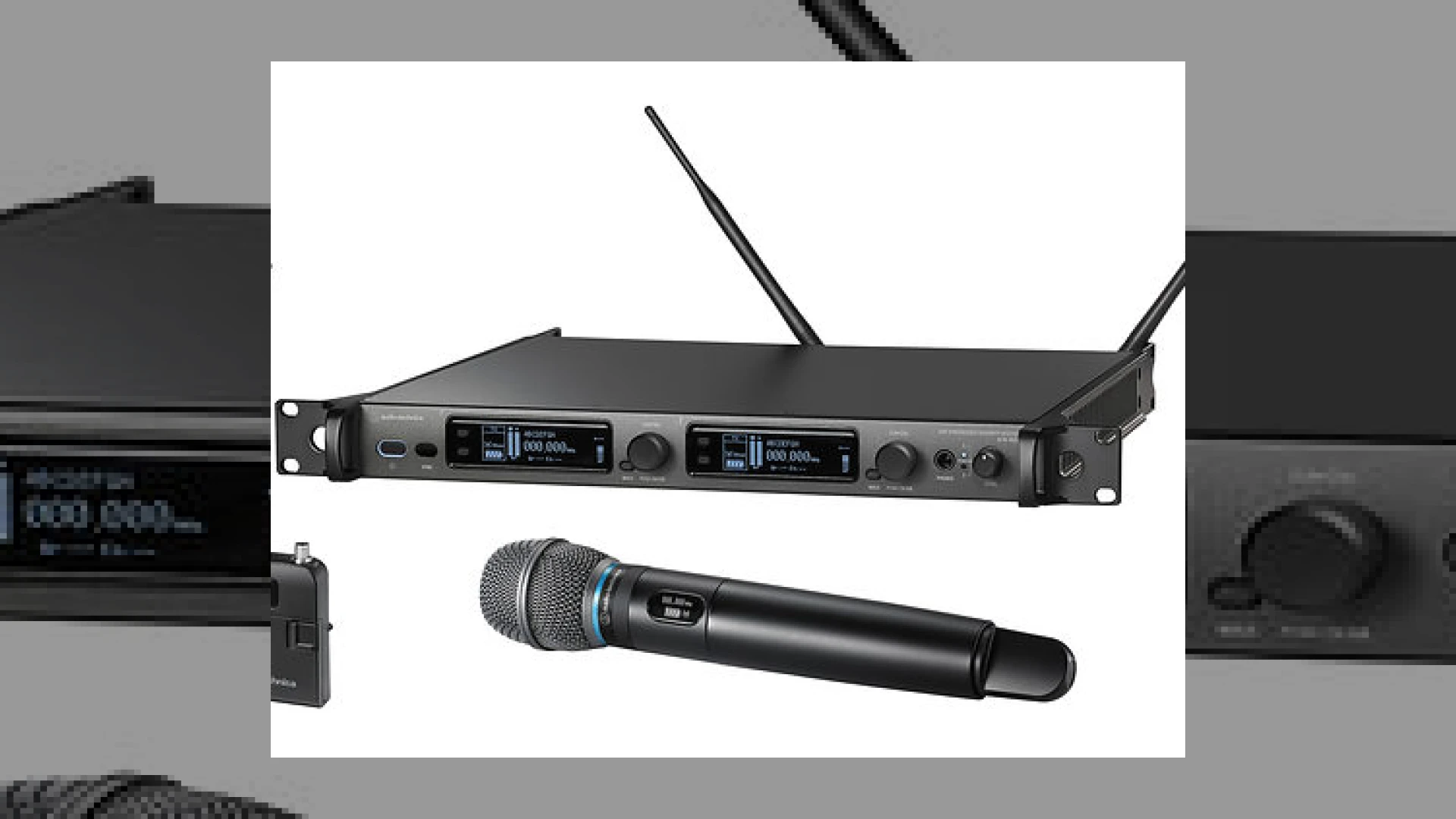
Visual context for Audio-Technica ship new wireless systems.
Navigating the increasingly crowded UHF spectrum has become one of the greatest challenges for live sound engineers and broadcast professionals. At SM Mastering, we closely monitor hardware evolutions that impact signal integrity from the stage to the studio. In a major move to address these RF challenges, we are excited to share that audio-technica ship new wireless systems targeting high-end professional applications. Featuring the updated fourth-generation 3000 Series and third-generation 5000 Series, these systems represent a significant leap forward in spectrum efficiency, setup speed, and rock-solid audio transmission.
Key Technical Breakthroughs as Audio-Technica Ship New Wireless Systems
The updated fourth-generation 3000 Series focuses heavily on operating within hostile RF environments. By doubling the tuning range to an impressive 60 MHz, users now have a much wider window to find clean, open frequencies. Frequencies are scanned and easily selected on the receiver unit before being synchronized with the transmitter via a seamless infrared (IR) link. As audio-technica ship new wireless systems, local venues and mid-sized touring acts get access to professional-grade tools like the unique backup frequency button. In the event of sudden, unexpected RF interference, the performer or engineer can switch the transmitter to a pre-assigned backup frequency at the push of a button, ensuring uninterrupted audio.
For large-scale touring and broadcast networks, the flagship third-generation 5000 Series offers unparalleled flexibility. It features a dual-receiver design with an exceptionally wide tuning bandwidth of 230 MHz (ranging from 470 to 700 MHz). This massive range allows engineers to deploy large multi-channel configurations globally without worrying about regional spectrum limitations. This Dante integration proves vital when audio-technica ship new wireless systems into enterprise settings, allowing pristine digital audio to flow directly over existing network infrastructures alongside analog XLR outputs.
Comparing the 3000 and 5000 Series Specifications
To help you decide which system fits your venue or production workflow, we have compiled a technical comparison of the primary units:
| Name | Use | Price (Est. MSRP) | Rating |
|---|---|---|---|
| Audio-Technica 3000 Series (Gen 4) | Mid-sized venues, corporate events, houses of worship | $999.00 | 4.7 / 5 |
| Audio-Technica 5000 Series (Gen 3) | Large-scale concerts, broadcast, multi-system touring | $3,499.00 | 4.9 / 5 |
Practical Live Sound and Studio Integration Tips
Deploying high-channel-count wireless systems requires careful planning. Here are several professional workflow tips to maximize your system’s performance:
- Utilize Antenna Cascading: The 5000 Series receiver includes an antenna cascade output. This allows a single pair of antennas to feed up to eight dual-channel receivers (16 channels total), drastically reducing stage clutter and potential RF interference from closely positioned antennas.
- Keep Digital Transmitters Structured: When routing your digital audio from the 5000 Series via Dante, ensure your network switches are optimized for Quality of Service (QoS) to prioritize audio packets over control data.
- Leverage Remote Monitoring Software: Take advantage of Audio-Technica’s dedicated software control. This allows monitor engineers to track battery levels, RF signal strength, and mute status from a central laptop at front-of-house (FOH).
High-quality RF capture is just the first step in the signal chain. To ensure your live recordings translate beautifully to streaming platforms, the captured audio must be processed with studio-grade tools. Just as digital-to-analog converters from Universal Audio ensure pristine studio monitoring, these wireless systems provide the exact physical clarity needed before the mixing stage. For more in-depth technical reviews, mixing workflows, and professional mastering insights, be sure to visit our SM Mastering Audio Articles.
Conclusion
Ultimately, when audio-technica ship new wireless systems, they redefine standard expectations for spectral efficiency and system reliability. Whether you select the versatile, backup-ready 3000 Series or the highly scalable, Dante-enabled 5000 Series, your productions will benefit from elite RF design. Investing in robust wireless infrastructure today guarantees that your audio remains uninterrupted, clear, and ready for high-fidelity mixing and mastering.
Frequently Asked Questions
What is the benefit of the backup frequency button on the 3000 Series?
The backup frequency button allows the transmitter to instantly swap to a clean, pre-scanned secondary frequency if unexpected RF interference occurs during a live performance, preventing dropouts without requiring manual receiver programming mid-show.
Do these systems support digital audio network protocols?
Yes, the third-generation 5000 Series features dual-channel receivers that support Dante networked audio outputs alongside traditional balanced XLR connections, making them highly compatible with modern digital consoles and network setups.
How many receiver units can be linked to a single pair of antennas?
Thanks to the antenna cascade output on the 5000 Series, a single pair of high-quality antennas can distribute signal to up to eight dual-channel receivers, powering up to 16 wireless channels without requiring external active antenna splitters.
🛒 Official Product Info & Where to Buy
Check full technical specs, pricing, and purchase options directly from the official manufacturer or authorized dealer for Audio-Technica ship new wireless systems.

Written by SM Mastering
Official content on sound engineering, mixing, mastering, and advanced electronic production by SM Mastering.