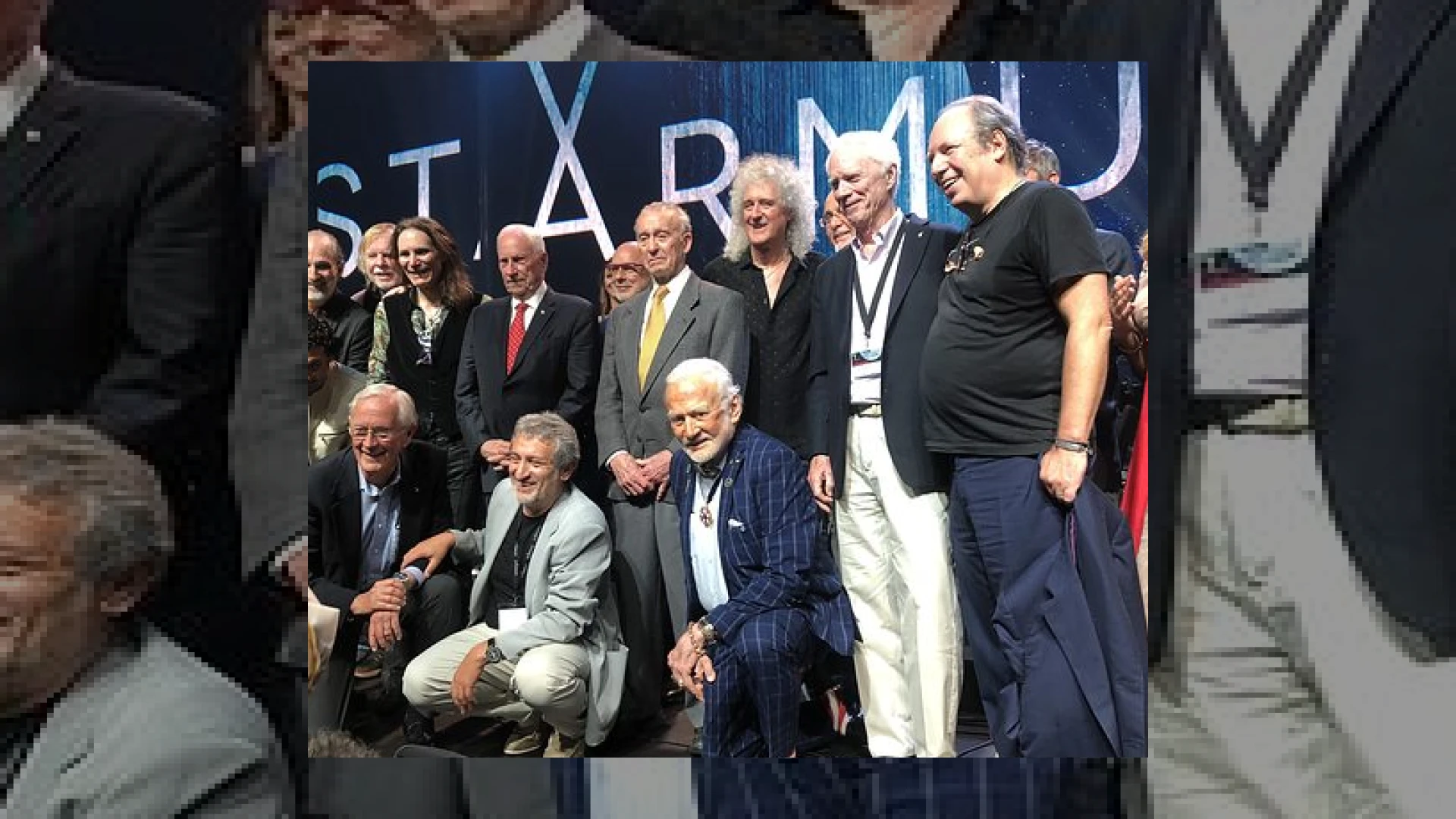
Visual context for Starmus V concert commemorates Moon Landings 50th Anniversary.
The intersection of astrophysics, spatial orchestration, and high-fidelity sound reinforcement reached its zenith at one of the most ambitious live events of the decade. The legendary starmus v concert commemorates moon landings 50th anniversary, bringing together stellar figures such as Brian May, Steve Vai, Rick Wakeman, Hans Zimmer, and the Swiss-based 21st Century Orchestra. For audio mastering engineers and live sound designers, handling an array of legendary synthesizers, high-gain rock guitars, and a full-scale symphonic orchestra presents an extraordinary technical challenge that requires precision dynamics control, meticulous spectral balancing, and state-of-the-art live-to-stereo routing.
As audio mastering engineers at SM Mastering, we often look at historical live events to study the complex interactions of transience, acoustic bleed, and stereo imaging. Indeed, analyzing how the starmus v concert commemorates moon landings 50th anniversary allows us to understand complex live-to-stereo mastering. Capturing the massive dynamic range of Rick Wakeman’s custom keyboard rigs alongside Steve Vai’s screaming DiMarzio pickups requires a sophisticated compression strategy to maintain headroom without sacrificing the explosive energy of the performance. If you are interested in how professional engineers handle these dense acoustic arrangements in post-production, check out our comprehensive guide on the SM Mastering Audio Articles portal.
How the Starmus V Concert Commemorates Moon Landings 50th Anniversary in Sonic Detail
Managing a stage shared by legendary rock instrumentalists and a full 21st-century orchestra requires immense planning. The way the starmus v concert commemorates moon landings 50th anniversary serves as a masterclass in dynamic range management. Live sound engineers had to rely on pristine microphone preamps, advanced digital splitters, and low-latency DSP processing. For multi-channel tracking, setups of this magnitude often rely on premium conversion hardware, such as the digital-to-analog converters designed by Universal Audio, ensuring that every nuance of Hans Zimmer’s synth textures and Brian May’s signature Red Special guitar is captured with maximum phase coherence.
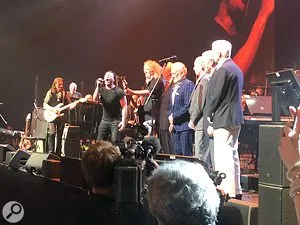
Additional product view and interface angle for Starmus V concert commemorates Moon Landings 50th Anniversary.
For audio professionals seeking to recreate this level of depth in their own mixes, referencing how the starmus v concert commemorates moon landings 50th anniversary can inspire new routing configurations. It highlights the importance of sub-grouping. When mixing symphonic rock, grouping the brass and woodwinds separately from the heavy electric guitars allows the mastering engineer to apply multi-band expansion, ensuring the mid-range frequencies do not become a muddy, unintelligible wall of sound.
Technical Equipment Specifications for Hybrid Orchestral Concerts
To pull off an event of this magnitude, standard live sound gear is insufficient. Below is an overview of the critical equipment categories required to process, mix, and master hybrid orchestral rock productions:
| Name | Use | Price (Est.) | Rating |
|---|---|---|---|
| Neve 8816 Summing Mixer | Combining orchestral stems with analog warmth and headroom. | $3,850 | 4.8/5 |
| Neumann KM 184 Stereo Set | Overhead spot microphoning for orchestral strings and woodwinds. | $1,699 | 4.9/5 |
| Universal Audio Apollo x16 | Low-latency DSP tracking and high-end AD/DA conversion. | $3,999 | 4.7/5 |
| L-Acoustics K2 Line Array | Ultra-precise live sound reinforcement with phase-coherent dispersion. | $12,000+ | 4.9/5 |
Practical Studio Workflow Tips for Hybrid Soundscapes
Recreating the grand sonic signature of a performance like Starmus V in your studio requires a dedicated workflow. Here are three expert tips from our mastering lab:
- Use Phase Alignment Tools: When blending close spot mics on orchestral instruments with distant room mics, use alignment tools to avoid comb filtering. This guarantees a punchy low-end and clear transients.
- Implement Sidechain Ducking on Guitars: Use the orchestral woodwinds or lead vocals to subtly sidechain-duck the low-mid frequencies (around 250Hz – 500Hz) of heavy electric guitars. This keeps the soundstage clear.
- Leverage Parallel Saturation: To make synthesizers and orchestral swells cut through a dense rock rhythm section, use parallel tape saturation. This adds harmonic complexity without increasing the peak level of the tracks.
Conclusion
Ultimately, studying how the starmus v concert commemorates moon landings 50th anniversary reveals the critical importance of high-headroom summing mixers, phase-coherent mic placement, and dynamic mid-range control. By implementing these high-end live sound and mastering strategies into your daily DAW workflow, you can elevate your hybrid orchestral productions to cosmic heights.
Frequently Asked Questions
What made the Starmus V audio production so challenging?
The primary challenge lay in blending the extreme transient responses of rock drums and high-gain guitars (Steve Vai, Brian May) with the delicate, wide dynamic range of the 21st Century Orchestra, requiring highly sophisticated subgroup compression and phase alignment.
How do mastering engineers treat live orchestral recordings?
Mastering engineers use multi-band compression, mid-side EQing to widen the ambient room microphones, and subtle tape saturation to glue the disparate acoustic and electronic elements into a cohesive stereo field.
Why is phase coherence crucial in large-scale multi-mic setups?
With dozens of open microphones on stage, sound waves arrive at different times. Proper phase alignment prevents frequency cancellation, especially in the low-end, ensuring the final master sounds full, clear, and powerful.
Written by SM Mastering
Official content on sound engineering, mixing, mastering, and advanced electronic production by SM Mastering.